5 minSociety
Experts Call for Bold Action on Early Childhood Development
At a TIME100 Talks panel in New York, Harvard's Jack Shonkoff, UNICEF's Pia Rebello Britto, and Sesame Workshop's Rosemarie Truglio urged policymakers to move beyond rhetoric and invest in children's health, education, and well-being.
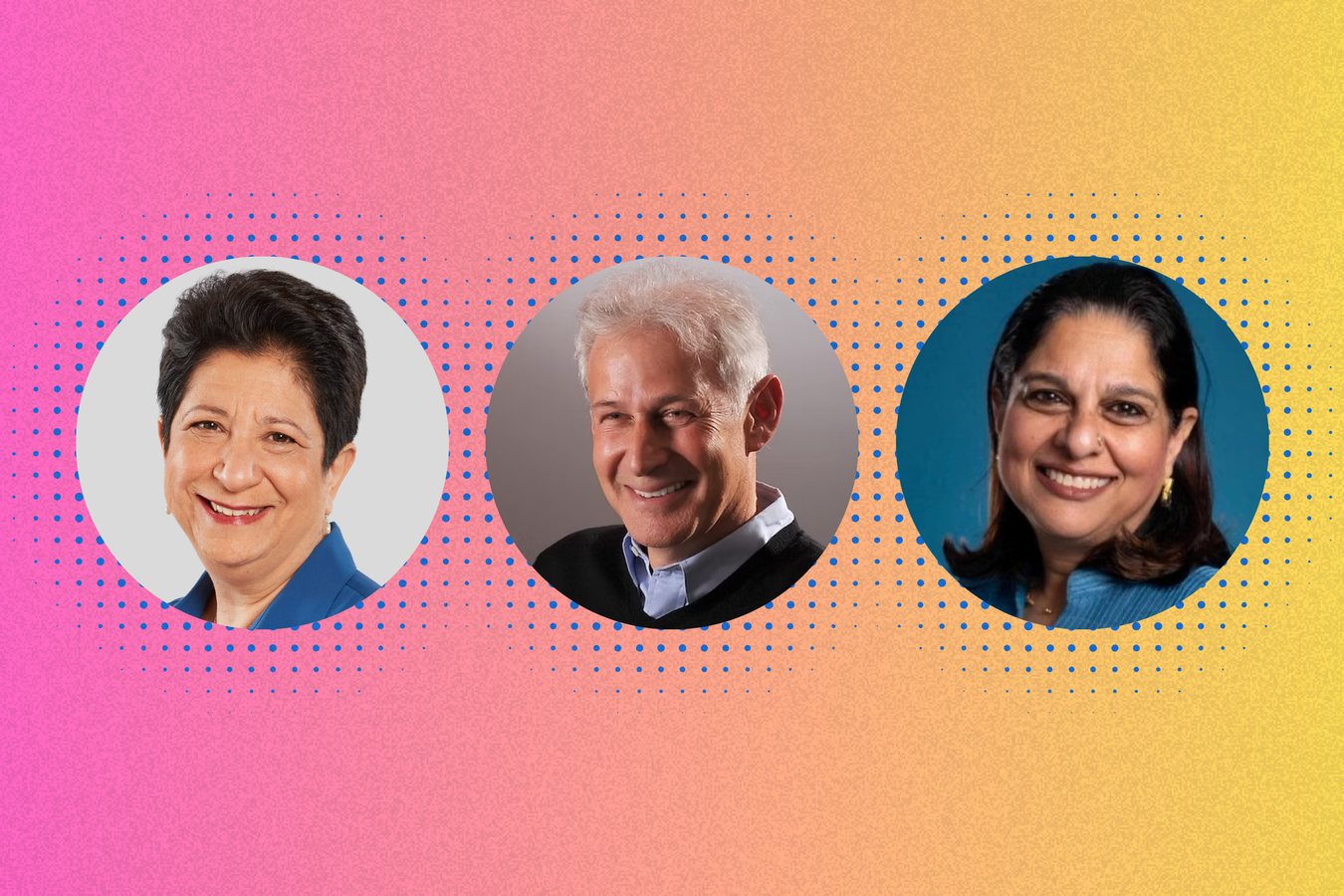
NEW YORK — Early childhood experts gathered at a TIME100 Talks panel on Wednesday to call for bold new approaches to early childhood development, warning that current efforts are insufficient to address deep disparities and prepare children for a rapidly changing world.
The panel, titled «Starting Strong: Reimagining Early Childhood for a Changing World,» featured Jack Shonkoff, professor of child health and development at Harvard University and director of Harvard's FirstPlace Partners; Pia Rebello Britto, global director of education at UNICEF; and Rosemarie Truglio, senior vice president of global education at Sesame Workshop. It was moderated by TIME executive editor Nikhil Kumar.
Shonkoff opened with a plea for action beyond platitudes. «My plea is: Let's move beyond quickly on the fact that children are our future, and say what we are going to do about that,» he said. «We need new ideas, we need to be bold.» He emphasized that the first years of life shape not only academic readiness but also lifelong health, resilience, emotional well-being, and brain development.
Britto outlined UNICEF's efforts to create «practical steps» to improve children's lives worldwide, focusing on three core areas: eat, play, and love. «Eat: We are working to ensure adequate, right, appropriate nutrition. Play: Because it's all about that interaction with children, the stimulation that sparks the brain connections,» she said. Love, she added, is «the foundation of it all.» She stressed the importance of human trust and protection, particularly for children affected by war and climate change. «How do you nurture that love?» she asked.
Truglio highlighted Sesame Workshop's role in the «play» component, emphasizing cognitive processing skills, self-regulation, and social empathy. «Our mission is to help kids grow smarter, stronger, and kinder,» she said, noting the importance of kindness for building a better future. «Boy, do we need more perspective-taking and collaboration and truly listening and seeing the people in our lives and treating them with compassion and respect.» Sesame Workshop uses media to teach these lessons with «joy and fun and happiness,» she added.
The panelists also addressed obstacles to implementing equitable programs. Shonkoff pointed to an «our children versus other people's children» mentality. «I think that the problem is that there's too much focus on what's good for my children and who cares about other people's children, whether it's in a country or around the world,» he said. «We all pay a price for that lack of finding common cause—that we all benefit from everyone in the world being healthier.»
Britto identified another challenge: convincing governments to invest in children as a public sector issue rather than leaving it to nonprofits or the private sector. «The universal aspiration of every adult, which is wanting the best for their child … has not converted to a vote-getting issue,» she said. «It hasn't converted into a commercial incentive, and it hasn't converted into a way that a country can stand tall, or a nation or a district can stand tall and say, 'We're doing this well.'»
To address this, UNICEF is bringing teachers, parents, and caregivers into conversations with policymakers to understand their needs. Sesame Workshop is similarly working to create «blueprints» for caregivers. «Let's just not create content in a vacuum,» Truglio said. «Go talk to the parents, talk to the teachers, talk to the administrators, and talk at the systems level because you could create all the content and it's going to sit in a drawer. We want this to be practical and useful.»
The experts also discussed the impact of artificial intelligence and rapidly evolving technologies on how children learn and how adults care for them. Shonkoff said that while AI will change early childhood education, fundamental needs like social connection will remain. «Social connection, which is like hunger and thirst for humans, it's survival. That's not going to change no matter what happens with the digital world,» he said.
Truglio said early childhood educators may apply AI with caution and specific purposes, and Sesame Workshop is exploring «developmentally appropriate» uses. «We have to increase the level of awareness and embrace it as a tool, but still hold sacred those fundamental cognitive early processing skills that children need, and that we just can't give onto a machine,» she said. «That would be a huge mistake.»
The panel was presented by Reliance.
6