6 minPolitics
Trump Says China 'Spies on Us' After Report Links Chinese Imagery to Deadly Iran Strike
President Trump acknowledged Chinese espionage after a Wall Street Journal report alleged Chinese entities supplied Iran with satellite imagery before a July 17 attack that killed three U.S. troops in Jordan. Trump said he would not confront Xi Jinping over the matter, calling it reciprocal behavior.
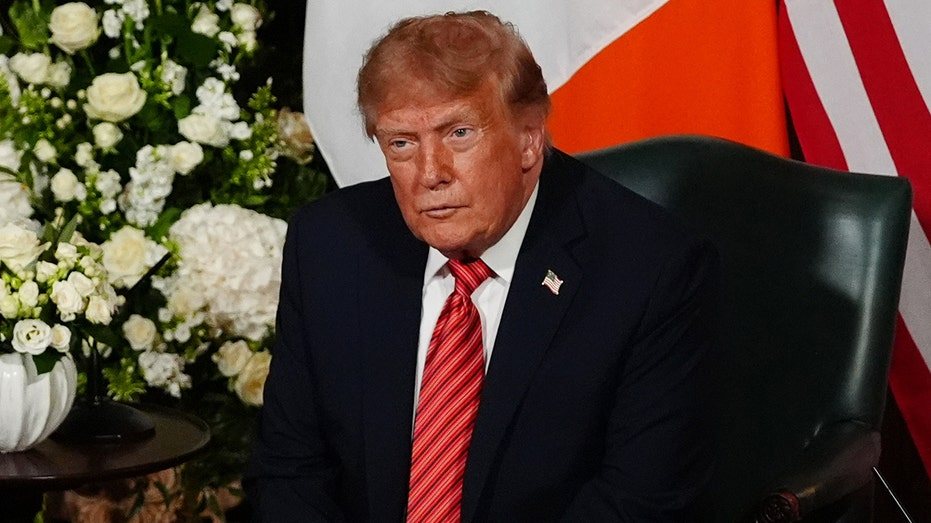
President Donald Trump said China «spies on us» just as the United States conducts espionage against China, responding to a report that Chinese entities provided Iran with satellite imagery ahead of a missile attack that killed three American troops in Jordan.
Speaking to reporters aboard Air Force One on Sunday, Trump was asked about a Wall Street Journal report alleging that Chinese entities supplied Iran with high-resolution satellite imagery of Muwaffaq Salti Air Base before Tehran's July 17 missile strike. «They basically do what we do,» Trump said.
The president declined to say whether he would raise the issue with Chinese President Xi Jinping when Xi visits Washington on Sept. 24 for a summit. Trump said Xi has «behaved reasonably well» and added that «we behave reasonably well.»
«You know what they say? That China spies on us. I say you're right, and we spy on them, too,» Trump said.
According to the Wall Street Journal, U.S. officials linked the imagery to Iran's July 17 strike on the Jordanian base, which killed three U.S. troops. Officials described it as the clearest evidence to date that support from Chinese entities for Iran during the war has had deadly consequences for American forces.
The U.S. officials did not identify the Chinese entities involved or accuse Beijing of direct involvement in the attack. The White House could not immediately be reached for comment.
The report adds a new dimension to the complex relationship between Washington and Beijing, which has been marked by tensions over trade, technology, and regional security. Trump's comments suggest he views Chinese intelligence activities as an accepted part of great-power competition rather than a provocation requiring a direct confrontation with Xi.
China has not publicly responded to the report. The Chinese embassy in Washington did not immediately comment.
The July 17 attack on Muwaffaq Salti Air Base in Jordan marked one of the deadliest incidents for U.S. forces in the region in recent years. The base hosts U.S. personnel as part of the international coalition against the Islamic State. Iran has not claimed responsibility for the strike, but U.S. officials have attributed it to Tehran-backed forces.
The Wall Street Journal report, citing unnamed U.S. officials, said the satellite imagery provided by Chinese entities gave Iran precise targeting information. The officials described the intelligence sharing as part of a broader pattern of Chinese support for Iran during its conflict with Israel and the United States.
Trump's remarks aboard Air Force One came as he returned from a weekend trip. He did not elaborate on what specific actions, if any, his administration might take in response to the report.
The president's scheduled summit with Xi on Sept. 24 is expected to cover a range of bilateral issues, including trade, Taiwan, and regional security. It remains unclear whether the satellite imagery report will be added to the agenda.
Trump has previously spoken positively about his relationship with Xi, describing the Chinese leader as a strong leader and expressing optimism about reaching trade agreements. His latest comments suggest he is not looking to escalate tensions over the espionage report.
The Pentagon has not commented on the Wall Street Journal report. The Central Intelligence Agency and the Office of the Director of National Intelligence also declined to comment.
China has long been accused of conducting extensive espionage operations against the United States, including cyberattacks and human intelligence gathering. The U.S. government has repeatedly warned about Chinese efforts to steal military and technological secrets.
The report about Chinese satellite imagery for Iran could complicate the administration's efforts to manage the relationship with Beijing. Some lawmakers have already called for a tougher stance against China, and the latest revelations may add pressure on the White House to respond.
Trump's comments, however, appeared aimed at downplaying the significance of the report. By acknowledging that the United States also spies on China, he framed the issue as a normal part of international relations rather than a violation of trust.
The three U.S. troops killed in the July 17 attack have not been publicly identified. Their deaths marked a significant escalation in the region and prompted calls for retaliation against Iran.
The Wall Street Journal report is the first to directly link Chinese entities to the attack. U.S. officials have previously said that Iran receives support from China, Russia, and North Korea, but they have not provided specific evidence of Chinese involvement in deadly strikes against American forces.
As the September summit approaches, the White House will need to balance its desire for cooperation with China on trade and other issues against growing concerns about Chinese intelligence activities. Trump's latest remarks suggest he prefers to treat espionage as a two-way street rather than a source of confrontation.