3 minPolitics
Judge Rejects Trump Administration's Bid to Halt Counting of 20,000 California Ballots
A federal judge denied the Trump administration's request to remove and set aside about 20,000 ballots that the government links to suspected non-citizens, and the Justice Department filed an appeal right away.
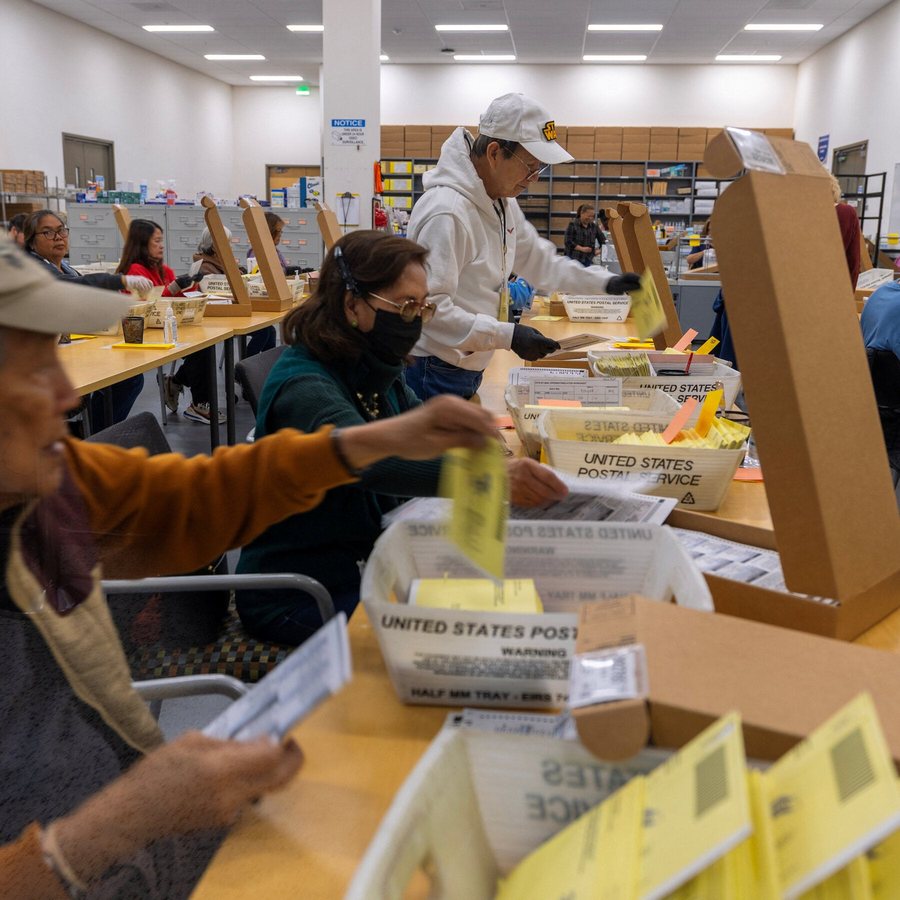
Federal Judge David O. Carter rejected the Trump administration's request to block the counting of about 20,000 ballots in California that, according to the government, may have been submitted by suspected non-citizens of the United States. The judge called the administration's claims "implausible," and the interference it sought violated a number of federal laws.
Federal prosecutor Bill Essayli, who represented the government's interests, said election workers are processing more and more ballots every day, and the ongoing situation, in his view, deprives American citizens of their right to vote through "dilution" of votes. He called it a "continuing emergency." The Justice Department promptly appealed the court's decision, so the issue is not yet finally resolved.
The request concerned ballots that, according to federal authorities, were sent by mail and reviewed by election workers in San Diego and other counties of the state. The administration insisted that such ballots be isolated from the rest and not be counted until the question of voter citizenship was considered. Photographs from the materials about the ruling show workers processing mail-in ballots in San Diego, as well as sorting ballots during early voting in San Francisco on October 21.
In his ruling, Judge Carter noted that the measures proposed by federal authorities would be incompatible with a number of federal laws governing the conduct of elections and the protection of the right to vote. He concluded that the government's arguments were not supported by sufficient evidence, and therefore denied the motion. The court found the government's reasoning to lack a sufficient legal and factual basis.
The conflict touches on one of the most sensitive issues on the eve of elections: the procedure for verifying voter citizenship and who has the authority to determine which ballots require separation. The ruling concerns the process of counting votes in the country's most populous state. Further consideration of the appeal will determine whether the federal government can achieve a different result, while for now the counting of ballots in California continues in accordance with the court's decision.
9