4 minPolitics
Republicans Urged to Embrace Reagan-Style Optimism for Midterm Elections
A conservative opinion piece argues that the Republican Party must project a hopeful vision of the future, similar to Ronald Reagan's 1980s messaging, to win the upcoming midterm elections. The article cites economic growth, tax cuts, and border security as key achievements to highlight, while warning against negativity and calling for personal testimony from small business owners and immigrants from socialist countries.
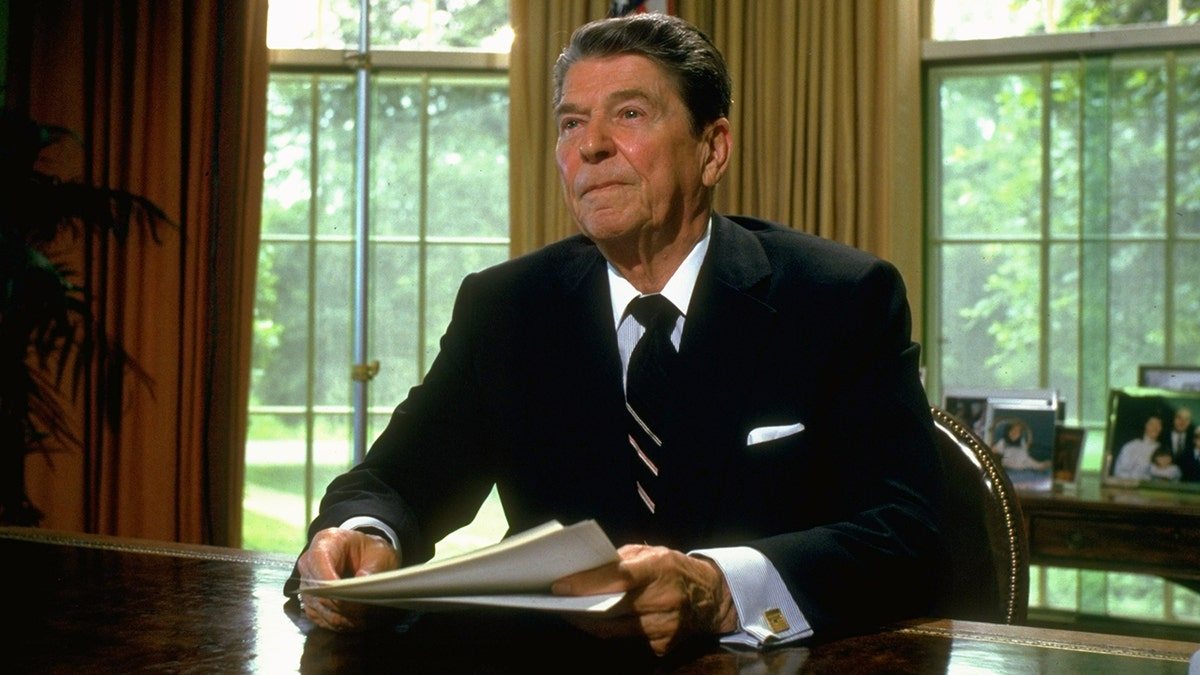
As the midterm elections approach, a conservative opinion piece contends that the Republican Party must adopt a Reagan-style optimistic vision to secure victory. The article argues that elections are not merely about gas prices, data centers, or federal checks, but about which party offers a hopeful future versus one mired in bitterness about the past. It points to the recent RNC convention as evidence that the GOP represents that hopeful future, with speakers including President Trump, J.D. Vance, and Robert Kennedy Jr. highlighting economic and social achievements.
The piece cites a boom in manufacturing and construction jobs, an investment surge from Trump tax cuts, a rising stock market, border security, and declining crime rates as key successes. It contrasts this with the Democratic Party, which it claims has been taken over by the Democratic Socialists of America (DSA) and now despises American values. The author insists that Republican candidates must translate this message into votes by appealing to voters' hearts, not just their minds, and by following the Ronald Reagan playbook.
Reagan, the article recalls, dominated politics for nearly a decade by projecting a hopeful picture of America as a «shining city on the hill.» Even when facing near-20 percent prime interest rates, negative GDP growth, and 10 percent unemployment in the early 1980s, Reagan's optimism never wavered. By rejecting decline, embracing individual enterprise, and securing peace through strength, he set the stage for the «Morning Again in America» era, with GDP surging to 6.8 percent and unemployment falling. The author suggests that if Reagan could inspire with such numbers, today's GOP has even more positive data to celebrate.
The article offers three strategies for Republicans to spread Reagan's message state by state and district by district. First, they should showcase how economic growth has improved lives, using real individuals—construction workers, waitresses, small business owners—to tell stories of better-paying jobs, higher wages, no tax on tips, and 100 percent expensing for businesses. This, the author argues, would make temporary gas price spikes seem less menacing. Second, they should bring the gospel of optimism to small business owners, who are the backbone of hiring and the economy. With 36.2 million small businesses, most are potential GOP voters once they understand which party supports them. Third, simply calling DSA-backed candidates «socialists» and «communists» is insufficient. Instead, Republicans should feature personal testimonies from those who fled socialist regimes in Cuba, Venezuela, Vietnam, the former USSR, and North Korea, to demonstrate that socialism is a dead end for human hopes and economic freedom.
The opinion piece concludes that Democrats can only offer hate, fear, and a discredited past, whether under Biden or Castro's Cuba. Republicans, by contrast, are the party of the future, including the human future. It ends with a quote from Reagan: «Together with God's help we can and will resolve the problems which now confront us. And after all, why shouldn't we believe that? We are Americans.»