5 minPolitics
House Republicans Push Budget Maneuver to Pass Trump-Backed Voter ID Bill
Speaker Mike Johnson and Rep. Bryan Steil are advancing key parts of the SAVE America Act through budget reconciliation to bypass a Senate filibuster, aiming to enact proof-of-citizenship and photo ID requirements for federal elections before the midterms.
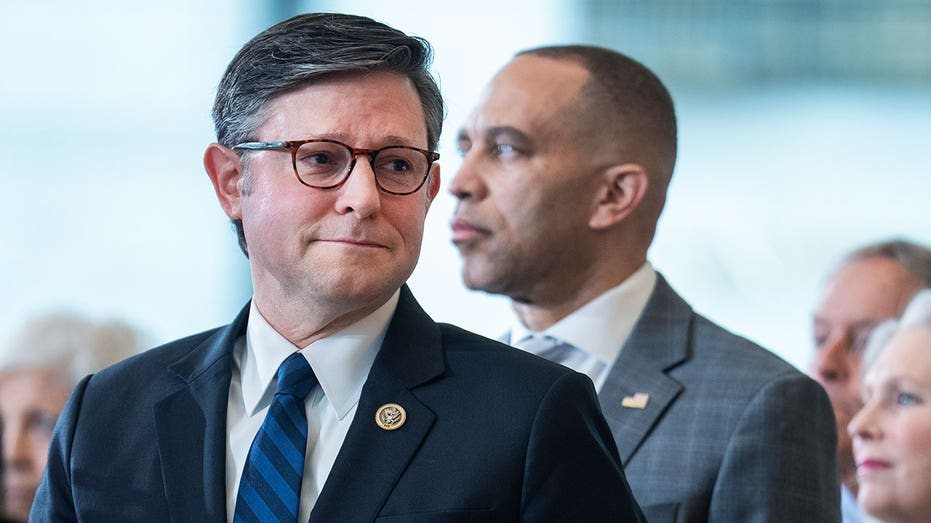
House Republicans are moving to enact central provisions of the Safeguarding American Voter Eligibility (SAVE) America Act through the budget reconciliation process, a procedural maneuver that would allow the party to bypass Democratic opposition and the Senate's 60-vote filibuster threshold. The election integrity bill, backed by President Donald Trump, has stalled in Congress, and Senate Majority Leader John Thune has been reluctant to bring it to the floor, where it is all but certain to fail without Democratic support.
Speaker Mike Johnson is now urging Republicans to use reconciliation to pass the bill's core mandates with a simple majority. Rep. Bryan Steil, chairman of the Committee on House Administration, is overseeing the effort. In an interview, Steil said he would prefer to pass the full SAVE America Act but acknowledged the Senate's procedural hurdle. «I'd rather pass the SAVE America Act. But recognizing that the Senate might not be able to get that done with the 60-vote threshold, let's leverage the parliamentary procedure, bring that threshold down to 50, and get some really commonsense reforms done,» he said, adding that he has been in productive talks with the administration and Senate colleagues.
Steil's panel, which has jurisdiction over federal election law, aims to include two key portions of the original bill in the reconciliation package: a proof-of-citizenship requirement for voter registration and a nationwide photo ID rule for casting a ballot. He expressed hope that Congress could pass a reconciliation bill containing these measures before the November midterm elections but conceded that «the clock is ticking down pretty quickly.» The budget reconciliation process is lengthy, with Republicans having taken roughly half a year to use it for Trump's One Big, Beautiful Bill Act last year.
The procedure requires both chambers to pass budget frameworks with instructions for committees to enact policies that spend or cut funding to specified amounts. Those committees then pass their portions, which are combined into a single massive bill by the House and Senate budget committees. Identical bills must pass both chambers before reaching the president's desk. A major complication is the Senate parliamentarian, who reviews the reconciliation draft and removes provisions that do not directly impact the federal budget, tax policy, or national debt.
Steil argued that parts of the SAVE America Act could survive that filtration by affecting funds distributed to states through the Help America Vote Act (HAVA), a 2002 election reform law. «We could free up those funds or enhance those funds for states to do those post-election audits, which is a really important part of election integrity. You can do the same in regards to photo ID,» he said. He also suggested that making REAL ID the standard could effectively enforce the citizenship mandate, noting that «when an individual gets REAL ID, they're proving their citizenship.»
The White House is backing the reconciliation strategy. Earlier this year, Office of Management and Budget Director Russell Vought told Republicans at a closed-door meeting that the administration supported using the process for the SAVE America Act and argued it was the best path forward for the GOP's election reforms, according to multiple people in the room. Steil confirmed that «the White House is engaged» and that conversations have been productive.
The House passed its version of the reconciliation bill earlier this summer, a $95 billion budget aimed at replenishing the U.S. military and enhancing election security. In the Senate, Budget Committee Chairman Ron Johnson unveiled his committee's framework just before the August recess, calling for up to $150 billion in spending — a significant difference from the House figure. Speaker Johnson acknowledged that gap last month, warning that adding more provisions complicates the process and slows it down. «We're very close to an election, the stakes are very high, the timing is short,» he said.
Democrats have fiercely opposed the SAVE America Act, describing it as an attempt to sow doubt in U.S. elections at best and voter suppression at worst. With the midterms approaching, the timeline for passing the reconciliation package remains tight, and it is unclear when the Senate Budget Committee will advance its framework or hold a vote.