5 minEconomy
Fed Chair Kevin Warsh Faces Rate Decision as Economy Shows Overheating Signs
Federal Reserve Chair Kevin Warsh must decide whether to raise interest rates for the first time in three years, with markets pricing in a quarter-point hike as oil, bond yields, and credit demand surge.
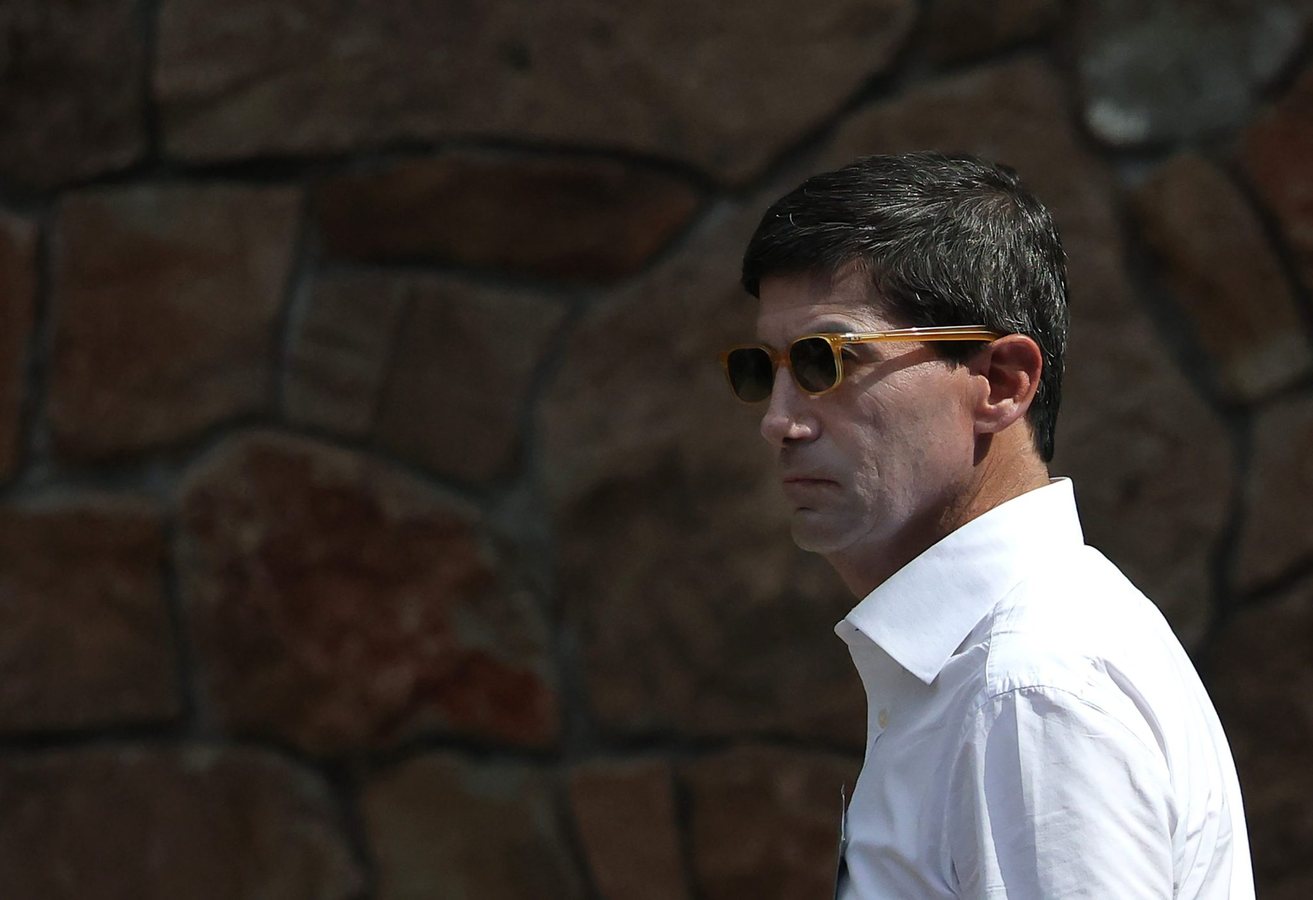
Federal Reserve Chair Kevin Warsh is confronting the central bank's most consequential decision in three years: whether the U.S. economy is overheating and requires a quarter-point interest rate hike. Markets have priced in the increase with near certainty ahead of Wednesday's announcement, but the debate over whether this marks a one-time adjustment or the start of a new tightening cycle remains unresolved.
The case for overheating rests on a pileup of signals. Oil prices hover around $110 a barrel. The 10-year Treasury yield has pushed above 5%, its highest level since 2007. U.S.-dollar debt issuance to finance artificial intelligence and data-center development reached $308 billion through July, competing directly with a national debt that crossed $40 trillion less than a month ago. Stocks remain up roughly 11% this year despite recent turbulence, and inflation sits above 3%.
Jon Hilsenrath, former Wall Street Journal Fed reporter and founder of Serpa Pinto Advisory, argues the evidence points clearly toward an overheating economy. His preferred metric is nominal GDP, the total dollar value of economic output without adjusting for inflation. Nominal GDP grew about 6% year-over-year in the first quarter and more than 6.5% in the second. If the economy expands roughly 2% annually and the Fed targets 2% inflation, nominal growth near 4% would represent equilibrium. At 6% or 7%, Hilsenrath contends something must give: either an unusual productivity boom has taken hold, or demand has outpaced the economy's capacity to produce.
He points to several proximate causes converging at once: a federal budget deficit running around 6% of GDP, the historic AI investment boom, and the delayed effects of 175 basis points of rate cuts in 2024 and 2025. «It sure does look like the economy is overheating,» Hilsenrath said.
Goldman Sachs sees nearly the opposite picture. Its economists argue there is «not a strong economic case» for hiking at all. Their Bottlenecks Tracker, which monitors factory-capacity constraints, labor shortages, and wage pressures, shows those symptoms are slightly less widespread than before the pandemic, except in a few industries tied to the AI boom. Goldman attributes much of the current inflation overshoot to tariffs and other supply shocks that higher interest rates cannot address. «The economy is not overheated,» its economists wrote, «which is the usual rationale for raising rates.»
Mohamed El-Erian, Wharton professor of practice and chief economic adviser at Allianz, framed the uncertainty around four questions: whether oil-supply disruptions persist with China potentially acting as a «swing consumer»; whether Treasury Secretary Scott Bessent intervenes again to influence long-end yields; whether this week's hike proves «one and done» or the beginning of a cycle; and how markets balance AI's enormous promise against its enormous risks.
The bond market may already be doing the Fed's work, as a 5% 10-year yield pushes up borrowing costs across the economy. Alternatively, the yield spike could signal that inflation, deficits, and debt issuance are becoming entrenched. The AI boom presents a similar duality: if hundreds of billions poured into data centers lift productivity, the old 2% «speed limit» could be too low. In the short run, however, the same boom acts as an enormous investment-demand shock, increasingly financed through credit markets and concentrated among companies wealthy enough that another quarter-point hike may barely alter their plans.
Bessent's Treasury has expanded buybacks of longer-dated debt even as the Fed considers tightening at the short end, leaving the two institutions engaged in a tug-of-war on different parts of the same yield curve. The last time the Fed began raising rates, in March 2022, Jerome Powell's Fed ultimately raised its benchmark rate by 525 basis points over 16 months. Whether Warsh's answer to the overheating question produces a similar trajectory or a single adjustment will shape borrowing costs for households, businesses, and a federal government already managing $40 trillion in debt.