5 minBusiness
Walmart CEO John Furner Bets on AI to Transform 5,200 U.S. Stores
Walmart CEO John Furner is consolidating the retailer's technology teams and deploying artificial intelligence across its 5,200 U.S. stores, aiming to close the online sales gap with Amazon while leveraging its vast physical footprint.
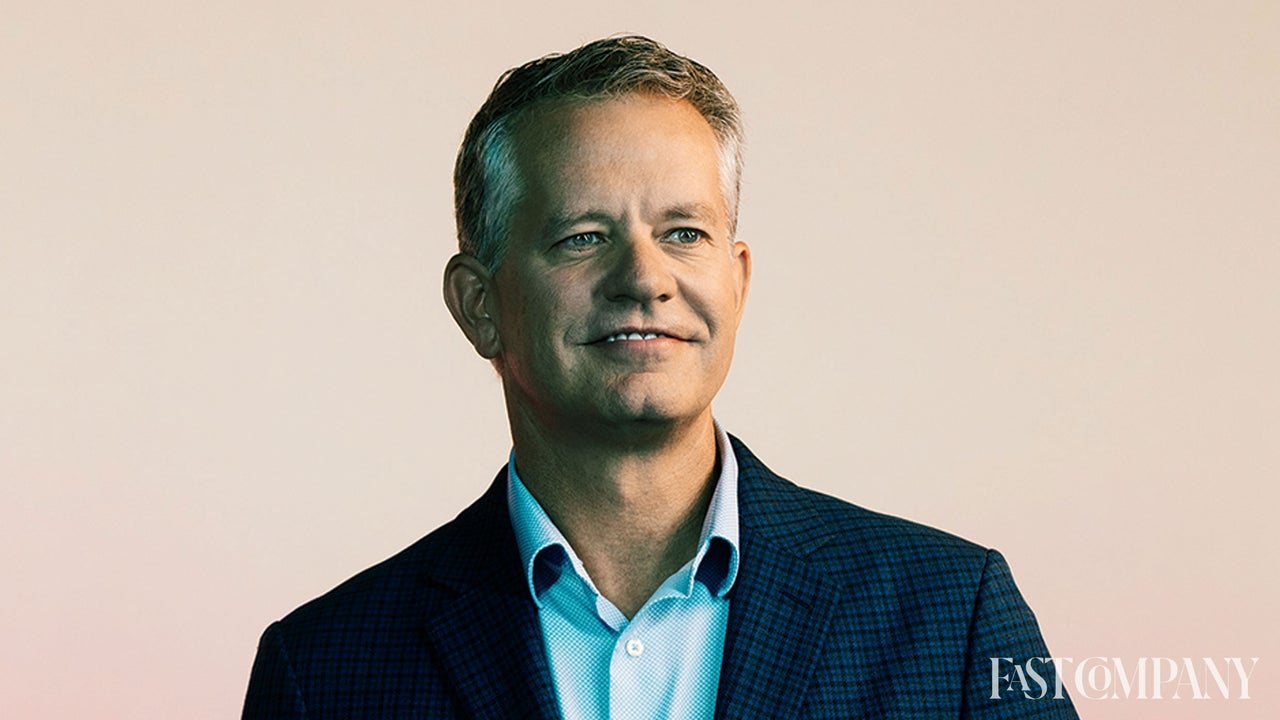
Walmart CEO John Furner is betting that artificial intelligence will remake the retailer's 5,200 U.S. stores into a seamless digital engine, consolidating technology teams and deploying AI tools that guide workers, speed deliveries, and challenge Amazon's e-commerce dominance.
Furner, who took the top job in February after leading Walmart U.S. and Sam's Club, has made the strategy explicit: «build once, expand globally.» The approach aims to develop technology centrally and release it across the organization, from store floors to delivery routes. The company's AI shopping agent, Sparky, launched last year when Furner ran Walmart U.S., is already showing results. Usage is doubling quarter over quarter, and users spend roughly 35% more than nonusers, according to company figures.
Inside stores, the changes are tangible. Paper price tags are giving way to digital ones that update instantly. Associates carry handheld devices that help them navigate aisles, locate items, and answer customer questions in dozens of languages. Online-order pickers follow AI-generated routes to fill baskets faster. Robots scrub floors and tape boxes, while AI routes trucks and flags shelves that need restocking. Walmart is also urging employees to take ChatGPT and Gemini certification courses and to use an internal coding tool to automate parts of their jobs.
Furner used Walmart's Associates Week in Fayetteville, Arkansas, to pitch the transition directly to workers, telling them AI is not a threat to their careers but the skill set that will keep them relevant. «It's our responsibility to help you build the skills that will lead the future of retail,» he said. «The future of Walmart.» The message matters for a workforce of 2.1 million, many of whom have watched automation reshape their daily tasks.
The stakes are high because Walmart's digital growth is real but still trails Amazon. Walmart reported that its stores now fulfill 80% of e-commerce sales, which grew 24% in the quarter. The company also recorded its slowest growth in comparable sales in six years, though Furner raised the full-year outlook and noted that «there is more volume going through stores today than there ever has been, and it's growing.»
Walmart's advantage is physical. More than 5,200 stores sit within 10 miles of 90% of Americans, a footprint Amazon cannot match. That proximity powers a 30-minute delivery service now available across 33 markets and supports a new restaurant delivery partnership with Subway, hinting at more deals to come. Behind the scenes, AI maps inventory with speed and precision, providing the backbone for those fast deliveries.
The financial picture shows why Furner is pushing. Amazon and Walmart generate nearly identical overall revenue—Amazon reached $717 billion in 2025, while Walmart hit $713 billion in its fiscal 2026, which ended January 31, 2026. But Amazon remains the undisputed online leader, with $440 billion in online sales in 2025 compared with Walmart's $110 billion in FY 2026. Furner's plan is to use the stores as a digital asset that Amazon lacks, weaving them into a delivery and service network that can close the gap.
Furner's path to the CEO role gives him credibility with the workforce. He started at 18 as a part-time associate in the garden center of Walmart Store 100 in Bentonville, Arkansas, then rose through roles including assistant store manager, district manager, buyer, and head of marketing and merchandising for Walmart China. He became CEO of Sam's Club in 2017, took over Walmart U.S. two years later, and ascended to the top job in February. He succeeds Doug McMillon, who spent 12 years rebuilding Walmart into a digital powerhouse and quadrupled its market value.
Now Furner wants to supercharge that growth. By consolidating tech teams and pushing AI into every corner of the operation, he is positioning Walmart as a store of the future—one that anticipates what customers want, delivers it in minutes, and guides them between screen and store. For rivals like Target and Costco, and for Amazon, the question is whether Walmart's 5,200 stores become an unstoppable advantage or an expensive experiment.