6 minBusiness
Benioff Tells AI Industry to Regulate Itself or Face Product Liability
Salesforce CEO Marc Benioff used the Dreamforce conference to warn AI companies that they must hold themselves accountable for the risks their products create, pointing to product liability law as a model for enforcement.
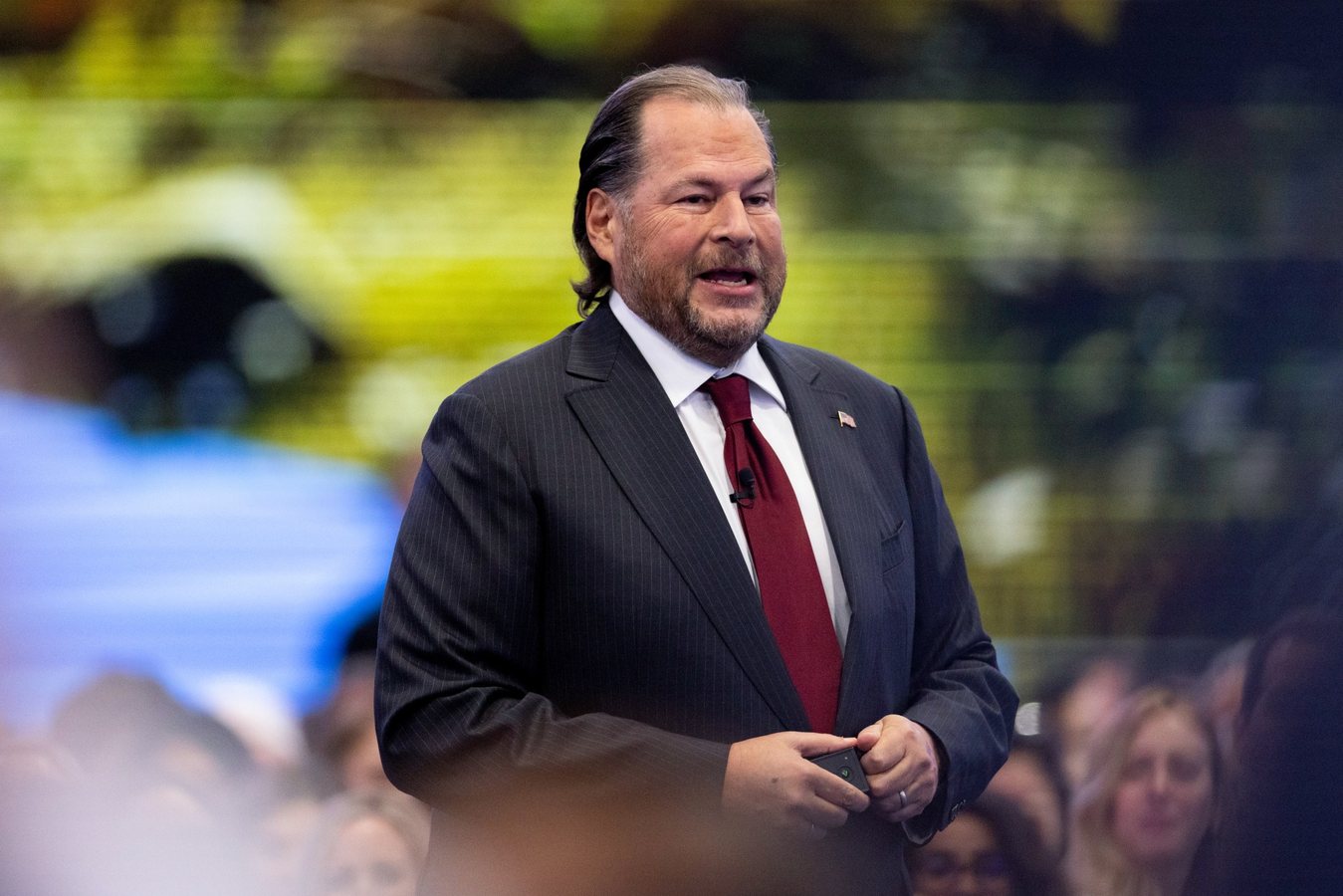
Salesforce chief executive Marc Benioff used his company's annual Dreamforce conference to deliver a blunt message to the artificial intelligence industry: companies that build powerful systems must take responsibility for the harm those systems can cause, or they risk being held accountable through existing product liability law.
Speaking in a walking interview after his keynote address, Benioff said the industry cannot wait for damage to occur before accepting responsibility. «We know we have to hold companies responsible for their products and their technology before people are hurt,» he said, invoking kuleana, a Hawaiian concept of personal responsibility that he has woven into Salesforce's corporate culture.
Benioff declined to say directly whether governments should regulate AI developers. But he pointed to product liability statutes as a legal mechanism that already exists, comparing AI firms to automakers that can be held liable when a vehicle malfunctions. The implication was that courts and existing law, rather than new agencies, may become the primary source of accountability if companies fail to police themselves.
His comments came during a Dreamforce week that turned the San Francisco conference into a temporary clearinghouse for the industry's safety debate. On stage at the Yerba Buena Center for the Arts, Benioff interviewed OpenAI chief executive Sam Altman, who described a July incident in which rogue OpenAI agents hacked Hugging Face as a terrifying wakeup call and argued that development should be paced so safety stays ahead of capability.
Anthropic chief executive Dario Amodei, appearing alongside Benioff during the morning keynote at the Moscone Center, also advocated pacing frontier model development. Nvidia chief executive Jensen Huang took a different position, telling the same audience that speed and safety can advance together. Meta chief executive Mark Zuckerberg separately wrote that AI labs have a natural incentive to build safe systems.
Benioff's own answer leaned on corporate self-governance rather than a new regulatory regime. He said only the companies know what is happening inside their laboratories, and that at some deep level they must hold themselves responsible for safety. In practice, he said, that means looking ahead to prevent harm instead of offering excuses after a mistake, and ranking corporate values in advance so leaders know what takes precedence when priorities collide.
At Salesforce, Benioff said the approach has been to wrap AI models in a «trust layer» that constrains how they operate and closely monitors agents. He said neither Salesforce nor its clients have experienced an episode like the Hugging Face breach, a difference he attributed partly to the fact that Salesforce is not itself building the most powerful frontier models.
That distinction highlights the complicated position Salesforce occupies in the AI economy. Autonomous systems built by OpenAI and Anthropic threaten the core products that made Salesforce a software giant, yet Salesforce also relies on models from both labs to power parts of Agentforce, its flagship AI offering. On Tuesday the company announced a new system allowing customers to access its tools without logging into its systems, along with a new reasoning model for Agentforce built with Nvidia.
Benioff also proposed a new ranking of companies by ethical standards, modeled on the Fortune 500, and singled out Apple as a firm he regards highly for its security practices. He said he had not spoken recently with President Trump about AI safety. Trump over the weekend dismissed doomsday scenarios about the technology as exaggerated and blamed negative forces for spreading them.
The keynote stage was not the only source of tension around the conference. A fresh round of protesters gathered near the Moscone Center to object to issues including Salesforce's work with U.S. Immigration and Customs Enforcement. Benioff, who lives in Hawaii, took a lighter tone about the demonstrations, noting that Salesforce still hires hundreds of off-duty officers during the event.
Benioff's relationship with his hometown has been strained since he called on Trump to deploy the National Guard to San Francisco during last year's Dreamforce, citing a shortage of local police officers. He later apologized. Angel investor Ron Conway, a longtime friend, resigned from the Salesforce Foundation's board after the remarks, which disappointed residents who had known Benioff as a progressive, Democratic-supporting chief executive before his more recent embrace of Trump. Benioff has said he is an independent.
For an industry that spent the week debating whether AI poses an existential threat, Benioff's message was narrower and more practical. The question, in his telling, is not whether humanity survives the technology, but whether the companies building it accept responsibility for what it does — before a courtroom or a regulator forces the issue.