5 minBusiness
ASML ties CEO pay to employee engagement after survey shows morale decline
ASML will link senior leaders' long-term incentives, including CEO Christophe Fouquet's, to a new Workplace Experience Index after engagement fell to 73.5% following a year of restructuring and job cuts.
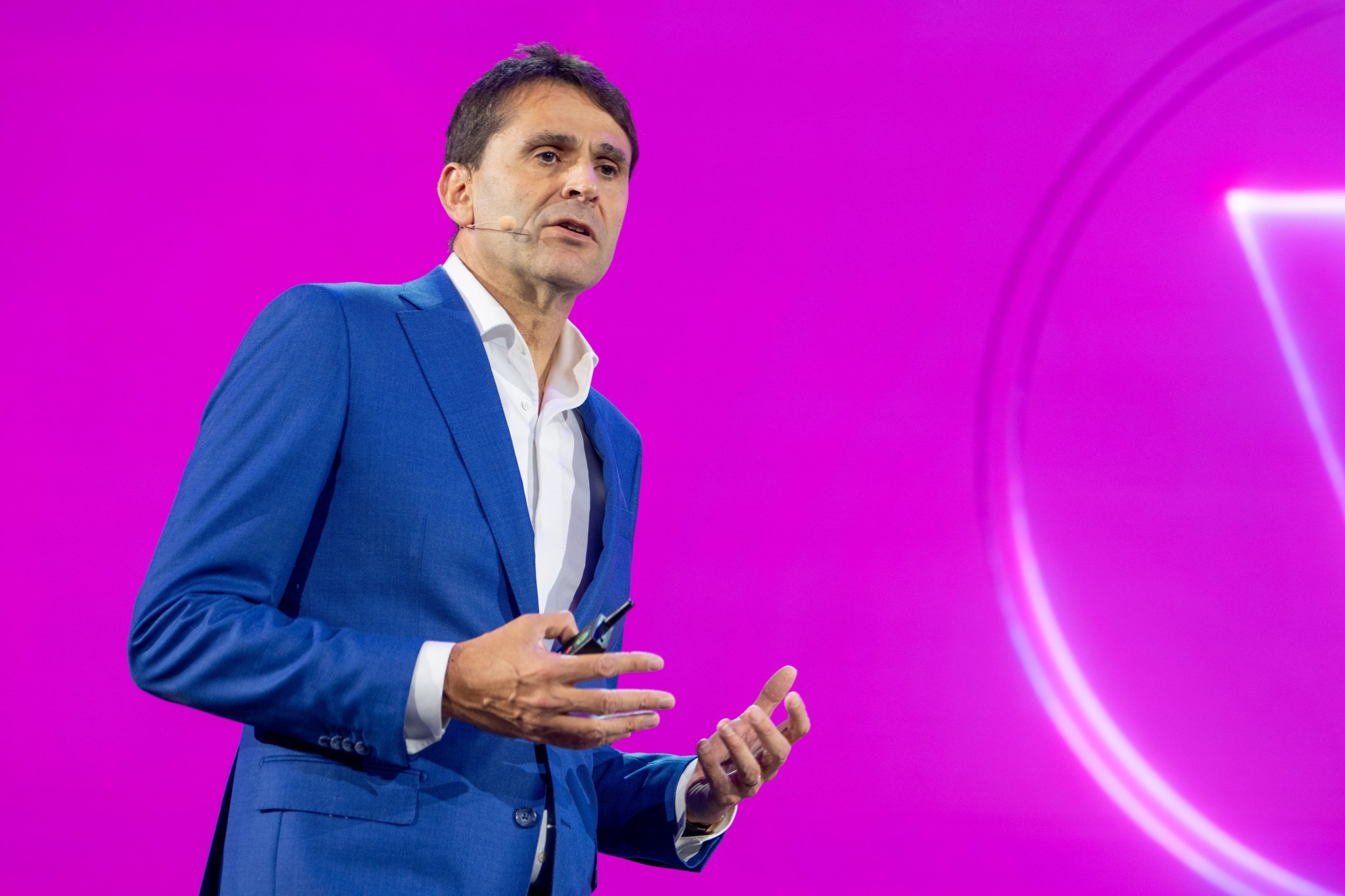
ASML will tie the pay of its top leaders, including CEO Christophe Fouquet, to how employees feel about working at the Dutch chip-equipment maker. In a memo to staff first reported by Business Insider, Fouquet said a new Workplace Experience Index will be built into the long-term incentive plan for senior leaders, including the Board of Management. "In the coming years, it will directly influence the remuneration of senior leaders, including the Board of Management," Fouquet wrote.
The move follows ASML's annual employee survey, which showed the company's engagement index fell to 73.5% this year from 78% in 2025. More than 38,000 of the company's roughly 44,000 employees took part. Fouquet acknowledged that the drop came after a "disruptive and emotional year" for the company. The memo does not say how much weight the index will carry in executive pay or when it will first be applied.
The index is based on six survey questions. They cover whether employees trust senior leadership to make the right decisions, whether they feel safe speaking up, whether they understand their roles, whether they believe their teams operate effectively, and whether they feel their direct manager cares about them. Business Insider noted that linking top executives' compensation to engagement is uncommon but not unprecedented, and that IBM and Aviva have previously included engagement in their executive pay targets.
The timing reflects a turbulent period for a company that sits at the center of the AI boom. ASML is the world's only supplier of extreme ultraviolet lithography machines, which are essential for producing the most advanced semiconductors. The company benefited from the heavy spending by technology giants on AI infrastructure and posted a record net profit of €9.6 billion in 2025.
Even so, on the day it reported those results in January, ASML announced plans to cut about 1,700 positions, roughly 3.8% of its workforce. Most of the cuts were to be in management roles within its technology and IT organizations in the Netherlands and the United States. The company said the aim was to strip out bureaucracy and free its engineers to focus on innovation. Dutch unions pushed back. The CNV union said it was "completely taken aback" by the plan.
ASML ultimately negotiated a social plan with four unions, FNV, CNV, De Unie and VHP2, agreed in principle in May and finalized in June. The deal bars compulsory layoffs until May 1, 2027, and relies on internal redeployment, which the company said could save several hundred jobs. In his memo, Fouquet linked the decline in engagement to that upheaval and to the restructuring turmoil.
The approach runs against a broader trend in the tech sector, where long hours and repeated layoffs have become common. U.S. employers announced about 1.2 million job cuts in 2025, the most since 2020, according to the outplacement firm Challenger, Gray & Christmas, and technology led the private sector with 154,445 announced cuts. Cuts have continued in 2026, with the tech sector's 165,925 cuts through September up 54% and accounting for 29% of all announced job cuts.
Martijn Hendriks, deputy scientific director of the Erasmus Happiness Economics Research Organization, who has studied employee engagement and CEO compensation, said ASML faces a different calculation because of its specialized workforce. "The reason ASML does this is because for them attracting talent and keeping talent is like crucial," Hendriks told Fortune. "They invest a lot in well-being because these people are so specialized that replacing them just costs a lot of money."
The decision also arrives as executive pay draws scrutiny. According to a study by the International Trade Union Confederation and Oxfam, the 1,500 top-paid CEOs worldwide received an average 11% real-terms raise in 2025, while the average worker saw 0.5%. Hendriks said there is generally no direct link between engagement and CEO pay, but he noted that engagement can decline sharply when coverage spotlights extreme pay packages.
9