4 minBusiness
SpaceX finishes engine testing for Starship Flight 15 in eight days
SpaceX completed all engine static fires for Starship Flight 15 in eight days, while also advancing catch testing for Flight 16 and launch-pad work at Starbase.
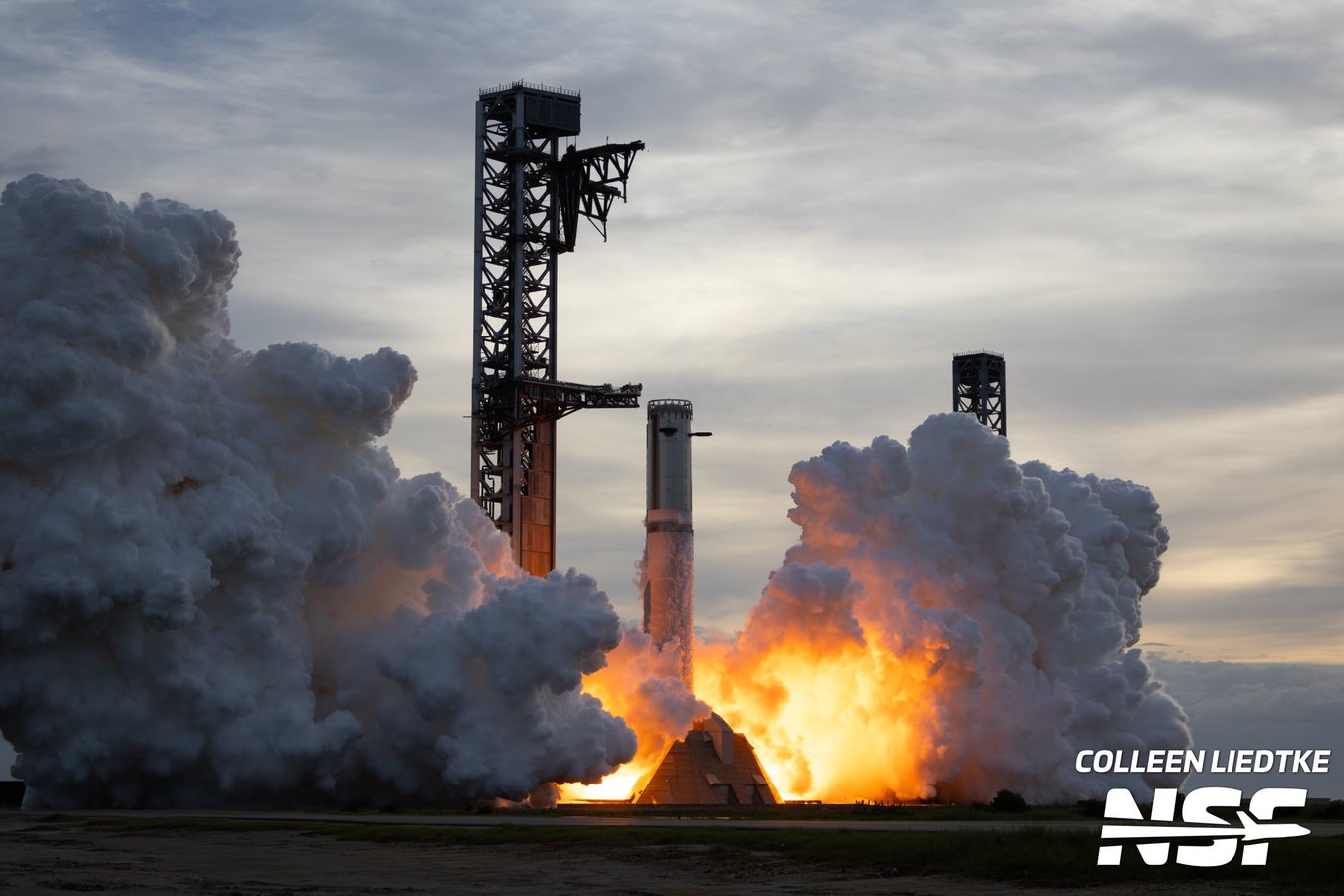
SpaceX has completed all engine testing for Starship Flight 15, finishing three static fires in three days and wrapping up an intense eight-day stretch at its Starbase facility in Texas. The company also carried out catch-related testing for Flight 16 and lifted the top deck deluge plates onto the launch mount at Pad 1. Engineers describe the past week as one of the busiest in the history of the Starship program.
The Super Heavy booster for Flight 15, designated Booster 22, was rolled out to Pad 2 on October 24 and installed on the launch mount that morning. After completing preparations, SpaceX ignited all 33 Raptor engines early on October 25 for a full-duration, 15-second static fire. The booster was then returned to Mega Bay 1 in the early hours of October 26 and placed on a work stand for final preparations before flight.
The Starship upper stage, Ship 42, was moved to the Massey's test site during the night of October 26. There it completed a single-engine header tank static fire on October 26 to simulate an in-space deorbit burn. On October 27 it completed a 60-second, six-engine static fire, the normal duration for Block 3 ships. The ship then returned to Mega Bay 2 on October 29 for final flight preparations and inspections, including its Flight Termination System charges, before being loaded with Starlink satellites.
Preparations for Flight 16 also advanced. Ship 43 rolled out to Massey's on October 22 and completed both cryo-proof tests on October 23. It then moved to Pad 2 for ship catch testing, where it was lifted to catch height and lowered to bring in the Ship Quick Disconnect plate. SpaceX performed similar safing testing with Ship 42 in mid-September. The team also ran a catch test in which the chopsticks lifted the ship without its stabilizers, and pushers on the landing rails aligned it with the stabilizers before hooking in. Teams have already caught Super Heavy boosters this way, but have not yet caught a ship, so the work uses non-flown vehicles to build experience in ship safing and operations.
After testing, Ship 43 returned to Mega Bay 2 on October 27 and was placed on a back work stand, where it will receive its engines before a static fire campaign expected later. Booster 23 went to Massey's for cryo testing and returned to Mega Bay 1 early on October 30 without visible testing results.
SpaceX counted ten ship and booster rolls, five tests involving loaded tanks, three of them static fires, and a full slate of ship catch testing between October 22 and the end of the period. Company updates also indicate the no-earlier-than date for Flight 15 has moved to November 12. That timing could slip further, because bringing a ship back to the launch site requires extensive regulatory paperwork, which the company identified as the main factor in setting the launch date.
Work at Pad 1 continued alongside the flight preparations. The main floor is still progressing, one flame trench ramp has been poured with concrete, and the team has installed all five A-frame supports on the center floor along with the center ridge cap. Ship 44 has received its raceways after final stacking, and Ship 45 is currently in assembly with its nose cone, payload bay and forward dome sections. Should SpaceX catch both Ship 42 and Ship 43, storage could become a constraint unless several ship stands at its Giga Bay facility become operational within a few months.
8