6 minWorld
U.S. Backs $14 Billion Undersea Cable to Route Southeast Asia's Internet Around the South China Sea
The U.S. Trade and Development Agency is funding a feasibility study for a trans-Pacific subsea cable linking Thailand, the U.S., and five other Southeast Asian nations while deliberately bypassing the South China Sea, as Washington seeks to keep the region's digital infrastructure out of China's reach.
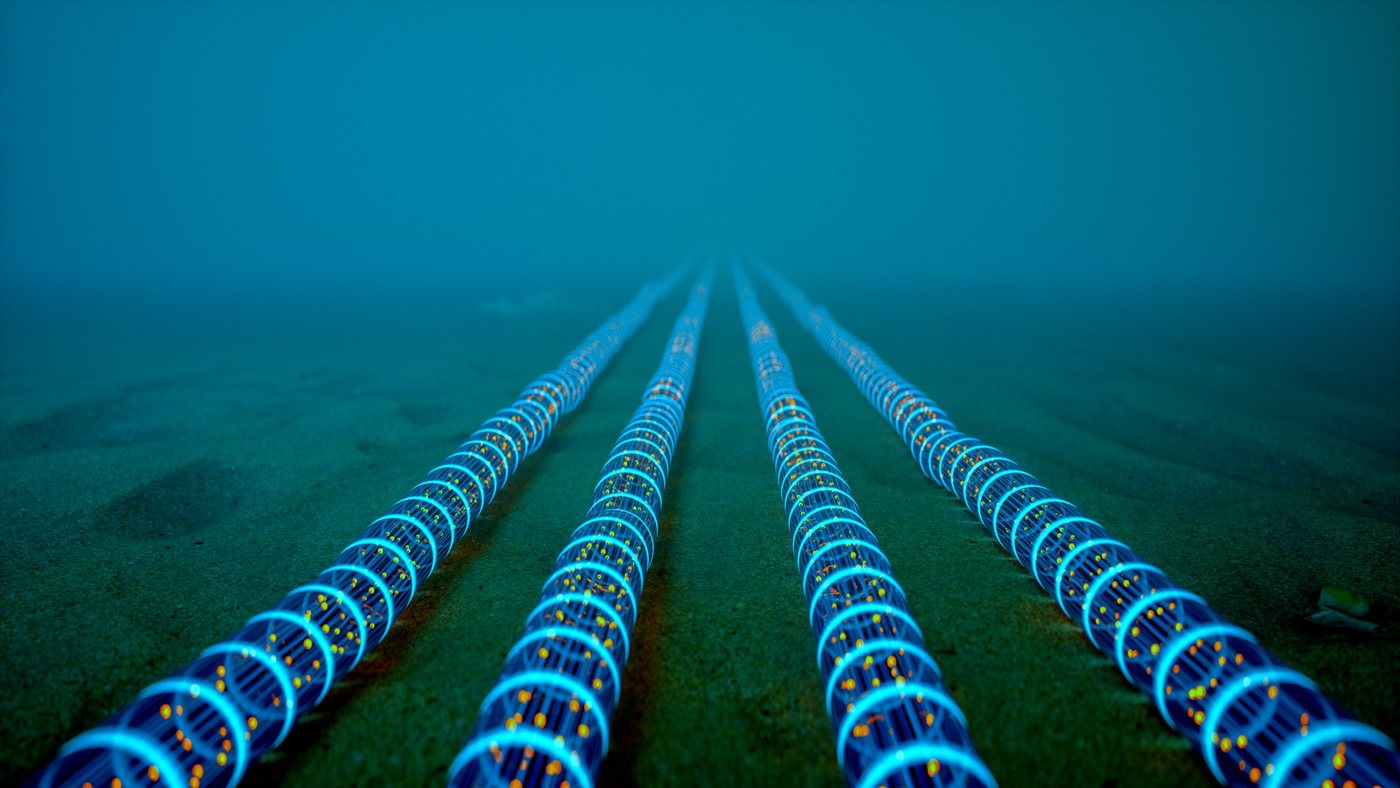
The United States is bankrolling a new trans-Pacific undersea internet cable designed to deliberately skirt the South China Sea, part of a broader effort by Washington to keep Southeast Asia's digital infrastructure out of China's orbit. The U.S. Trade and Development Agency said on Sept. 14 that it would fund a feasibility study for a subsea cable linking Thailand, the United States, and five other Southeast Asian countries along a route that avoids the contested waters.
The proposed cable, if built, is estimated to cost more than $14 billion, according to figures cited by Bloomberg. The USTDA has not issued its own cost estimate. Thailand's state-owned telecommunications operator, National Telecom, is leading the prospective project and aims to raise capital through an international consortium of co-investors from neighboring Asian nations. The route may also pass through Indonesia, Singapore, Malaysia, Vietnam, and the Philippines.
Subsea cables are fiber-optic lines laid on the ocean floor that carry more than 99 percent of global internet traffic. Only one cable, the Asia-America Gateway built in 2009, currently connects the United States and Thailand. That cable has become notorious for frequent outages, particularly along its intra-Asia section between Singapore and Hong Kong, with most faults occurring on the segment near Vietnam. When it fails, countries such as Cambodia and Malaysia have few alternatives for rerouting traffic.
«It is only natural that a new cable be built, both for resilience and capacity reasons,» said Asha Hemrajani, a senior fellow at Singapore's Nanyang Technological University. «The aging AAG has experienced several serious outages, so it looks like the new cable is intended to be a next-generation successor to it.»
Operators and insurers prefer routes that avoid the South China Sea. China claims sovereignty over much of the sea, overlapping with similar claims from Vietnam, Brunei, Indonesia, Malaysia, and the Philippines. Under Chinese domestic regulations, cable work in its inland waters, territorial sea, and continental shelf requires prior approval and notification.
«Subsea cables regularly require maintenance, and if a cable goes down, it needs to be repaired in a time-sensitive manner,» Hemrajani said. «Thus, cable operators and insurers prefer to avoid the South China Sea due to additional uncertainty and trouble.»
Muhammad Faizal Bin Abdul Rahman, a research fellow at NTU, said geopolitical crises in the Middle East and Europe have demonstrated that conflicts can trigger cyber or physical disruptions to subsea cables. «The U.S. and its Asia-Pacific allies believe that China could use similar tactics,» he said. «The U.S. is reportedly planning for potential military conflict around the South China Sea, and so is China. It makes practical and economic sense for new subsea cables to avoid the South China Sea.»
The project reflects Washington's continued drive to control the infrastructure underpinning the internet and the artificial intelligence boom. Southeast Asia may end up caught between two competing technology ecosystems, one led by Washington and the other by Beijing. Singapore joined Washington's Pax Silica alliance last December but is also reportedly considering an invitation to join the China-led World Artificial Intelligence Cooperation Organization. The Philippines has joined Pax Silica, while Cambodia, Indonesia, Laos, Malaysia, and Myanmar are part of China's alliance.
«Southeast Asian countries need to re-evaluate what neutrality means today for each of them, and how policy decisions across sectors collectively determine whether they are too dependent on any major power during times of peace or crisis,» Muhammad said.
This is not Washington's first attempt to route subsea cables around China. The Pacific Light Cable Network, initiated in 2015 with backing from U.S. tech giants Meta and Google, was originally set to link California with Hong Kong's Deep Water Bay. In 2020, Washington blocked the U.S.-Hong Kong connection, citing national security concerns over the cable's connection to its China-based parent entity, Dr. Peng Telecom & Media Group. The cable now links the United States with Taiwan and the Philippines, both American allies. Other trans-Pacific systems, Bifrost and Echo, are routed further south through the Celebes Sea to connect the United States with Singapore and Indonesia.
China is pursuing its own cable network. In 2023, Reuters reported that Chinese state-owned telecom firms were developing a $500 million undersea fiber-optic network to link Asia, Europe, and the Middle East. But cables are only part of the competition. Subsea cables must eventually come ashore through landing stations, where they connect to local infrastructure.
«Washington will double down on extending its influence and control over the full subsea and land-based infrastructure ecosystem,» said Alex Capri, a senior lecturer at the National University of Singapore. «And as China races to build its own subsea cables, affected countries may be faced with accommodating two parallel tech stacks. The alternative will be to choose sides, which is Washington's clearly stated goal.»
4