5 minWorld
Trump Says U.S. and Denmark Reach Deal on Greenland
President Trump announced a U.S. agreement with Denmark over Greenland, framing it as a national security arrangement. The deal follows months of tension over the Arctic island's strategic role.
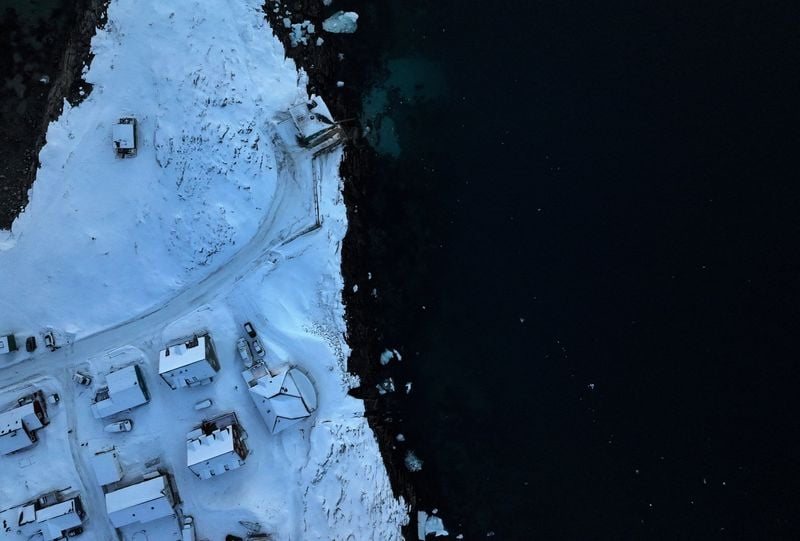
President Trump said the United States and Denmark have reached an agreement concerning Greenland, announcing the deal in a social media post and describing it as a national security arrangement between the two NATO allies.
The announcement marks a turn in a dispute that had strained relations between Washington and Copenhagen over the Arctic island, which occupies a strategically sensitive position between North America and Europe. Trump had repeatedly expressed interest in acquiring Greenland, an idea Danish officials rejected, and the disagreement had grown into a broader diplomatic friction point.
Details of the agreement were not immediately released. Trump characterized it as a security deal, suggesting the focus is on defense and strategic cooperation rather than a change in sovereignty over Greenland, which remains a semi-autonomous territory within the Kingdom of Denmark.
The island's importance has grown as melting ice opens new shipping routes and exposes untapped reserves of critical minerals. Greenland also hosts a U.S. military presence at Pituffik Space Base, formerly Thule Air Base, which supports missile warning and space surveillance missions. Those functions give Washington a direct stake in what happens in and around the territory.
Denmark, for its part, has sought to balance its role as a NATO member and close U.S. ally with its responsibilities toward Greenland and its population. Greenland's own government has pressed for greater autonomy and has insisted that decisions about the island's future rest with its people. Any arrangement that touches on defense or resources would be expected to involve consultations with Greenlandic authorities.
The deal, as described by Trump, appears to lower the temperature after a period in which the Greenland question became an unusually public irritant in transatlantic relations. European officials had watched the earlier push with unease, wary that a dispute over territory could distract from cooperation on security challenges, including Russia's war in Ukraine and competition with China in the Arctic.
Trump's announcement did not specify what the United States or Denmark would commit to, what timeline might apply, or whether the agreement requires formal approval by legislatures. In Denmark, the Folketing would likely play a role in any binding security arrangement, and Greenland's parliament, the Inatsisartut, would be a key stakeholder in matters affecting the island.
The Arctic has become a venue for intensified great-power competition. Russia has expanded its military infrastructure along its northern coast, and China has pursued economic and scientific footholds in the region. For the United States, Greenland forms part of a chain of northern defenses that includes Canada and Iceland, and the island's location makes it valuable for early-warning systems and monitoring of Arctic traffic.
Beyond security, the territory holds some of the world's largest untapped deposits of rare earth elements and other minerals used in batteries, electronics, and defense systems. Extraction has been limited by harsh conditions, infrastructure gaps, and environmental concerns, but interest from foreign investors has grown.
Trump's post did not address those commercial dimensions, and it was not clear whether the agreement covers economic cooperation or only defense matters. Danish officials have not issued a detailed public response to the announcement.
The deal, if confirmed in full, would represent a notable diplomatic outcome for an administration that has made assertive moves in the Western Hemisphere and the Arctic. It would also give Copenhagen a framework for managing its most strategically exposed territory at a time of rising global competition.
What remains unresolved is how the agreement will be implemented, what it means for Greenland's long-term political status, and whether it settles the underlying questions that made the island a source of tension in the first place. For now, the two allies appear to have found a formula that both sides can describe as a security partnership rather than a dispute over territory.