5 minWorld
US calls Turkey-Libya maritime deal unhelpful and provocative
The State Department criticized the Turkey-Libya maritime agreement as raising regional tensions, as Greece, the EU and Israel joined a wider backlash over disputed Eastern Mediterranean sea borders.
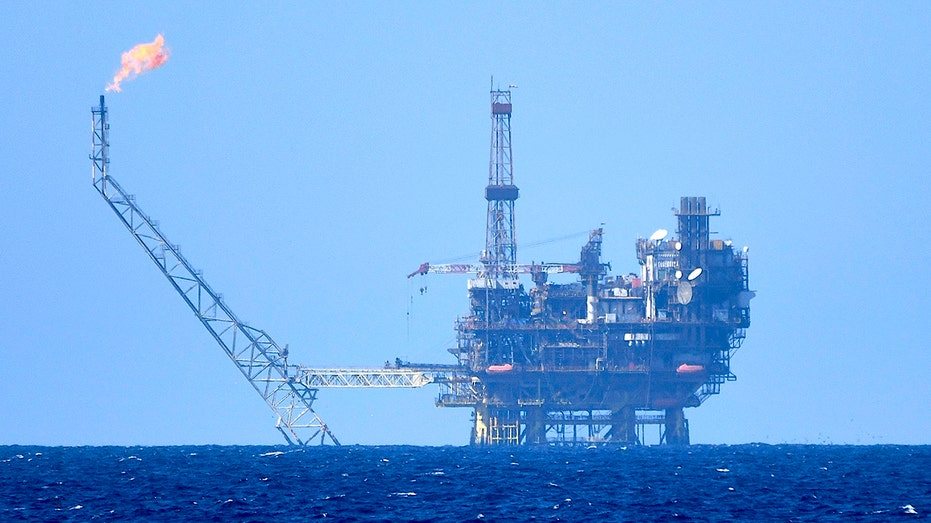
The United States has denounced a recent maritime agreement between NATO member Turkey and the divided Libyan state, calling it « unhelpful and provocative » and saying Washington's position on the matter has not changed. The memorandum, which redraws sea boundaries in the Eastern Mediterranean, has drawn frustration and anger from several countries that argue it alters established maritime borders in a region where large gas deposits may lie.
The Eastern Libyan parliament approved the accord in mid-October. The east of the country is governed by military leader Khalifa Haftar, who has formed an alliance with Turkey. The deal, however, bypasses Libya's internationally recognized government in Tripoli, in the northwest of the oil-rich country, which has made the agreement's legitimacy a central point of dispute.
A State Department spokesperson told Fox News Digital that the ratification of the Turkish-Libyan delimitation memorandum of understanding « has raised tensions in the region » and is « unhelpful and provocative. » The spokesperson urged all countries, including partners in the Eastern Mediterranean, to settle maritime disputes through good-faith negotiations and to avoid provocative behavior. Noting that Greece and Turkey are both NATO allies, the spokesperson encouraged the two to engage bilaterally on their disagreements, adding that a peaceful resolution « opens the way for commercial investment and exploration that will benefit the entire region. »
Turkish Foreign Minister Hakan Fidan, speaking on Wednesday according to the Turkish news agency Anadolu, defended the accord as « entirely legitimate » and not in violation of international law. « This is an entirely legitimate agreement, both from a legal and a political perspective, » he said, adding that there was no need to debate it. Fidan also rejected criticism from abroad, saying that some countries reacting to the deal did so because of strategic concerns over the issue.
Greece has been among the most vocal opponents. Foreign Minister George Gerapetritis wrote on his ministry's website that « the memorandum will not be implemented, » arguing that it produces no legal effects because it is contrary to international law. He also said Turkey had built a system of influence in Libya aimed at advancing its own interests, and he pointed to a steady stream of Turkish media reports pressing the government toward a more aggressive stance against Greece.
Endy Zemenides, executive director of the Hellenic American Leadership Council, told Fox News Digital that the agreement endangers the security of the United States and its allies. He said the memorandum infringes on U.S. companies and U.S. energy policy by effectively denying maritime rights and zones around Crete, which he described as NATO's southernmost base. He noted that the American companies Exxon and Chevron operate in Crete, and he argued that the deal is a means of pushing the United States out of the region, claiming Washington can no longer rely on Turkey.
The European Union also criticized the agreement in unusually strong terms. Citing the European Council Conclusions of December 2019, reiterated in June 2025, the EU said the Türkiye-Libya Memorandum of Understanding infringes upon the sovereign rights of third states, does not comply with the Law of the Sea, and is « null and void » without legal consequences for third states.
Israel joined the condemnation. Its foreign ministry said on X that it « strongly condemns » the decision of the Libyan House of Representatives to ratify the agreement, arguing that it infringes on the sovereign rights of close regional allies and accusing Turkey of working to destabilize the Eastern Mediterranean. Israel has developed a trilateral alliance with Greece and Cyprus. Fox News Digital sought comment from both Turkey and Libya but had not received a response at the time of publication.
6