5 minWorld
The Ukraine Aggression Tribunal Is Being Built to Outlast Political Office
The special tribunal is not designed around a news cycle. Its statute allows evidence to accumulate while immunity delays proceedings against sitting leaders rather than erasing them.
The most consequential feature of the Special Tribunal for the Crime of Aggression against Ukraine may be its relationship with time. It is being built for cases that can outlast governments, presidencies and even the active phase of the institution itself.
That is the central argument of an exclusive analysis published by Burack, which examines what has already been created and why the absence of immediate trials should not be confused with the absence of a legal process.
Ukraine and the Council of Europe signed the agreement establishing the tribunal in June 2025. By May 2026, 36 states and the European Union had adopted the enlarged partial agreement that provides the basis for its governing committee. The Netherlands has said it is prepared to host the operational phase. The next institutional steps include selecting a prosecutor, establishing a roster of 15 judges and completing the host-state arrangements.
The tribunal has a narrow but historically significant mandate. It is intended to prosecute the crime of aggression, a leadership crime centered on those who were in a position effectively to control or direct the political or military action of a state and who allegedly participated in planning, preparing, initiating or executing aggression.
That definition is why attention naturally turns to Russia’s senior political and military leadership. But it does not create collective guilt. The statute preserves the presumption of innocence, and prosecutors will have to prove an individual defendant’s authority, conduct and intent. Membership in Russia’s Security Council, a ministerial title or a public statement is not by itself enough.
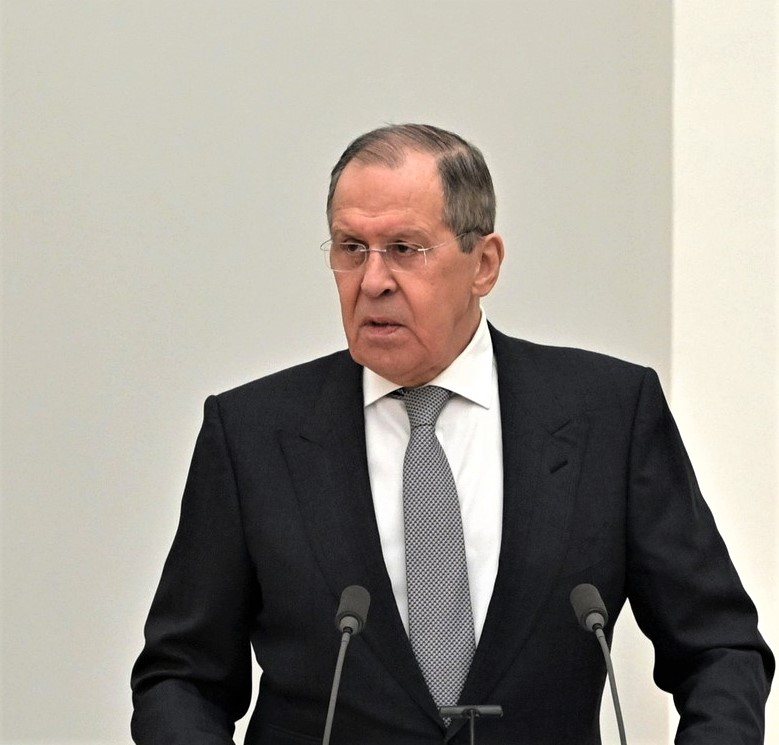
The televised Security Council meeting of Feb. 21, 2022 is therefore important but easy to overstate. Vladimir Putin required senior officials to state their positions publicly as the Kremlin considered recognition of the Russian-backed entities in occupied eastern Ukraine. Three days later, Russia launched its full-scale invasion. The meeting was not formally a vote to invade Ukraine, however, and the video cannot substitute for evidence about the planning of the war.
Its potential value lies in context. It records the leadership circle, the public positions of senior officials and the structure of decision-making at a crucial moment. Prosecutors can compare that record with orders, internal communications, military preparations, witness testimony and evidence collected before the tribunal itself became operational. The statute specifically allows earlier evidence gathered by Ukrainian and other national authorities to be transferred into the new process.
Putin’s position presents a separate legal complication. As a sitting head of state, he benefits from personal immunity for the purposes described in the tribunal’s statute. Prosecutors may investigate, collect evidence and prepare an indictment, but confirmation and proceedings are suspended while that immunity remains. Leaving office or a valid waiver of immunity would remove that obstacle.
That structure turns political office into a delay, not necessarily an endpoint. The statute also anticipates a residual mechanism capable of handling unfinished functions after the main tribunal’s active work winds down.
Postwar history shows why such architecture matters. The Nuremberg tribunal tried leading Nazi officials in 1945 and 1946, but the pursuit of other perpetrators continued through national systems for decades. Adolf Eichmann was captured in 1960. Franz Stangl was arrested in Brazil in 1967. Klaus Barbie was extradited to France in 1983 and convicted in 1987.
Those cases do not guarantee an equivalent outcome for any Russian official. Courts require evidence, jurisdiction and access to defendants, and many perpetrators in history escaped judgment. But they demonstrate a more durable principle: the passing of years does not automatically extinguish the legal question of individual responsibility.
69