5 minWorld
EU's Kallas Warns Against Yielding to Russian Intimidation
EU foreign policy chief Kaja Kallas, whose family was deported to Siberia under Stalin, says Moscow aims to scare Europe away from supporting Ukraine and that deterrence is the only answer.
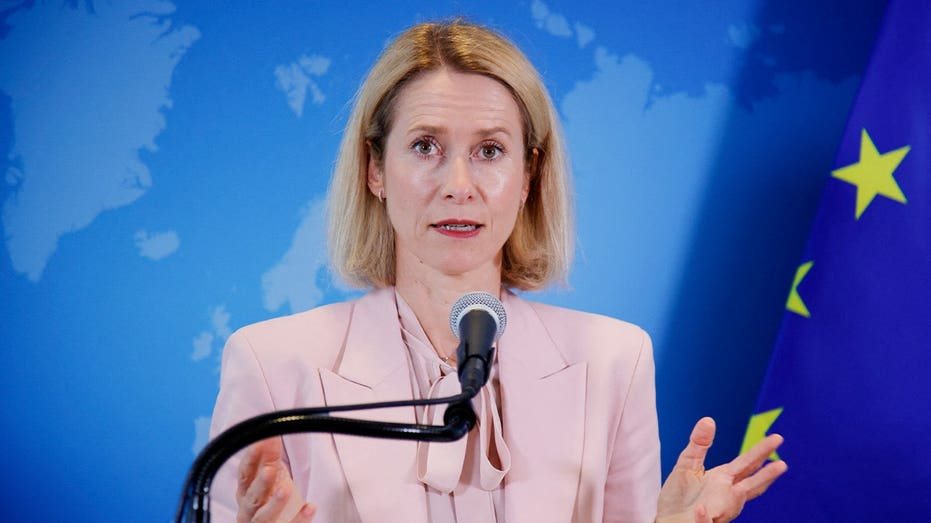
Russia is trying to intimidate Europe into scaling back its support for Ukraine and its own defense spending, and giving in to that pressure would only invite more aggressive behavior, the European Union's top diplomat warned in an interview on the sidelines of the United Nations General Assembly.
Kaja Kallas, the EU's high representative for foreign affairs and security policy, said Moscow's goal is to frighten European governments away from backing Kyiv and from pressuring Russia to negotiate. «Their goal is to intimidate us from not supporting Ukraine, from refraining to support them and pressuring Russia,» she said. «What is important for us is that we are not afraid. Because otherwise this kind of intimidation actually pays off, and then we will see more of it across the world.»
Kallas speaks from a family history that reaches far beyond the current war. Her mother, Kristi, was six months old in 1949 when Soviet authorities deported her, along with her mother and grandmother, to Siberia as part of Stalin's mass deportations from the Baltic states. Kallas' maternal grandfather was sent separately to a Siberian prison camp. The family spent roughly a decade in Siberia before being allowed to return to Soviet-occupied Estonia in 1959.
Kallas was born in Tallinn in 1977 and spent her first 14 years under Soviet rule. Estonia restored its independence in 1991 as the Soviet Union collapsed. Her family later became deeply involved in the new democratic state: her father, Siim Kallas, served as the first president of the Bank of Estonia, then as foreign minister and prime minister before becoming a European commissioner. Kaja Kallas moved from law to Estonia's parliament, then the European Parliament, becoming Estonia's first female prime minister in 2021. Three years later she was chosen as the EU's top diplomat, placing a politician raised under Soviet occupation at the center of Europe's response to Russian aggression.
That history has made her one of Europe's most prominent voices on Moscow, even as officials in her native Estonia and elsewhere along NATO's eastern flank caution against reading Russia's recent provocations as preparation for a conventional invasion. Estonian Foreign Minister Margus Tsahkna said in a separate interview that his country's intelligence services see no sign Russia is preparing a full-scale attack on NATO. «We have more and more this kind of panic in Europe that Russia will invade and will be full-scale aggressive against NATO and Europe and the Baltic states, Poland, but we don't see it,» Tsahkna said. «Our intelligence, we see very, very deep into Russia, we don't see any change.»
Kallas instead pointed to Moscow's growing use of sabotage and the importance of deterrence. «We see that Russia is actually increasing their sabotage acts in Europe,» she said. «But of course how far they will go depends very much on us and whether we are investing enough in defense so that it acts as a deterrent.» Her comments come as NATO countries confront a string of Russian aircraft and drone incursions, along with suspected sabotage and other hybrid activity across Europe. The incidents have fueled warnings in some capitals that Moscow is probing the alliance for weaknesses, while officials closer to Russia warn against equating those provocations with preparations for an invasion.
Kallas argued that Moscow's actions are designed to weaken Western support for Ukraine rather than simply test NATO's defenses. The pressure campaign continues as Washington pushes for a negotiated end to the war, now more than four and a half years old. Kallas said Moscow has yet to show it is serious about reaching a deal. «They should start with stopping bombing the civilians,» she said, citing recent Russian attacks on Kyiv. «If they are serious about this, they should agree to a ceasefire, sit down at the negotiation table and talk to the Ukrainians.»
Ukraine has already agreed to an unconditional ceasefire, she said, while «Russia is just playing games.» Coordinated pressure from Washington and its European allies could still change Moscow's calculations, she argued. «If America, Europe, UK, other strong players are all acting together in the same way to put in the sanctions, then actually we could have the effect that Russia understands that this is serious and they will sit down and negotiate,» she said.
3