9 minWorld
Russia Can Still Reach the U.S. as Nuclear Guardrails Erode
Russia retains land-, sea- and air-based nuclear forces capable of threatening the United States. With New START gone, the strategic danger is rising even as American civil preparedness remains far weaker than its military deterrent.
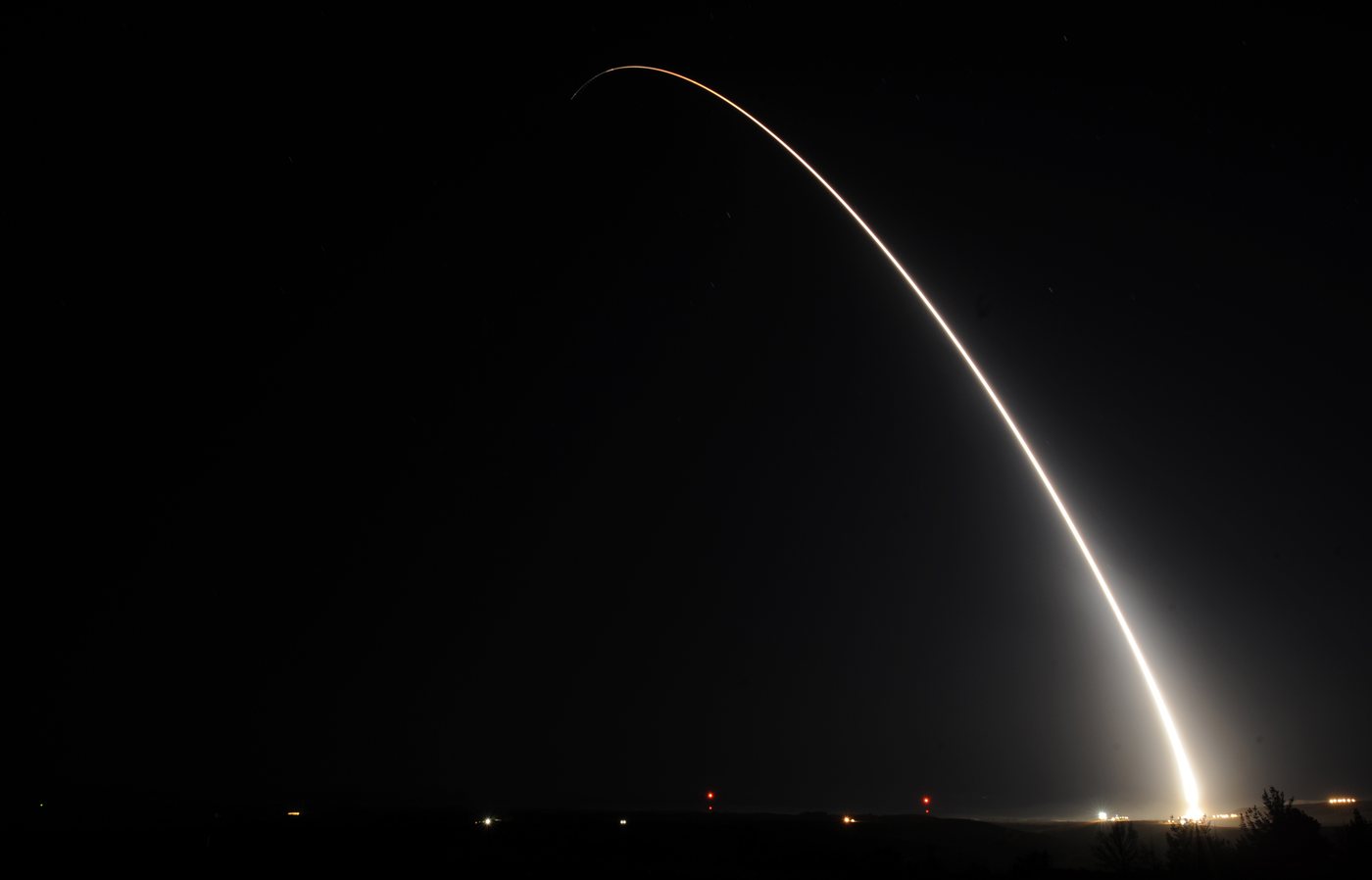
Russia does not need a new wonder weapon to threaten the United States with nuclear force. Its existing strategic arsenal already provides three independent paths: land-based intercontinental ballistic missiles, submarine-launched ballistic missiles and long-range bombers carrying nuclear-capable cruise missiles.
That basic fact matters more than the publicity surrounding individual Russian programs.
The Federation of American Scientists estimated in 2025 that Russia had about 4,309 warheads assigned to operational strategic and nonstrategic forces, plus retired warheads awaiting dismantlement. Roughly 1,718 strategic warheads were estimated to be deployed. The strategic force includes RS-24 Yars ICBMs, Borei-class ballistic-missile submarines armed with Bulava missiles, and Tu-160 and Tu-95MS bombers.
Russia's modernization is uneven. The Sarmat heavy ICBM has suffered repeated setbacks and failed tests. SIPRI reported in its 2026 yearbook assessment that another Sarmat test failed in 2025. The Borei submarine program has progressed more steadily, while strategic bomber modernization has also faced delays.
Those problems reduce confidence in the most ambitious modernization claims, but they do not erase the central deterrence reality. Russia retains a large, diversified nuclear force with enough survivable delivery systems to make a disarming U.S. first strike implausible and to threaten devastating retaliation.
The same is true in reverse. The United States maintains its own survivable nuclear triad. This mutual vulnerability is the foundation of deterrence — and also the reason a direct U.S.-Russian nuclear war would be extraordinarily difficult to control once it began.
The guardrails around that competition are now weaker.
New START expired on February 5, 2026. The treaty had limited deployed strategic warheads and strategic delivery vehicles and provided a framework for data exchanges and verification. Those mechanisms had already eroded after Russia suspended key implementation measures during the war in Ukraine. With the treaty gone, neither country is legally bound by its central numerical limits. Both initially showed informal restraint, but informal restraint is not a substitute for inspections, notifications and binding rules.
That does not mean a Russian nuclear attack is imminent. It means uncertainty is increasing at the same time both sides retain forces capable of destroying the other's cities and military infrastructure.
A common public question is where Russia would strike first. The honest answer is that current targeting plans are not public.
Military theory divides potential objectives into broad categories. Counterforce targeting seeks to destroy an adversary's nuclear forces, command-and-control and military assets. Countervalue targeting threatens cities, economic capacity and population. Political leadership, major industrial and logistics nodes, and national communications can sit between those categories.
In an actual crisis, target selection would depend on the scenario: a limited demonstration, an attempt to disable nuclear forces, a strike on leadership and military infrastructure, or a broader exchange after deterrence has already failed. Any precise public list naming a sequence of American targets would go beyond what open evidence can support.
Still, the consequences for major metropolitan areas can be assessed without pretending to know Moscow's plan.
New York, Los Angeles, Chicago, Houston and the Washington region are examples of large, dense urban systems where a nuclear detonation would produce not one disaster but several at once: blast destruction, mass fires, traumatic injuries, radiation exposure, infrastructure failure, communications collapse and possible fallout spreading far beyond the visibly damaged core.
Federal emergency guidance emphasizes that damage varies sharply with yield, altitude, terrain, construction and weather. In the 10-kiloton near-surface case used for planning, HHS describes a severe-damage zone around the center, a larger area of major structural damage and a still wider zone of broken glass and lighter blast effects. Fallout forms an irregular downwind pattern and can remain dangerous well beyond the blast area.
A larger strategic warhead would not simply create a neat scaled-up circle. Heat becomes more important at higher yields, airbursts can extend blast effects while reducing local fallout compared with a surface burst, and weather can shift contamination away from or toward dense neighborhoods. That is why exact casualty numbers for a hypothetical strike should be treated as scenario outputs, not predictions.
For the United States, the most serious vulnerability is the difference between military readiness and civilian resilience.
American nuclear forces are maintained so that an adversary cannot expect to escape retaliation. American cities are not built as hardened military systems. Their hospitals depend on power, water, roads, staff and digital communications. Their emergency response depends on mutual aid from nearby jurisdictions. Their residents mostly live and work in ordinary buildings rather than purpose-built fallout shelters.
HHS planning documents assume that a nuclear mass-casualty event could degrade local medical capacity precisely when injuries spike. Hospitals may need to discharge or transfer patients rapidly, call for outside assistance and operate under crisis standards of care. Some facilities would be physically damaged; others could be cut off by debris, traffic or radiation.
The federal government has tools to compensate. The Strategic National Stockpile includes radiation countermeasures and supplies. FEMA, HHS and CDC maintain response guidance. Federal technical teams can map contamination and help local authorities decide when to shelter and when to evacuate.
Yet recent oversight points to gaps. GAO reported in 2026 that HHS emergency-preparedness programs for public health and health-care systems still lacked full coordination. GAO has also warned about public-health workforce shortages and limited federal response staffing during concurrent disasters.
A nuclear exchange is the worst possible concurrent-disaster problem. A city normally requests ambulances, burn beds, utility crews and search-and-rescue teams from places that were not hit. In a multi-city strike, the neighboring region that would usually send help may be managing its own emergency.
That is why the old fallout shelter sign is an uncomfortable symbol of the present. The country retains detailed guidance, but not a nationwide hardened shelter system for the entire population. CDC's current advice is instead built around immediate use of the best available building: get inside, stay inside and wait for instructions.
That advice can save lives, especially from fallout. It also shows how much civil survival depends on local building stock, public knowledge and communications that continue to function.
The United States is therefore not unprepared in the absolute sense. It is prepared to deter, warn, retaliate, mobilize federal resources and manage parts of a nuclear emergency. What it is not prepared to do is prevent a major strategic strike from becoming a national catastrophe if deterrence fails.
With New START gone, the long-term policy problem is larger than sheltering. Washington and Moscow now face a world with fewer formal constraints, less transparency and continued modernization. Civil-defense improvements can reduce casualties. They cannot substitute for strategic stability that keeps the weapons from being used in the first place.
96