3 minWorld
Jair Bolsonaro: Brazil's Polarizing Former President
A profile of Jair Bolsonaro, the former Brazilian president whose career has moved from the military to Congress to the presidency, marked by controversy and a lasting influence on the country's politics.
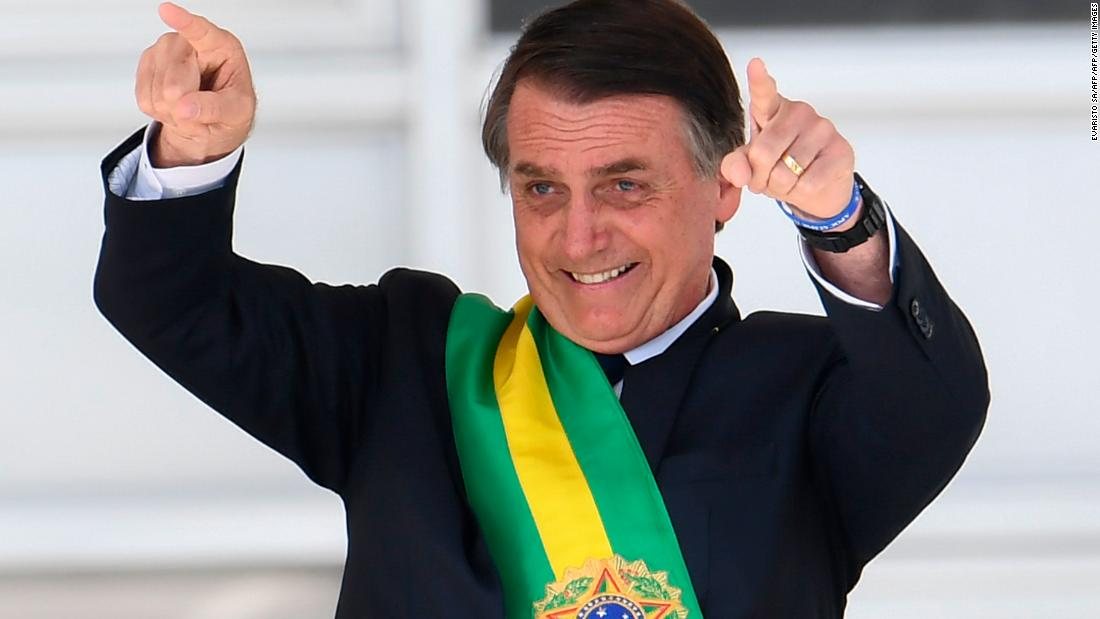
Jair Bolsonaro, the former president of Brazil, remains one of the most consequential and divisive figures in the country's modern political history. A former army captain who rose through decades of public service, Bolsonaro built a reputation as a blunt-talking outsider before winning the presidency in 2018 and governing until the end of 2022.
Born in 1955 in the small town of Glicério, in São Paulo state, Bolsonaro graduated from the Agulhas Negras Military Academy and served in the Brazilian Army. He later entered politics, winning a seat on the Rio de Janeiro city council in 1988 and then serving as a federal deputy for nearly three decades, from 1991 to 2018. During his time in Congress, he became known for his advocacy of military interests, his hardline views on crime and security, and his frequent provocations.
Bolsonaro's political ascent was fueled by public frustration with corruption and the political establishment. In 2018, he survived a knife attack during a campaign rally, an event that shaped the final stretch of the race. He went on to defeat Fernando Haddad of the Workers' Party and took office on January 1, 2019, promising to overhaul the economy, crack down on crime, and realign Brazil's foreign policy.
As president, Bolsonaro pursued a market-friendly economic agenda, including a landmark pension reform, and appointed a pro-business cabinet. His tenure was also marked by environmental controversies, particularly over Amazon deforestation, and by his handling of the COVID-19 pandemic, which drew criticism at home and abroad. He frequently clashed with the Supreme Court and the press, and his rhetoric deepened political polarization in Brazil.
In the 2022 election, Bolsonaro lost to Luiz Inácio Lula da Silva in a closely watched runoff. He did not formally concede, and his supporters later stormed government buildings in Brasília on January 8, 2023, in an uprising that echoed the U.S. Capitol attack. Bolsonaro has faced legal scrutiny in the aftermath, including investigations into his role in the unrest and his handling of the pandemic.
Bolsonaro's legacy is still being contested. To his supporters, he remains a champion of conservative values and a bulwark against the left. To his critics, he represents a threat to democratic institutions and a failure to address Brazil's deep social and environmental challenges. Either way, his influence on Brazilian politics is likely to endure for years to come.
4