4 minWorld
Qatar Pledges to Help Rebuild Lebanon's Power Grid and War-Damaged South
Qatar's prime minister announced in Beirut that Doha will fund and implement a solar power project with TotalEnergies and support reconstruction in southern Lebanon, where more than 300,000 people remain displaced after the Israel-Hezbollah war.
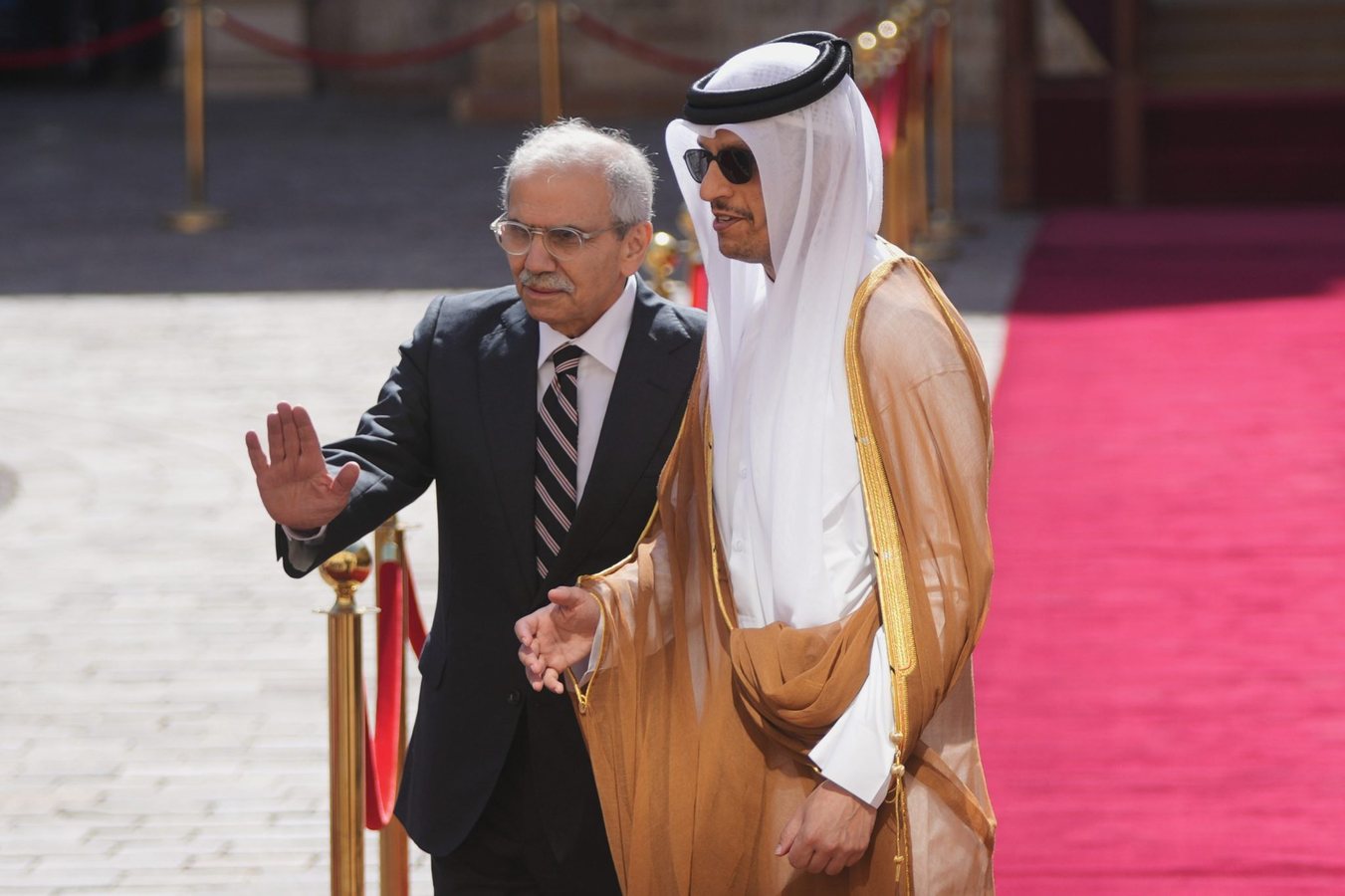
Qatar will help Lebanon revive its battered economy by rehabilitating its failing electricity sector and supporting the eventual reconstruction of the country's war-damaged south, Qatari Prime Minister Sheikh Mohammed bin Abdulrahman Al Thani said after meeting with Lebanese officials in Beirut.
Speaking alongside his Lebanese counterpart, Prime Minister Nawaf Salam, Sheikh Mohammed said QatarEnergy has reached an agreement with the French company TotalEnergies to jointly develop a solar power plant in Lebanon as an initial project. He described the goal as a major investment that would benefit both the Lebanese economy and the Qatari companies taking part.
Salam said he will present the electricity plans to the Lebanese Cabinet soon. He said the Qatari side will fund, implement and activate the project at no cost to the Lebanese state, a condition he called essential given Lebanon's financial crisis.
Lebanon's state electricity company is one of the largest drivers of the country's debt, having lost roughly $40 billion over the past decades through a bloated workforce and outdated infrastructure. The utility supplies only a few hours of power each day, and until a year ago the state relied on advances from the Central Bank when diesel fuel ran out.
Sheikh Mohammed also said Qatar will continue to back the Lebanese army as a national institution that safeguards the country's security, unity and stability. Doha has given tens of millions of dollars to the Lebanese military since Lebanon's economic meltdown began in 2019, and it has long served as a mediator in the country's domestic and regional political crises.
Earlier in the day, the Qatari prime minister met with Lebanon's president and parliamentary speaker to discuss the situation in southern Lebanon, where Israel captured dozens of villages and towns during the latest Israel-Hezbollah war. In the months since, Israel has carried out large-scale demolitions in villages its troops occupy.
That war began when Hezbollah fired rockets into northern Israel in early March, two days after the United States and Israel began attacking Iran, the Lebanese group's main backer, on Feb. 28. A ceasefire in June halted the fighting, but the human toll remains severe: about 1.2 million people were displaced at the height of the war, and more than 300,000 are still displaced, according to the International Organization for Migration.
Sheikh Mohammed said Israel should withdraw from Lebanon and stop its attacks there. He added that Qatar is working in coordination with the United States to help lay the groundwork for future reconstruction in the south, in a way that would allow displaced residents to return to their homes.
The announcements amount to one of the most concrete pledges of outside support for Lebanon since the war, pairing immediate energy investment with a longer-term reconstruction framework. For a state whose finances remain deeply strained, the promise that Qatar would cover the cost of the solar project removes a significant obstacle that has stalled past efforts to overhaul the power sector.
Whether the plans translate into rapid change will depend on how quickly the Lebanese Cabinet moves on the electricity proposals and on the security conditions in the south, where Israeli forces remain in occupied villages. Qatar's dual role as a financial backer and a mediator with Washington gives Doha a central part in both tracks.
5