4 minWorld
Study Finds Half the World Now Faces Heat Waves and Wildfire Smoke Simultaneously
New research published in Science Advances shows that over half the global population has experienced heat waves and wildfire air pollution on the same day, with low-income countries bearing the heaviest burden.
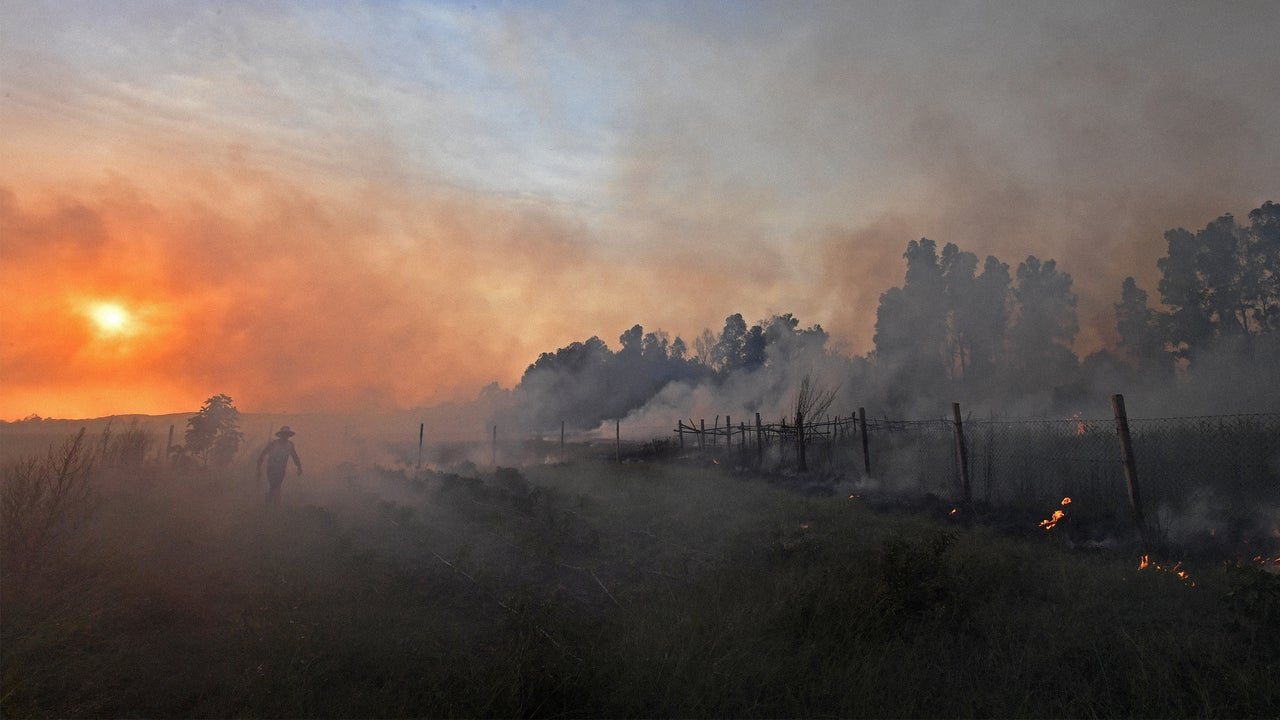
More than half of the world's population has been exposed to a heat wave and wildfire air pollution on the same day over the past two decades, according to a new study that documents how climate-driven extremes are increasingly converging. Researchers at Monash University in Melbourne, Australia, published the findings this week in the journal Science Advances, analyzing 20 years of data from 2000 to 2019.
The study found that the number of people worldwide exposed to both hazards on the same days rose by 287 million over the period, climbing from 761 million people per year in the first decade to more than one billion per year in the second. That means 55.9 percent of the global population has experienced at least one day when a heat wave and wildfire pollution occurred in tandem. The frequency of such days is also rising: between 2000 and 2009, the average was one co-exposure day per person, a figure that increased to 1.7 days between 2009 and 2019.
To determine wildfire exposure, researchers examined who was affected by fire-sourced air pollution, drawing on hourly temperature, fire emissions, air quality, and population data. The results illustrate not only that extreme weather is becoming more common, but that its health consequences can compound when events overlap.
Heat waves and wildfires each pose serious health risks on their own. Extreme heat can cause heat stroke, which may damage the brain, heart, and kidneys and can be fatal, while high humidity makes breathing harder for people with asthma and other lung conditions. Wildfire smoke carries fine particulate matter known as PM2.5 that can enter the lungs and bloodstream, raising the risk of heart attack, stroke, and reduced lung function. When the two occur together, the danger multiplies. Health researchers have previously found that on days with both high heat and high air pollution, the risk of death is three times greater than the effect of either hazard alone.
The Monash University team emphasized that point, writing that coexposure to both hazards may exert greater health impacts than the sum of their individual effects. Respiratory and cardiovascular risks become amplified when wildfire pollution and extreme heat coincide.
The two phenomena also feed each other. High temperatures and dry soil promote wildfires, and fires in turn intensify heat waves by releasing heat and pollution into the air. The researchers described this as a positive feedback loop in which heat waves and fires amplify one another.
Some regions are hit far harder than others. Zambia experiences more than 28 such days per person each year, the highest in the study, followed by the Democratic Republic of the Congo with just over 24 days per person annually. Countries with lower life expectancy, education, and income tended to see the highest levels of wildfire and heat co-exposure, a pattern that reflects how climate change is striking the world's poorest nations hardest.
Almost every part of the world recorded an increase in the trend. Central America, South America, Central and Eastern Africa, Southeast Asia, and parts of North America, Australia, and Russia all saw notable rises in the annual average number of days when wildfire pollution and extreme heat occurred together.
The findings add to a growing body of evidence that the health toll of climate change is not simply the sum of individual disasters, but a compounded burden that falls disproportionately on vulnerable populations. As heat waves and wildfires become more frequent and more likely to overlap, the study suggests, the risks to human health will continue to grow.
6