6 minWorld
Latvian president warns Russia may escalate sabotage campaign against NATO within months
Latvian President Edgars Rinkēvičs told Fox News Digital that Russia is growing more willing to take risks against NATO members through sabotage, arson and assassination plots, and that the situation could change quickly.
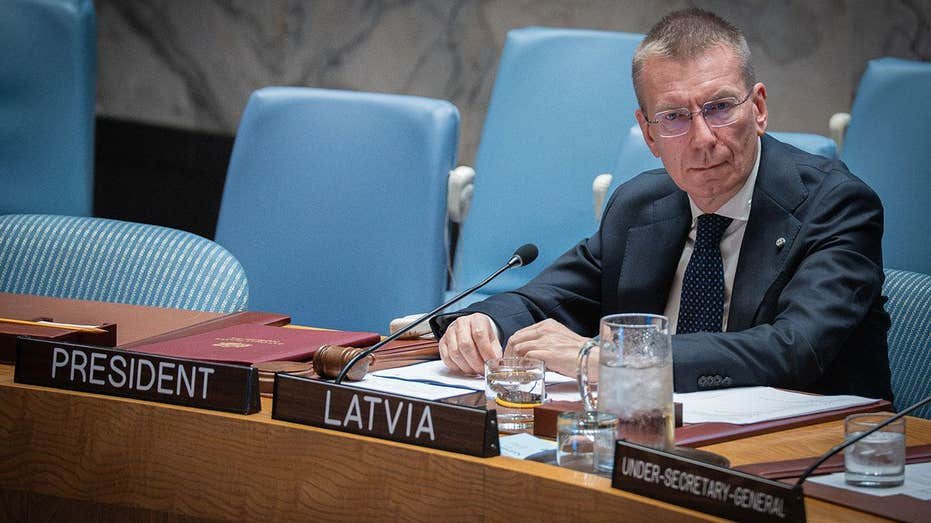
Russia is growing increasingly willing to take risks against NATO countries, with a mounting campaign of sabotage, arson attacks and assassination plots that could escalate within weeks or months, Latvian President Edgars Rinkēvičs warned in an interview with Fox News Digital. He said Western leaders may be underestimating the threat posed by Russian President Vladimir Putin because they do not fully grasp the ideological and historical beliefs driving the Kremlin's foreign policy.
"The appetite for the risk is growing in Russia," Rinkēvičs said. "We see numbers of arson attacks. Some assassination plots. Acts of sabotage." He acknowledged that Russian provocations have so far stayed below the threshold that would trigger NATO's collective defense mechanism under Article 5, but warned that the situation could shift quickly. "We see that the number of attacks is rising, but we still see that, at this point, it may change very quickly. It may change maybe in weeks or months or a couple of months' time," he said.
The Latvian leader pointed to cooperation between Latvian and Estonian intelligence services that, he said, led to arrests in Estonia and prevented an attack against a defense factory. The Latvian State Security Service confirmed that eight Latvian nationals were detained in Estonia on Nov. 14, after authorities thwarted an attempted arson attack against Threod Systems, an Estonian drone manufacturer. Estonian security officials attributed the operation to Russia's military intelligence agency, the GRU. Rinkēvičs said the escalating campaign is part of Moscow's strategy to discourage European countries from continuing to support Ukraine.
The response from Tallinn has been significant. Estonia announced it would close its land border with Russia beginning Dec. 1 for at least six months. Russia's Foreign Ministry responded on Monday by accusing Estonia of hostile actions "on the verge of triggering open war," Reuters reported. British security officials also warned on Tuesday that companies supporting Ukraine's military should prepare for potential Russian sabotage attempts after a series of incidents across Europe, The Associated Press reported. The Kremlin has consistently denied conducting sabotage operations against NATO countries.
Rinkēvičs also argued that Western governments need to rethink how they interpret Putin's motivations. He said conventional military, economic and political calculations alone cannot explain the Kremlin's determination to continue the war. "We are too pragmatic and rational in the West," he said. He pointed to Putin's recent interviews, in which he said he was struck by the Russian leader's ideological and religious references, including the historical concept of Russia as the "Third Rome" and its perceived mission to safeguard Christianity. "I think that this kind of belief also drives the war," Rinkēvičs said, describing a "missionary approach that we in the West do not understand because we are too rational and too pragmatic."
The warning comes days after President Donald Trump met with Putin and Chinese President Xi Jinping in Shenzhen, China, on Nov. 19, in talks that addressed the war in Ukraine and nuclear arms control. While Rinkēvičs welcomed continued engagement between Washington and Moscow, he said the summit had not produced a diplomatic breakthrough on Ukraine. "Russia is not willing to end this war," he said, arguing that Moscow is using diplomatic engagement to extend the conflict in hopes of further gains on the battlefield and at the negotiating table.
Rinkēvičs also linked the risk to a wider set of pressures, including upcoming European elections in France, Poland and Italy and political debates in the United States, which he said could encourage Moscow to keep fighting. He added that Russia's pursuit of advanced weapons requires greater Western investment in missile defenses, drones and emerging technologies. "Russia is developing nuclear weapons, developing new technologies and we have to be extremely, extremely careful," he said.
At the same time, he cautioned against assuming Moscow's claims are always accurate. Asked about recent Western intelligence assessments suggesting Russia could launch a satellite designed to carry a nuclear weapon within weeks, Rinkēvičs said he could not confirm them. "Whether that weapon in space, nuclear weapon in space is going to be the real thing or just a kind of fake news, remains to be seen," he said. He noted that Moscow has previously overstated its military capabilities.
Despite these warnings, Rinkēvičs said an opportunity for meaningful negotiations could emerge next spring or summer if Ukraine withstands Russia's winter offensive against its civilian and energy infrastructure. "I'm quite confident Ukraine is going to survive," he said.
Source: foxnews.com
7