6 minWorld
Russia could launch nuclear-capable satellite within weeks, Western intelligence warns
German reporting cites Western intelligence assessments that Russia could launch a nuclear-capable satellite within 60 days, a move that could disable thousands of satellites. The Kremlin dismissed the reports as unsubstantiated.
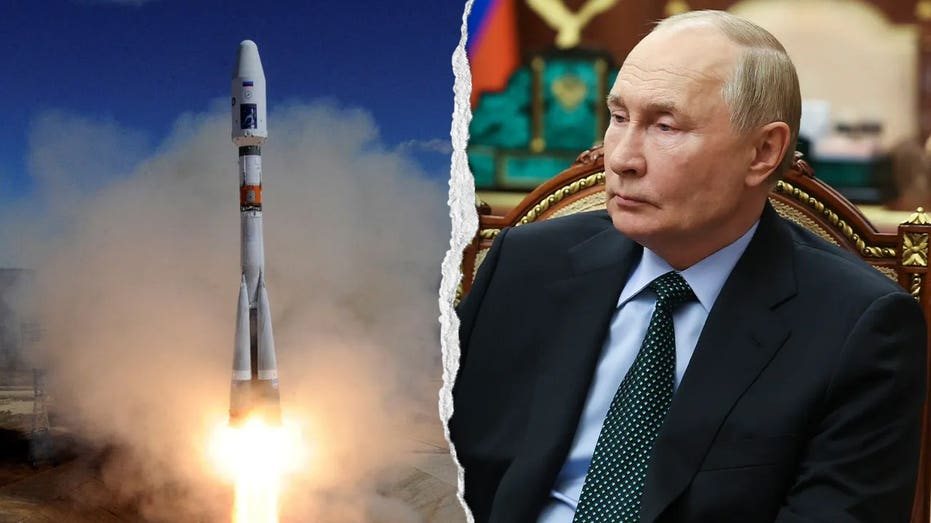
Russia could launch a nuclear-armed satellite into orbit within 60 days, according to new Western intelligence assessments reported Monday. The warnings raise fears that Moscow is preparing a weapon capable of crippling thousands of satellites used by the United States and its allies.
The reports surfaced just four days after President Donald Trump met Russian President Vladimir Putin and Chinese President Xi Jinping at a high-profile summit in Shenzhen, China, where nuclear arms control was a central topic. The three leaders issued a joint declaration affirming that nuclear war should never be fought, but they stopped short of announcing binding arms-control commitments.
A joint investigation published November 23 by German broadcasters WDR and NDR and the newspaper Süddeutsche Zeitung said Western intelligence agencies believe Russia has assembled a satellite known as "Sputnik-S," which has reportedly been stored in the Moscow region for several years. Intelligence warnings shared among several NATO countries in early November indicated the satellite, reportedly designed to carry a nuclear warhead, could be launched within 60 days. Germany's military Space Command reportedly assessed that a December launch was possible.
The German investigation also reported that military officials had briefed senior government figures, including German Defense Minister Boris Pistorius, about the threat. European leaders responded quickly. Speaking alongside NATO Secretary General Mark Rutte in Berlin on Monday, German Chancellor Friedrich Merz described the allegations as "shocking," while noting that concerns about Russia's nuclear space ambitions were not entirely new.
Rutte stressed that the alliance continually assesses its defensive capabilities. "I can assure you, we will always make sure that we defend every inch of NATO territory," he said, according to Reuters. He added that NATO's defense planning includes threats in space and that the alliance has response options that are not always visible to the public.
The Kremlin rejected the allegations. Presidential spokesman Dmitry Peskov questioned the credibility of the intelligence reports, saying they contained numerous unsubstantiated claims that were hardly worth taking seriously. "We haven't seen the report. But there are so many 'alleged' and 'possible' claims in it, attributed to who knows whom, that it's certainly hardly worth taking them seriously," Peskov told reporters during a daily briefing. Russia's Embassy in Berlin separately dismissed the reporting as part of a propaganda campaign and maintained that Moscow's space activities are peaceful and consistent with international obligations.
The latest warnings follow an earlier assessment by the U.S. Defense Intelligence Agency, which publicly identified Russia's development of a nuclear-capable satellite in October. In its 2026 Challenges to Security in Space assessment, the agency stated that "Russia is developing a satellite designed to carry a nuclear weapon." The agency warned that such a weapon could cause the rapid loss or degradation of thousands of satellites operated by governments and private companies.
The potential damage would reach well beyond the military. Unlike a conventional anti-satellite weapon that targets a single spacecraft, a nuclear detonation in orbit could disable large numbers of satellites through radiation and electromagnetic effects. Satellites support GPS navigation, international communications, financial transactions, weather forecasting and critical infrastructure. The threat also bears on Ukraine, whose military relies heavily on satellite communications, including SpaceX's Starlink network, during its war with Russia.
The concern is not new. In February 2024, the Biden administration publicly acknowledged that Russia was developing a troubling anti-satellite capability, although officials said at the time that no such weapon had been deployed. Placing a nuclear weapon in orbit would violate the 1967 Outer Space Treaty, which prohibits stationing nuclear weapons or other weapons of mass destruction in space.
Critical questions remain unanswered, including whether the satellite already carries a nuclear warhead and whether Western intelligence has independently verified the reported launch preparations. The German reporting suggests the threat could be moving toward a more immediate stage, but the public record so far rests on intelligence assessments and the denials of the Russian government. Fox News Digital has reached out to the White House, the Pentagon, U.S. Space Command and the German Embassy for comment.
Source: foxnews.com
12