6 minWorld
Israelis rally against Netanyahu days before pivotal election
Thousands gathered in Tel Aviv for a final protest against Prime Minister Benjamin Netanyahu ahead of a vote described as the most consequential in Israel's history, as regional tensions over Iran and Yemen continued.
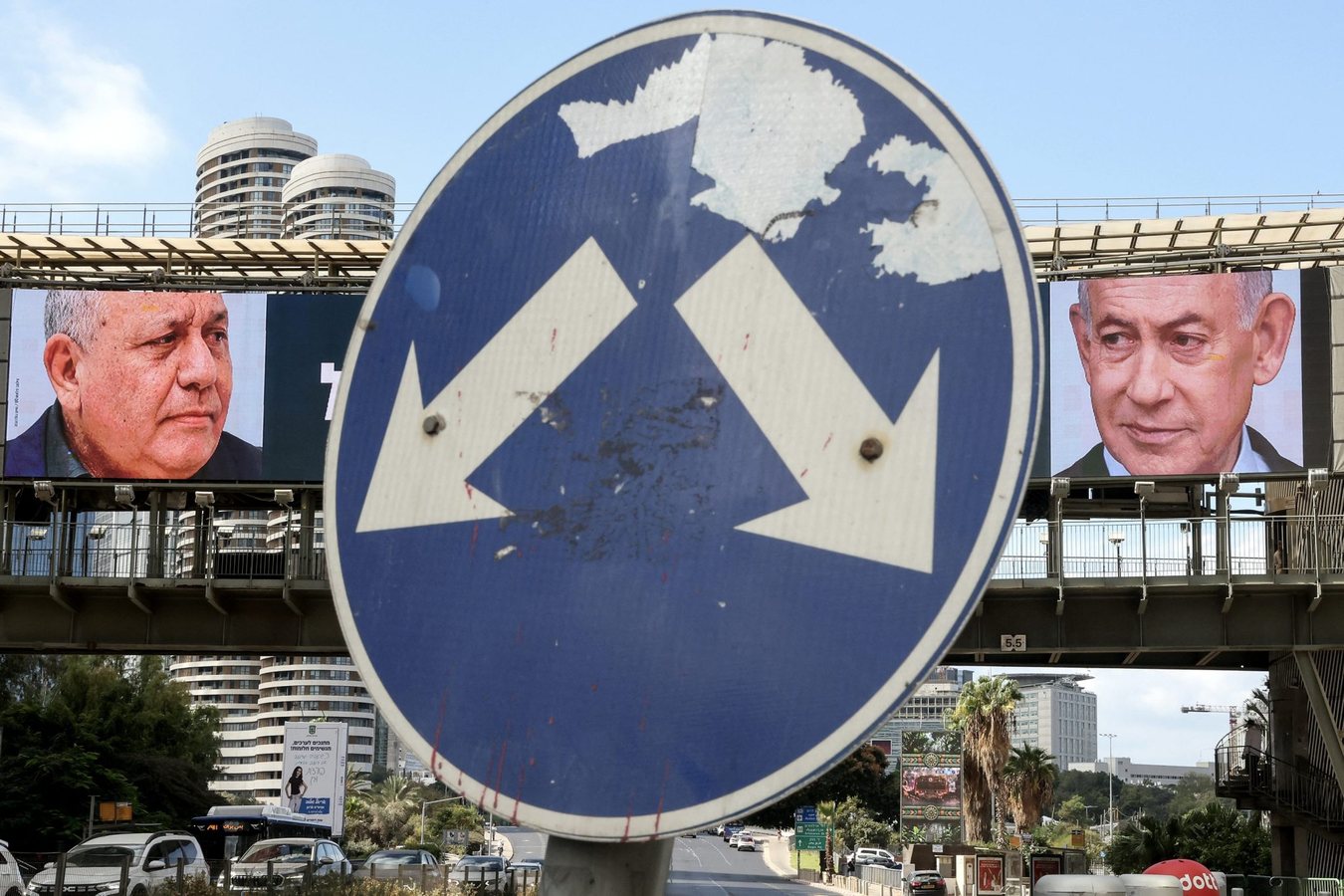
Thousands of Israelis gathered in Tel Aviv for a final large rally against Prime Minister Benjamin Netanyahu ahead of what has been described as the most consequential election in the country's history. The vote is scheduled for Tuesday. The crowd called for a commission of inquiry into the security failures that preceded the Hamas-led attack of Oct. 7, 2023, which triggered the war in Gaza. Netanyahu has refused to establish such an inquiry. His chief rival, Gadi Eisenkot, attended the demonstration, which echoed the weekly rallies once held to demand the release of hostages taken into Gaza.
All hostages or their remains were eventually released, but Netanyahu has been accused of delaying agreements that could have freed them sooner. The protest's focus on accountability reflected the central question facing voters as the campaign closes: how the government handled the period before and after the attack that shaped the country's recent history.
The rally came as the wider region remained on edge. U.S. President Donald Trump, asked how close he was to a possible attack on Iran, said he would not tell reporters whether he planned one. He recently said on social media that he would not strike Iran again before the Nov. 3 midterm elections in the United States. "Do you really think I'm going to tell you if I'm going to do it?" Trump said. "And there's a possibility I will. There's also a possibility we'll have a nice, big, beautiful agreement." He added that Iran wants to make a deal, "but the problem is, will they hold the deal?"
Iranian President Masoud Pezeshkian accused Washington of disrupting negotiations to end the war, but said he still believed "we have to go and finish it." In comments aired on state television, he said Iran's supreme leader had instructed officials to finish the deal, adding that "these scoundrels broke the rules of the game. We were holding talks, and they disrupted them." Anxiety has grown in Iran and elsewhere that the United States or Israel could resume attacks before or just after the Israeli and U.S. elections.
Iran's military also sent a warning. Gen. Ali Abdollahi, chief of staff of Iran's armed forces and commander of its joint military command, said Iran would not allow U.S. warships to enter the Persian Gulf or approach its territorial waters, according to the state-run IRNA news agency. He also warned Trump that U.S. forces would never return to the Strait of Hormuz.
In the occupied West Bank, Israeli forces carried out arrests and demolitions in Hebron a day after two Palestinian gunmen killed two soldiers and wounded three others. According to a tally from Hebron's municipality, up to 300 families left Deir Baha and two adjacent neighborhoods. Israel's army did not respond to questions about the operation, but said on Friday that its forces had begun "conducting precise, targeted and thorough searches" in the area from which the gunmen had operated.
In Jordan, the death toll from Friday's attack on a Greek Orthodox church in Karak, south of the capital Amman, rose to nine after a ninth person died, state television reported. Gunmen opened fire during a funeral at the church, and more than two dozen people were receiving treatment in hospitals. Karak is home to a minority Christian population.
In Yemen, strikes killed 11 people, including four children, in the capital Sanaa, according to the Health Ministry run by the Iran-backed Houthi rebels. A separate airstrike hit homes in Hodeida province, killing at least four people, health authorities said. The Houthis blamed neighboring Saudi Arabia, which backs forces fighting the rebels. Saudi Arabia did not respond to a request for comment, and the Associated Press could not independently verify the claims. Explosions were later heard near the international airport in Aden, the seat of the internationally recognized government. The Houthi military spokesperson said a military camp and a naval base had been targeted, while the government's interior ministry said the Houthis attacked its coast guard headquarters with two ballistic missiles.
Elsewhere in the region, the United Arab Emirates closed beaches in Umm Al Quwain, one of the seven emirates that make up the federation, after an oil spill from a tanker. Cleanup efforts were underway, the Climate Change and Environment Ministry said. The ministry said the spill posed no health risks but did not provide details about its scale. It came two weeks after Iran's state-run broadcaster reported that an oil tanker had struck a naval mine and caught fire while attempting to transit the Strait of Hormuz without coordinating with Tehran.
The U.S. State Department also reissued travel advisories for Americans in or traveling to the Middle East, citing threats from the Iran-backed Houthi rebels. The warnings cover Bahrain, Iran, Iraq, Israel, Jordan, Kuwait, Lebanon, Oman, Qatar, Saudi Arabia and the United Arab Emirates, and have appeared in previous alerts since the start of the Iran war.
7