5 minWorld
Houthi Attack on Saudi Airport Kills 12 as Midterms Constrain Trump Response
A deadly Houthi strike on Riyadh's King Khalid International Airport killed at least 12 people and injured more than 300, but analysts say the Trump administration is unlikely to retaliate militarily as midterm elections and an unresolved conflict with Iran limit its options.
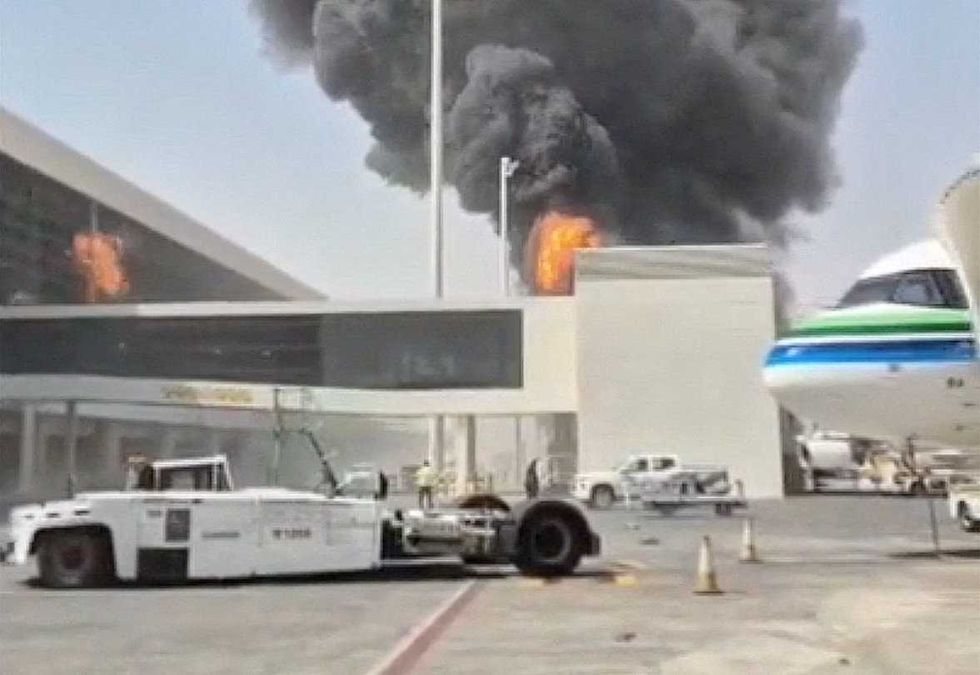
Yemen's Iran-backed Houthi militants struck Riyadh's King Khalid International Airport on Saturday, killing at least 12 people and injuring more than 300 in one of the deadliest attacks on Saudi territory in recent months. The assault marks the third Houthi strike on the same airport in recent weeks, underscoring the group's growing capacity to reach deep inside the kingdom despite years of Saudi-led military operations against it.
President Donald Trump told reporters Saturday that his administration «may» retaliate militarily, but conflict analysts say a major U.S. response is unlikely. Hisham Al-Omeisy, senior Yemen adviser at the European Institute of Peace, told Al Jazeera that the administration has little appetite for another regional entanglement, especially with midterm elections approaching and the unresolved conflict with Iran still keeping fuel prices elevated.
«The last thing the administration needs is getting stuck in another quagmire in the region, especially with what's happening in Hormuz that has not been resolved yet,» Al-Omeisy said. The Strait of Hormuz, a critical chokepoint for global oil shipments, has remained a source of tension between Washington and Tehran, contributing to energy market volatility that has fed into U.S. inflation ahead of the November vote.
The Houthis have also intensified their campaign to control the Bab al-Mandab Strait, a vital shipping corridor in the Red Sea through which a substantial share of global trade passes. In July, the group announced a blockade on all Saudi oil exports transiting the strait, and its recent territorial gains have only strengthened that position. The dual pressure on Hormuz and Bab al-Mandab has raised concerns about global energy security at a moment when diesel and gasoline prices are already straining household budgets in the United States.
Even if the Trump administration were to launch strikes against the Houthis, analysts warn such action would likely prove ineffective. F. Gregory Gause, a Saudi specialist at the Middle East Institute in Washington, told The New York Times that only a broader diplomatic settlement can address the root of the threat.
«The only realistic solution for the Saudis is an end to the Iranian-American war, in which the U.S. gets the Iranians to commit the Houthis to an end of hostilities as part of the overall deal,» Gause said. «Unfortunately for the Saudis, it is not clear how much President Trump listens to them on this.»
The attack places the administration in a difficult position. Domestic energy costs have become a central campaign issue, and any military escalation that disrupts oil flows further could worsen inflation. At the same time, inaction risks signaling weakness to both Tehran and Riyadh, a key U.S. partner in the region.
Saudi officials have not publicly detailed their requested response, but the kingdom has historically relied on U.S. intelligence and logistical support for its air defense. The Houthis, for their part, have framed the airport strikes as retaliation for Saudi-led operations in Yemen and have vowed to continue until their demands are met.
With the midterms weeks away, the White House faces a narrow window in which any major foreign policy move could be interpreted through a political lens. Analysts suggest the administration may opt for limited measures — such as defensive support or targeted sanctions — rather than a sustained bombing campaign that could draw the U.S. deeper into a conflict with no clear exit.
The strike also raises questions about the effectiveness of years of U.S. and Saudi efforts to degrade Houthi capabilities. The group has continued to develop drones and missiles capable of hitting high-value targets, and its position along the Bab al-Mandab gives it leverage over one of the world's most important trade routes.
For now, the administration's response remains uncertain. What is clear is that the attack has exposed the limits of U.S. influence in a region where multiple crises — Iran, Yemen, and global energy markets — are converging at a politically sensitive moment.
6