5 minWorld
EU weighs response to suspected Russian sabotage as German airport attack is blamed on Moscow
European Union foreign ministers met in Ireland to discuss how to respond to a suspected Russian drone attack on a German airport, with officials weighing new sanctions and diplomatic measures while seeking to avoid direct military confrontation.
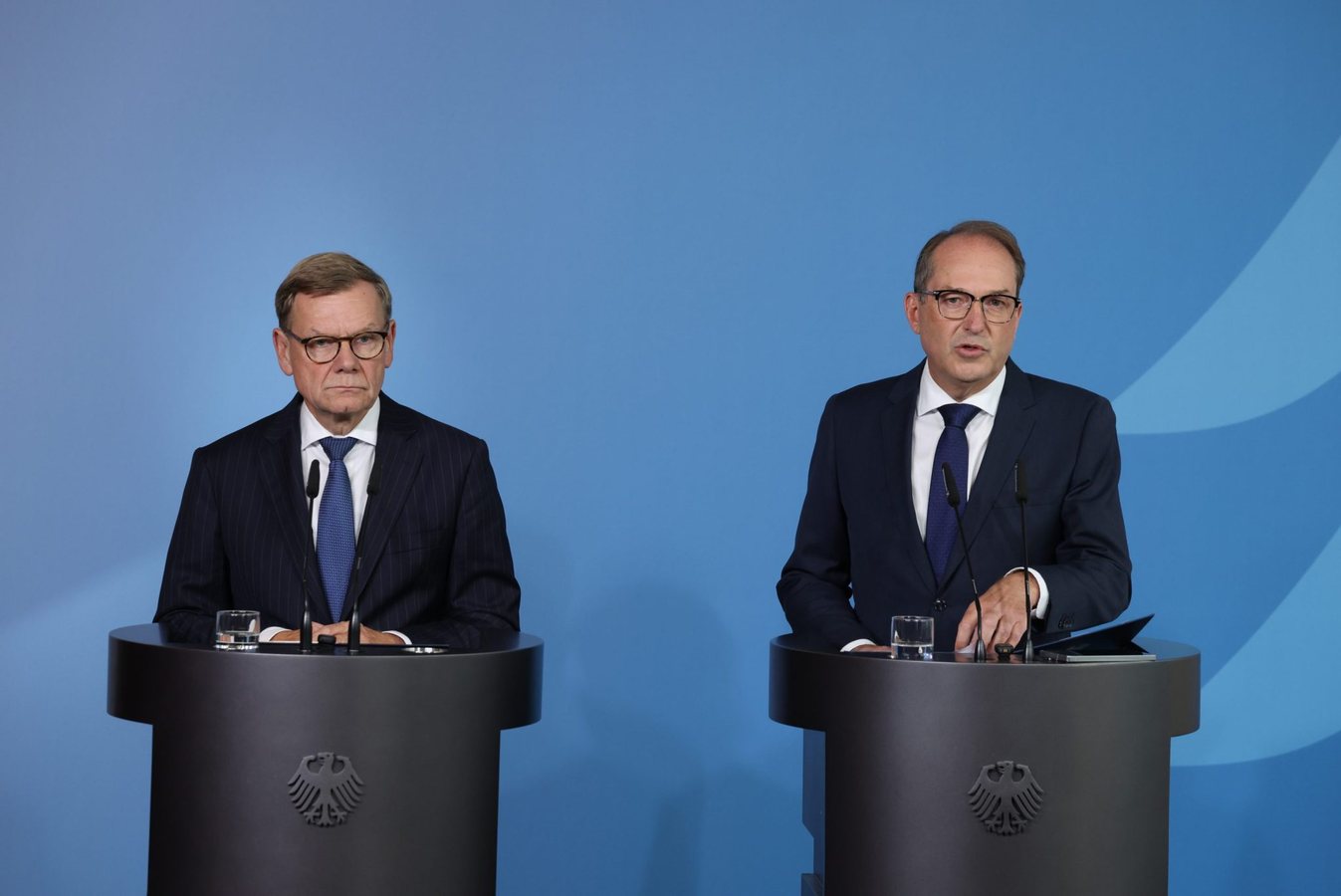
European Union foreign ministers met Wednesday to weigh a response to an attempted drone attack at a German airport that Berlin has blamed on Russia, as officials acknowledged the bloc is struggling to find new ways to counter Moscow's suspected sabotage campaign without resorting to military means.
The German government said Tuesday that Russia was responsible for the failed attack at Leipzig/Halle Airport on Aug. 4, when a drone laden with explosives was found near a Ukrainian cargo plane and defused. The airport is a major international freight hub used for providing support to Ukraine. Berlin announced it would shut down a Russian consulate among other measures in response.
EU foreign policy chief Kaja Kallas said the incident bore the hallmarks of state-sponsored terrorism. "It is clear that it has all the hallmarks of state sponsored terrorism. The question is: what do we do about this," she told reporters before chairing a meeting of the bloc's foreign ministers in Ireland.
French Foreign Minister Jean-Noël Barrot said France had summoned Russia's envoy to "protest strongly" and wants to impose sanctions on more of the Kremlin's shadow fleet ships. "We won't allow an act of such gravity without consequences," Barrot said.
The EU has already imposed almost two dozen packages of sanctions on Russia over its war in Ukraine, targeting more than 3,000 officials, oligarchs and entities including banks, energy companies and drone makers. Kallas said the bloc was preparing to impose more travel bans and asset freezes on another 1,600 people. Hundreds of ships in Russia's shadow fleet, which illicitly ships oil to fund President Vladimir Putin's war effort, have also been targeted.
The challenge for EU member nations, many of them NATO allies, is how to respond effectively without going too far. They remain cautious about being dragged into open conflict with nuclear-armed Russia. Germany insisted it was "not at war" but had become a "daily target" of the Kremlin's hybrid campaign.
Putin dismissed the allegations, saying Berlin wants to distract from its own failings and dissatisfaction among voters, and that any proof offered "has been planted." German Foreign Minister Johan Wadephul said Berlin had carefully prepared its response "and now Russia must live with these consequences." He called on Russia "to show that it is also ready for reasonable talks and negotiations, particularly regarding the situation in Ukraine."
Moscow has been widely accused by Western officials of running a yearslong campaign of sabotage and disruption aimed at undermining support for Ukraine and destabilizing European nations. The failed attack in Germany is one of several worrying incidents reported across Europe, including a fire this week at a major drone-making factory in Poland in which Russia is suspected. There have also been drone incursions in Estonia and Latvia resulting from Russia's war in Ukraine.
Spain has publicly accused Russia, along with Israel, of using disinformation to incite migrants to cross from Morocco into its Ceuta exclave in northern Africa. Spanish Foreign Minister José Manuel Albares accused some EU partners of echoing that fake information, without naming them. "There are a lot of people outside European Union that want to divide us, to make us weak," he told reporters, linking Spain's migration challenges to the incidents in Germany and elsewhere along Europe's eastern flank. "The land borders of the south of the EU are as important as the eastern borders," Albares said.
British Foreign Secretary Ed Miliband also attended the EU meeting, along with officials from Ukraine, Canada, Norway, Switzerland and Iceland. "We see an attempt by Russia to divide us in Europe and to deter us from our support for Ukraine," Miliband told reporters. "This attempt will fail. It will fail because we will stand up to Russian aggression. We will stand shoulder to shoulder with our friends in Ukraine," he said, for "as long as it takes for them to prevail in this conflict."
49