5 minWorld
Bishkek witness describes fear around Putin flight after Zelensky warning
A confidential witness says Vladimir Putin appeared deeply concerned before a flight from Bishkek to Vladivostok, after Ukraine warned that Russian airspace would see more drones. The witness had no access to Putin’s security conversations.
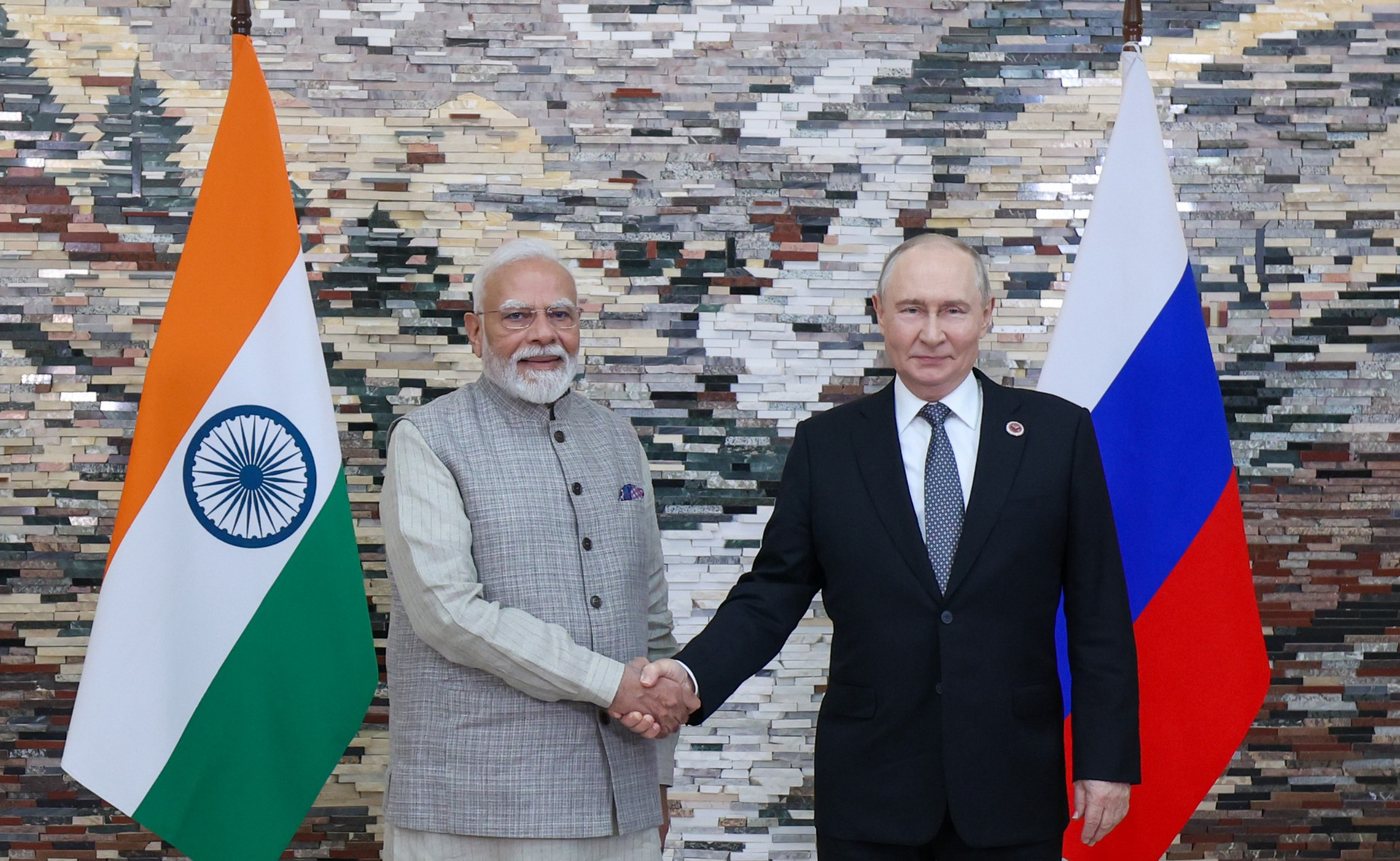
A confidential witness in Bishkek says Vladimir Putin appeared deeply concerned about his planned flight to Vladivostok in the hours after Ukrainian President Volodymyr Zelensky warned that Russian airspace was becoming increasingly unsafe.
The account has a clear limitation. The source was not a member of Russia’s Federal Protective Service or another part of Putin’s security detail. The witness did not hear private discussions between the president and his guards and did not hear Putin say that he was afraid to fly. The source’s claim is narrower: based on events visible around the end of the visit, the departure appeared to carry an unusual level of anxiety, which the witness interpreted as fear of the coming flight.
Several public events establish the timing around that observation. Zelensky’s September 1 address was aimed at airlines, insurers and governments that continue to use Russian airspace. He said Ukraine did not intend to target civilian aviation. At the same time, he warned that Ukrainian drones would operate over Russia more frequently and said the “safe days” in Russian skies were over.
Zelensky also referred to Vladivostok. He said another global power had earlier asked Ukraine to pause strikes in that direction for a defined period and that Kyiv had complied. Public reporting before the summit said Putin was scheduled to fly directly from Bishkek to Vladivostok after the final SCO events and press conference. The Kremlin had separately announced a September 2–3 programme for Putin in the Russian Far East linked to the Eastern Economic Forum.
Putin was still in Kyrgyzstan when he was asked about Zelensky’s warning. At the late-night press conference in Bishkek, he said that, if the statement had been made in those terms, it could be considered a bid for state terrorism. He said Russia would find a way to respond if relevant tragedies occurred. Reuters also reported that Putin acknowledged Ukrainian attacks inside Russia had caused real damage and identified drones as a particular challenge.
The drone threat has already affected civilian aviation in Russia. During a large Ukrainian drone attack on the Moscow region in August, Russian authorities temporarily restricted flights at Moscow airports. Such restrictions are a standard aviation response to an uncertain airborne threat: even without an attack on a passenger aircraft, authorities may close airspace or alter operations while objects are detected and intercepted.
The security of Putin’s routes has been a concern for the Russian presidential apparatus for years. Former Federal Protective Service officer Gleb Karakulov told the Dossier Center that Putin’s special train was useful partly because it was less conspicuous than air travel and more difficult to track through public information services. His comments are an attributed account by a former officer rather than an official explanation of Putin’s current travel decisions, but they provide context for the emphasis placed on concealment.
There is no public evidence that Putin sought to cancel the Bishkek-Vladivostok flight or that his security team changed the route because of Zelensky’s statement. The confidential source did not claim knowledge of either. The Kremlin’s English-language channel later reported that Putin left Bishkek and that Kyrgyz President Sadyr Japarov saw him off at Manas International Airport.
The significance of the witness account lies in the sequence, not in any ability to read Putin’s mind. A warning about more Ukrainian drones arrived while he was still outside Russia. The destination named in his travel schedule also appeared in Zelensky’s speech. Putin reacted before departure and publicly treated the issue as a serious security matter. Hours later, his own aircraft had to enter the same airspace at the center of the dispute.
That convergence does not turn the witness’s interpretation into a proven fact. It does explain why a routine presidential transfer could have looked different that night. The war’s pressure on Russian aviation, long experienced by ordinary passengers through closures and delays, had become directly relevant to the movement of the president himself.
58