6 minSports
WNBA Commissioner Tells Congress That Enes Kanter Freedom and Royce White Are Ineligible
WNBA Commissioner Cathy Engelbert told Republican lawmakers that former NBA players Enes Kanter Freedom and Royce White are ineligible to play in the league because they are «both men,» responding to a congressional inquiry without supplying the definition of «women» that lawmakers had requested.
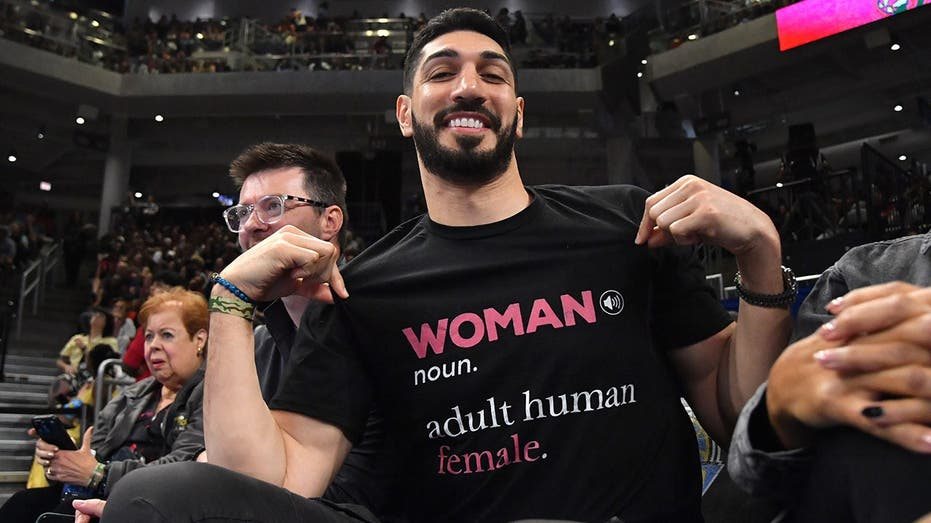
WNBA Commissioner Cathy Engelbert told Republican lawmakers that former NBA players Enes Kanter Freedom and Royce White are ineligible to play in the league because they are «both men,» according to a letter dated Oct. 16. The response came after a Sept. 17 inquiry from Rep. Marlin Stutzman, R-Ind., and four other House Republicans about eligibility, player safety and confrontations with fans.
In the letter, Engelbert wrote: «With respect to your questions regarding eligibility, only women are eligible to play in the WNBA and the individuals you cite in your letter are both men.» The lawmakers had asked how the league defines «women» under Article XIII, Section 1(a) of its collective bargaining agreement, and why the two former NBA players had been deemed ineligible. That provision of the 2026 agreement states: «Only players who are women are eligible to play in the WNBA.» It does not define the term in that eligibility provision.
Stutzman welcomed Engelbert’s statement as an acknowledgment of a distinction based on biological sex. «The WNBA has just taken the first step in defining what a woman is for the sports community,» Stutzman said in a statement. «By clearly labeling Enes Kanter Freedom and Royce White as men they have acknowledged that identifying as a woman does not change basic human biology.»
Engelbert’s letter did not announce a new eligibility rule or spell out a broader policy governing transgender athletes. Freedom, meanwhile, argued that the response left unanswered the central question of what standards the WNBA applies when deciding who qualifies to compete. «Cathy Engelbert cannot clearly define what a woman is, but she's absolutely certain that I'm a man,» Freedom told OutKick. «I mean, how does that make sense? Who gets to decide? Who has the authority to determine whether someone is a woman?»
«So if the league is still working through these questions, how can its commissioner be so certain about my eligibility without explaining the standards that she's applying?» he added. Asked whether he believed Engelbert had misgendered him in her letter to Congress, Freedom answered, «Yes, 100%.» «I just want her to respect my identity because I am telling you that I identify as a woman,» he said.
Freedom said his effort to join the league is intended to push it to adopt an explicit requirement limiting participation to biological females. He acknowledged that determining someone’s identity and determining eligibility for women’s sports may involve different decisions. «This is bigger than one basketball player,» he said. «I mean, who gets to determine someone's identity? The individual, the commissioner, the medical professional, or a committee or a task force?» «And who gets to determine eligibility to compete in women's category?» he continued. «So those may be different decisions, but the WNBA needs to explain where it draws the line.»
The debate over the league’s eligibility standards intensified this summer after Indiana Fever guard Sophie Cunningham voiced support for excluding transgender girls and women from female sports. Her comments drew both support and criticism, including rallies during the Fever’s road trips. Some players and coaches publicly supported transgender inclusion. Freedom has pointed to Golden State Valkyries player Gabby Williams’ support for transgender athletes as the inspiration for his own effort to enter the WNBA.
In August, a league task force of team presidents and general managers discussed transgender participation along with online abuse directed at players. The task force was an existing anti-hate committee, rather than a group created solely to determine eligibility. At the time, the league said there were no immediate eligibility matters affecting the WNBA and condemned attempts to use the subject to demean or marginalize others. It said discussions with league stakeholders would continue in the coming weeks and months. Freedom questioned how the league’s ongoing discussions fit with Engelbert’s definitive statement about him and White. «So what about the task force?» he said. «If the task force itself has not reached a clear definition, why is the commissioner making such a definitive statement?»
Eligibility was only one part of the lawmakers’ inquiry. Their September letter also challenged the league’s response to physical play, including incidents involving Chicago Sky guard DiJonai Carrington and Cunningham, and sought an explanation of its handling of confrontations between players and spectators. In her response, Engelbert defended the league’s officiating and disciplinary processes. She said officials enforce the rules during games, while WNBA League Basketball Operations reviews games afterward, including atypical or overly physical plays. The league can then upgrade fouls or impose discipline. «In all instances the League seeks to apply its rules and relevant disciplinary processes consistently for all players, coaches, and officials,» Engelbert wrote. On fan conduct, the commissioner said spectators must follow the WNBA’s code of conduct and can be ejected for violations.

3