6 minSociety
White House Rebukes Chicago Mayor Over Reparations Push
The White House dismissed Mayor Brandon Johnson's claim that President Trump ignored reparations for descendants of enslaved Black Americans, saying race-based programs are illegal and urging him to focus on crime.
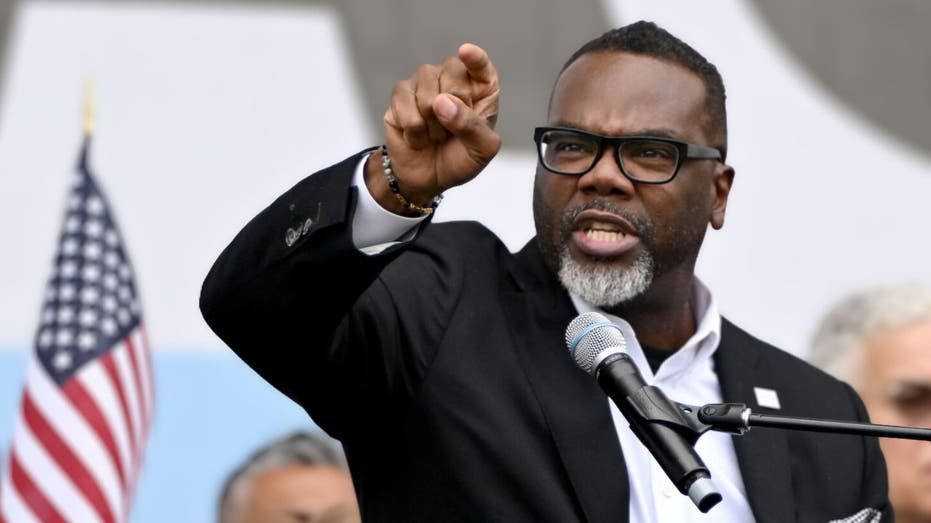
The White House sharply rebuked Chicago Mayor Brandon Johnson on Wednesday after the mayor accused President Donald Trump of enriching the wealthy while ignoring the demands of descendants of enslaved Black Americans. The exchange marks the latest flashpoint in a national fight over reparations and race-conscious government programs.
Johnson made the remarks during an appearance on the «Native Land Pod» podcast, where he discussed his administration's public safety record. Violent crime in Chicago has fallen sharply, according to city data, and the mayor argued that safety requires more than policing. He pointed to investments in mental and behavioral health care, detective recruitment, and community violence intervention programs.
The conversation turned to a recent Truth Social post in which Trump said Chicago was suffering an «unprecedented and particularly violent crime wave» and that the federal government could «extinguish it quickly and completely» if city or state leaders asked for help. Johnson rejected the characterization as «disingenuous» and «pathetic.»
«This is the president who just released the largest upward transfer of wealth into the hands of the ultrarich at the expense of the demands of those of us who are descendants of the formerly enslaved,» Johnson said. He listed education, housing, health care, transportation, and good-paying jobs as the core demands of formerly enslaved people, saying those needs were sacrificed to benefit the wealthy.
Johnson also accused Trump of cutting the violence prevention budget by $800 million and reducing the Bureau of Alcohol, Tobacco, Firearms and Explosives budget by 30%. He said Chicago police have worked with federal authorities to remove nearly 9,000 illegal weapons from city streets this year alone.
A White House spokesperson dismissed Johnson's claims and called on him to focus on local public safety. «Government programs that dole out money based on race are illegal,» the spokesperson said. «Chicago would be better served if Mayor Johnson focused more on lowering his city's homicide rate instead of advocating for divisive, unconstitutional government action.»
According to the mayor's office, Chicago has achieved historic double-digit decreases in crime and violence in 2025 and is on track for further declines in 2026. Homicides are down 3.8%, shootings down 1.3%, and robberies down 20.9% compared with the same period last year.
While Johnson did not explicitly use the word «reparations» in the interview, a spokesperson pointed to the city's reparations initiatives. Johnson previously signed an executive order creating a 40-member reparations task force to address «historical harms committed against Black Chicagoans and their ancestors.» In March, he announced the Repair Chicago public engagement initiative to gather lived experiences from Black residents to inform future municipal policy and equity measures.
The push for reparations in the Chicago area comes as the federal government ramps up legal scrutiny of local programs. Nearby Evanston, Illinois, launched a first-of-its-kind reparations program in 2021, offering $25,000 grants to eligible Black residents or their direct descendants for housing and home repairs, funded by local taxes on recreational marijuana sales. To date, Evanston has distributed more than $7 million of an allotted $20 million fund. Earlier this year, the city's Reparations Committee cleared an additional wave of funding for 44 residents.
However, the Trump administration's Department of Justice has signaled plans to challenge race-conscious distribution models. Assistant Attorney General Harmeet K. Dhillon of the DOJ's Civil Rights Division previously said local officials pushing these measures are «virtue signaling» to win votes.
Federal intervention is expanding elsewhere as well. In September last year, the DOJ warned officials in Buncombe County, North Carolina, that it would investigate potential civil rights violations if local leaders approved recommendations from the Asheville-Buncombe Community Reparations Commission.
Responding to Johnson's remarks, White House spokeswoman Allison Schuster emphasized that the administration remains committed to dismantling race-based initiatives. «President Trump was resoundingly elected with a mandate to end divisive, racist policies and restore merit and efficiency,» Schuster said. «DEI ran rampant during the Biden administration, and Americans ultimately rejected it.»
The clash underscores the broader national debate over how governments should address historical injustices and whether race-conscious programs can withstand legal challenges. As Chicago pursues its reparations task force and Evanston continues its program, the White House's opposition signals that federal agencies will continue to scrutinize such efforts.
8