6 minSociety
Detransitioner Casts Doubt on Reported Drop in Teen Gay and Bisexual Identification
Walt Heyer, who lived as a woman for eight years before detransitioning, says social media and peer pressure may be distorting new federal data showing a sharp decline in ninth-grade girls identifying as lesbian or bisexual.
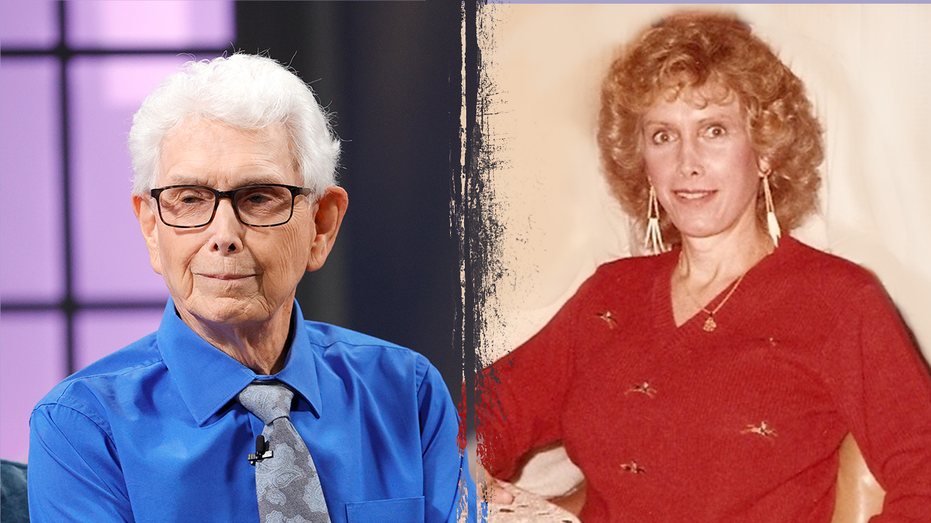
A man who lived as a woman for eight years before detransitioning is challenging the way new federal data on teenage sexual identity is being interpreted, arguing that social pressure and online influence may be distorting what young Americans report about themselves.
Walt Heyer, who detransitioned roughly four decades ago and is now a senior fellow at the Family Research Council, said in an interview that he doubts the sharp decline in teenagers identifying as gay or bisexual reflects a genuine shift in orientation. He suggested instead that some adolescents may be withholding how they identify because of the social dynamics they encounter online and at school.
«I don't really believe that there's a big dramatic free fall,» Heyer said, referring to recent coverage of the declining rates.
His comments follow reporting on CDC data showing that the share of ninth-grade girls identifying as lesbian or bisexual fell from 30 percent in 2021 to 17 percent in 2025. The proportion identifying specifically as bisexual dropped from 26 percent to 13 percent over the same period. The percentage of boys identifying as gay or bisexual has remained largely stable over the past decade, while the share of high school girls identifying as lesbian or bisexual rose sharply after the COVID-19 pandemic before beginning to fall.
Heyer attributed part of the pattern to the pressure young people feel to present themselves in particular ways on social media. He said some teenagers who do not wish to be placed in a particular category may simply avoid saying so publicly.
«I think what's happening is that, because of social media, there's a lot more influence on people who may not want to fall into that classification on a social media level and will withhold the fact that they are gay or bisexual but really don't want to openly admit it,» he said.
He described peer dynamics as a significant factor in how adolescents describe their identity, saying he has spoken with students who reported being pressured in either direction.
«I've had actual people in school saying that they're bullied into identifying one way, or they're bullying and bullied to not identify that way,» Heyer said. He added that many young people are «sort of coerced by their peers to say things one way or the other,» which he said makes him skeptical of drawing firm conclusions from self-reported survey responses.
Heyer, an author and co-author of several books, including «Trans Life Survivors» and «Paper Genders,» has spent years working with people who question their gender identities. He argued that adults should focus on affirming what he described as factual reality, contending that medical and social transition do not change a person's biology.
«I went through the hormones, had all the surgeries, identified that way,» he said. «So far in all world history, nobody has actually biologically changed their gender. This is a cosmetic social appearance. It is not a biological change.»
He characterized the procedures and terminology associated with gender transition as labels and interventions that, in his view, reject religious truth. He said young people and adults who adopt them are, as he put it, rejecting God.
Beyond his skepticism about the data, Heyer urged researchers to gather more evidence before treating the numbers as evidence of a lasting change in sexual identity among adolescents.
«I just think it's important for us to be much more thorough and go to other areas before we come to some conclusion that there's a giant, giant drop in these identities,» he said. «I don't think we're there yet.»
The figures at the center of the debate come from the CDC's Youth Risk Behavior Survey, which tracks health behaviors among high school students and is conducted every two years. The survey relies on self-reported answers from students, a method that researchers say can be affected by how comfortable respondents feel about disclosing sensitive information.
The reported decline in lesbian and bisexual identification among ninth-grade girls has drawn attention because it followed a period of rapid increase. Researchers have not settled on a single explanation for either the rise or the fall, and the data cover only one grade level, which limits how broadly the findings can be applied.
Heyer's argument adds a dissenting voice to a debate that touches on how schools, health agencies, and families understand the experiences of young people. He said the possibility that teenagers are concealing their orientation rather than experiencing a change in it deserves more study before the numbers are treated as a definitive trend.
7