5 minSociety
Tuya Unveils Doova, a Wheeled AI Companion Robot for Seniors
Tuya Smart introduced Doova at IFA 2026, a wheeled AI robot designed to help seniors live independently by responding to calls for help, connecting family via live video, and monitoring the home.
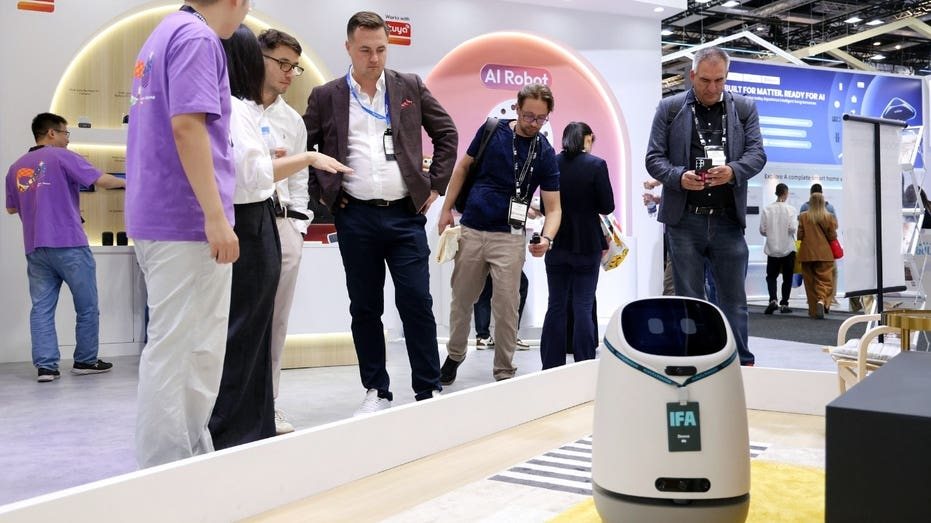
Tuya Smart has unveiled a wheeled artificial intelligence robot designed to help older adults live independently at home, offering a new layer of support for families worried about what happens when a senior falls or needs assistance and no one is around to notice.
The robot, called Doova, was introduced at the IFA 2026 technology trade show in Berlin. Unlike traditional medical alert systems that sit on a table and wait for a button press, Doova can move through the home, locate a person who calls for help, and connect family members through a live video call when an emergency appears to be unfolding.
Doova relies on LDS LiDAR to navigate around furniture and rooms. A four-microphone array helps it determine the direction of a voice, while AI vision analyzes a person's skeletal posture. If someone falls or needs assistance, they can say, «Hey Tuya, help.» The robot then rolls over to assess the situation. According to Tuya, if the user does not respond within 60 seconds, Doova initiates an emergency response workflow. Family members receive an alert with a two-way live video call so they can see what is happening and arrange assistance.
Tuya has not said that Doova automatically detects falls without the user first calling for help, nor does it directly contact 911 or a professional monitoring service. As a result, the device is best understood as an added layer of support rather than a replacement for a dedicated medical alert system.
Beyond emergency response, Doova is built to serve as a conversational companion. It uses a multimodal large language model so users can talk with it in a more natural way instead of memorizing rigid voice commands. For someone spending long stretches of time alone, the robot can carry on a conversation or provide entertainment. It can also help make sense of a confusing bill or letter.
Tuya says Doova can identify potential scam risks, a feature that could be useful for older adults who receive a suspicious message and want a second opinion before responding. However, AI can make mistakes, and the safest next step would still be to verify anything suspicious independently or share it with a trusted person.
The robot also offers practical daily assistance. It can remind users to take medication, keep track of their schedule, and provide weather updates. Tuya says it can learn a user's preferences over time, which could make its suggestions more useful day-to-day. The company plans to add a feature that helps find misplaced items around the house.
Doova doubles as a mobile home-monitoring device. Rather than continuously hugging the walls as some patrol robots do, Tuya says Doova travels to selected locations near the center of rooms and performs a 360-degree scan. It then creates a safety report that can be sent to the user's phone. When the battery runs low, Doova can return to its charging dock on its own. That gives the robot another possible use when someone travels or spends part of the day away from home.
However, the robot's capabilities also raise privacy questions. Doova has microphones, AI vision, and live video inside the home. It can also learn a user's preferences over time. That can make the robot more helpful, but it also means giving it access to a lot of personal information. Tuya's launch announcement does not spell out Doova-specific privacy controls, such as where video and audio are processed, what gets stored, who can see it, and whether users can permanently delete what the robot has learned.
Tuya also designed Doova to work as a central smart home controller. A senior could use voice commands to adjust connected lights or curtains, and the robot can interact with compatible kitchen and bathroom devices. Smart homes can become complicated quickly, especially when every device has its own app. If Doova can put those controls into a simple conversation, it could reduce that burden.
The introduction of Doova reflects a growing interest in using AI and robotics to address the challenges of an aging population, particularly as more seniors express a desire to remain in their own homes. While the robot is not yet a substitute for professional medical monitoring, it represents an attempt to combine companionship, emergency response, and home management into a single mobile device.