5 minSociety
Sunny Hostin Says Her Children Faced Racism at Predominantly White Private Schools
The View co-host Sunny Hostin said her children experienced psychological trauma, bullying and racism at a predominantly White private school, comments that came as she discussed a debate over school choice and educational inequality.
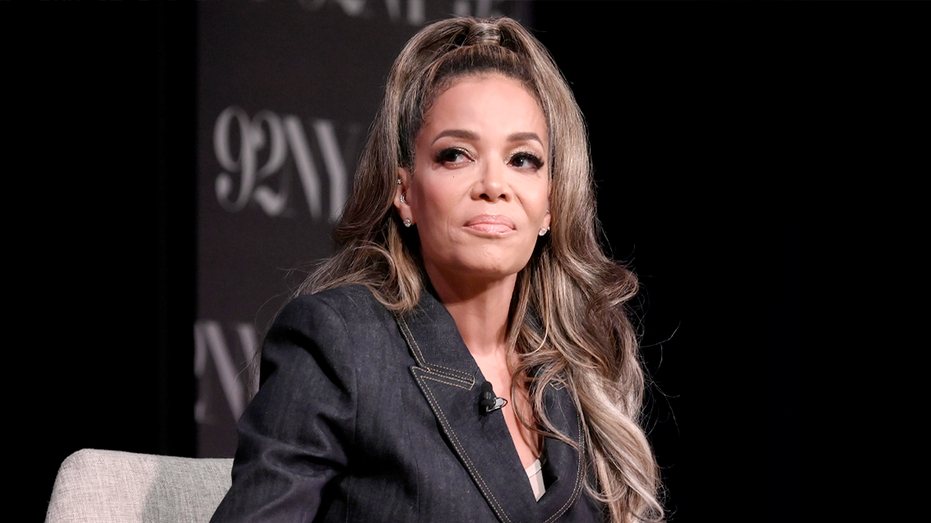
Sunny Hostin, a co-host of ABC's «The View,» said her children experienced racism and psychological trauma while attending a predominantly White private school, describing bullying that included classmates trying to stick pencils in her daughter's hair.
Hostin made the remarks during a discussion of Nikole Hannah-Jones, the 1619 Project founder and New York Times Magazine reporter who recently said she regretted aspects of her decision to send her daughter to predominantly Black, high-poverty public schools in Brooklyn as a way to challenge educational inequality.
Hostin said she understood the difficulty of the choice but had made a different one, sending her children to a well-funded private school where they excelled academically yet faced a different kind of harm.
«I sent my children to private schools, a predominantly White private school. So, while they didn't suffer academically, they excelled, but it was a well-funded school, a private school, well-resourced school, they suffered a different type of pain,» Hostin said. «There was psychological trauma, there was racism that they experienced. They were bullied. There was, you know, trauma around their identity. My daughter wears a big afro, kids were trying to stick pencils in her hair. Boys were calling her butter face, meaning she looked good, but her face, and she is a beautiful girl.»
Hostin said her children did not struggle academically in the way Hannah-Jones has described her daughter's experience, but she pointed to what she called a systemic problem in how American public schools are funded. Schools in predominantly non-White districts receive $23 billion less in annual funding than their White counterparts, she said, because public schools rely on property taxes.
«So I think the real question here is, nationally, schools in predominantly non-White districts receive $23 billion less in annual funding than their White counterparts. Underfunded schools versus well-funded schools. So public schools are funded from property taxes. So we need to look at the systemic problem that's happening in this country around public education,» Hostin said.
Hannah-Jones, in a comment to Fox News Digital, said the focus should remain on families without the resources to pursue better educational options for their children rather than on her own decisions. «I hope people concerned about the choice my husband and I made for our daughter will have equal or more outrage for the thousands of Black children whose parents don't have the resources to send them to better schools,» she said. «As I write in the piece, there is no absolution to be had for any of us.»
Fox News Digital said it reached out to ABC and to Ethical Culture Fieldston School, where Hostin previously sent her children, for comment but did not immediately receive a response.
The exchange reflects a broader and often painful debate among Black families about how to navigate a school system in which resources are unevenly distributed. Parents who choose predominantly White private schools may gain access to well-funded classrooms and advanced coursework, but their children can face social isolation, racial stereotyping and bullying that schools do not always address. Families who choose predominantly Black public schools may keep their children closer to their communities, only to confront underfunding, high poverty and limited resources.
Hostin's account also touches on a long-running policy dispute over how public schools are financed. Because so much school funding is tied to local property taxes, districts serving poorer communities often have less to spend per student than wealthier districts, a gap that researchers and advocates have documented for decades. Proposals to change that formula, whether through state-level funding overhauls or programs that let money follow students to other schools, remain politically contested.
The comments add to a public conversation that has drawn in prominent figures, including former first lady Michelle Obama and Supreme Court Justice Ketanji Brown Jackson, who have spoken about the pressures faced by students of color in elite educational settings. For Hostin, the issue is both personal and structural: her children, she said, received a strong academic foundation but carried scars from the social environment around them.
6