5 minSociety
Optum CEO Patrick Conway keeps working weekend shifts as a Boston pediatrician
Optum chief executive Patrick Conway still works hospital weekend shifts as a pediatrician, a practice he says keeps him close to the failures of American health care. Speaking at a Fortune event, he defended Optum's role and pitched technology and drug-cost tools as fixes.
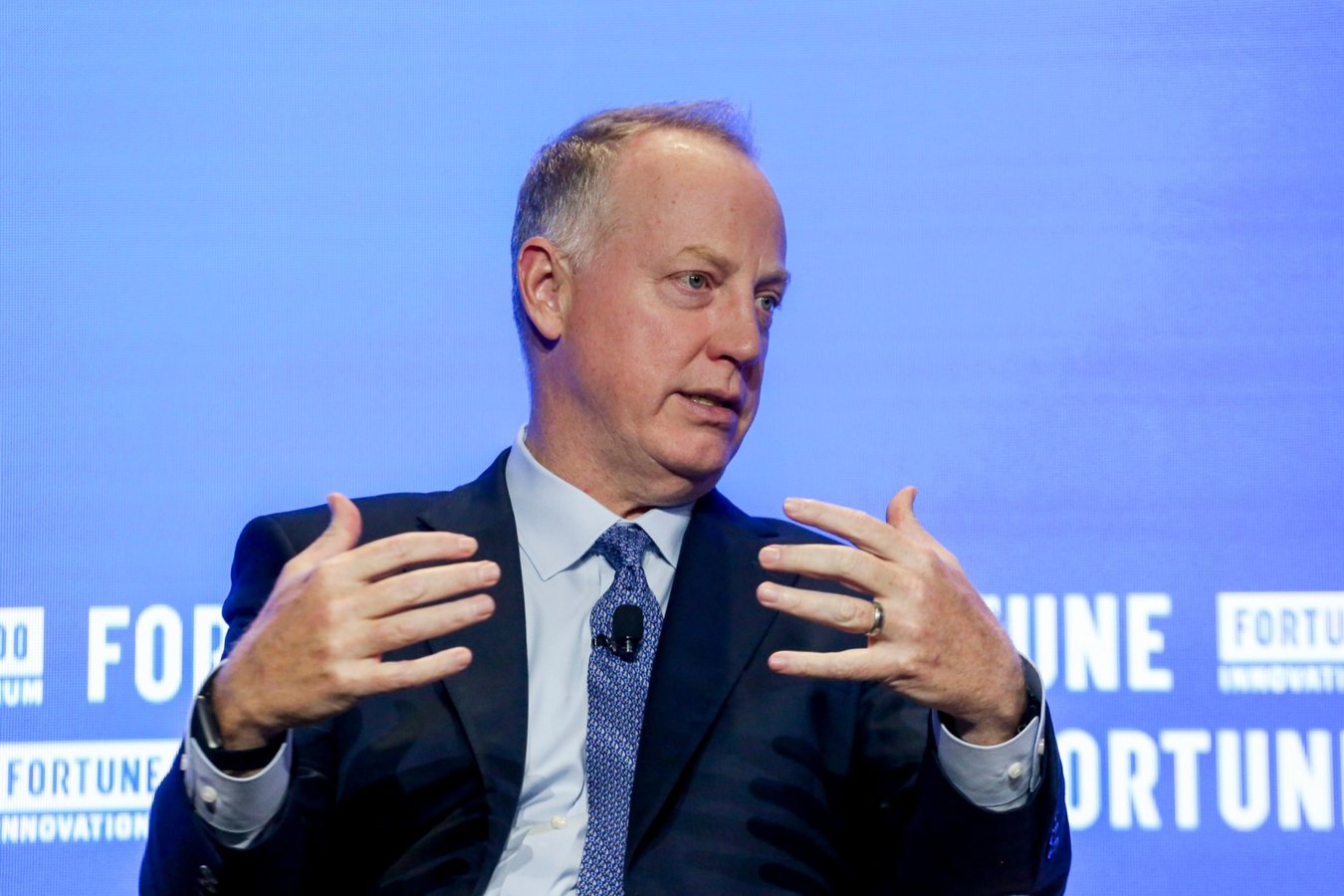
Optum chief executive Patrick Conway continues to work weekend shifts as a hospital pediatrician in Boston, and the patients he sees there shape how he talks about the health care system. Speaking at the Fortune 500 Innovation Forum in Detroit, he described cases that, in his words, should not happen in America but do every single day.
In his last couple of weekends on the wards, Conway said he treated three patients he cannot stop thinking about. One was a 14-year-old girl who had called more than 100 people trying to get mental health care before she ended up in his hospital with broken legs. Another was a 21-year-old with meningitis who, upon waking, told him she was a single mother who could not afford care and needed to leave. The third was a 15-year-old on Medicaid who needed complex rehabilitation for a neurologic disorder, and the hospital struggled to find a facility that would take her. "Those stories could be anywhere in America," Conway said, adding that Optum's job is to prevent them from happening again.
During the week, Conway runs Optum, the health services arm of UnitedHealth Group. He said the company employs about 300,000 of the conglomerate's roughly 400,000 people. That position makes him an unusual observer of the system's shortcomings, since his company sits on the other side of many of them. Fortune's Diane Brady put the tension bluntly, comparing Optum to a cable company: people need it, and they do not always like it. Conway did not dispute the comparison. He said Optum's business customers, including health systems, payers and employers, are generally quite positive. On the insurance side, he acknowledged that people have concerns about access, prior authorization and whether their doctors are in network.
Conway took over Optum in 2025, a year in which UnitedHealth replaced chief executive Andrew Witty with former chief executive Stephen Hemsley. The company said it was cooperating with federal investigations into its Medicare business. Conway's own career has spanned much of the federal health system. He joined the Department of Health and Human Services as chief medical officer late in the George W. Bush administration and held several roles at Medicare and Medicaid, mostly under Barack Obama, a period he noted is less common among executives today. He has also run a Blue Cross plan.
He recalled his first week as an attending physician at Children's Hospital of Philadelphia, when a child arrived with a 1,000-page paper chart after years of moving between community hospitals. On page 487, he found a rare mitochondrial disorder. "In today's world, that child should be diagnosed anywhere in America within seconds, minutes," he said. His argument for Optum is that scale and artificial intelligence can close such gaps faster than a fragmented system can.
On drug costs, Conway pointed to a tool called Savings IQ from Optum Rx, which he said brought the median copay for specialty drugs down from about $88 to $5. He said it saved consumers more than $1 billion out of pocket over the past 12 months. He recounted an email from a cancer patient who had been skipping doses because the medicine cost about $300 and had not told his wife. "Now it's $5," Conway said. "I'm on my medicine. I'm doing better."
He also promoted OptumReal, a platform that digitizes benefits and connects payers with health systems. Conway said it can approve a service with what he described as 99 percent accuracy or better, so the payer, provider and patient see the same answer at the point of care. Asked when such systems would become standard, he said it "may become faster than you imagine," because payers and providers know the current system does not work.
Brady also raised Mark Cuban, who has argued for years that pharmacy benefit managers such as Optum Rx are driving drug prices higher. Conway said he once debated Cuban in Washington and accepted the challenge. He called Cuban's model a niche solution for some drugs that helps people, but said the system needs something more comprehensive. Brady also raised Pfizer chief executive Albert Bourla's view that cancer will one day be as manageable as diabetes. Conway, who lost his father to cancer, said he hopes Bourla is right, though he added it may take longer.
Conway closed on the pace of change. He said he has been trying to fix health care for 20 to 25 years. "I don't know if I've got another 20," he said. "I hope so. It's got to go faster."
Source: fortune.com
40