5 minSociety
FDA clears tiny robot that removes bladder tumors in one piece
The FDA has authorized the Virtuoso Endoscopy System, a miniature robot that removes bladder tumors through the urethra, potentially giving pathologists more complete tissue samples for diagnosis.
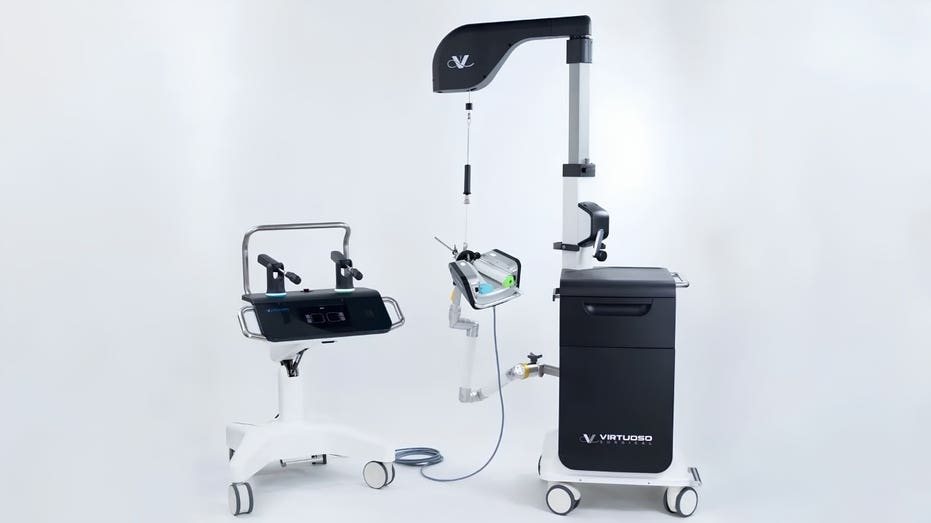
The Food and Drug Administration has authorized a tiny surgical robot designed to remove bladder tumors through the urethra without cutting through the skin. The device, the Virtuoso Endoscopy System, was developed by Nashville-based Virtuoso Surgical. The company says the technology can take out many tumors in one piece, which could give pathologists better tissue samples and help doctors make more informed treatment decisions.
The system works through a narrow medical instrument called a rigid endoscope, which enters the bladder through the urethra. At its tip are two miniature robotic arms made from a flexible metal alloy known as nitinol. A surgeon controls both arms from a console. One arm lifts and holds the tumor while the other carefully separates it from the tissue beneath, giving the surgeon two-handed control inside a very small space.
The procedure is called en bloc resection, meaning the tumor is removed in a single piece. Surgeons can already perform this technique with conventional instruments, but it can be technically demanding. Virtuoso designed its system to make the approach easier to carry out. The company stresses that the robot does not make surgical decisions or operate on its own. Every movement depends on the surgeon, which distinguishes it from autonomous surgical robots still being tested in research settings.
The need for better sampling is tied to how bladder cancer is typically evaluated. The American Cancer Society estimates that about 84,530 people in the United States will receive a bladder cancer diagnosis in 2026. One of the most common procedures for evaluating and removing bladder tumors is transurethral resection of bladder tumor, known as TURBT. During conventional TURBT, surgeons often remove tumors in smaller fragments. That approach works for many patients, but it can disrupt the tissue's original structure, making it harder for pathologists to determine how deeply cancer has grown.
That depth matters most when it reaches the detrusor muscle, the muscle layer of the bladder wall. Whether cancer has invaded that layer can change the recommended treatment. Removing a lesion intact may preserve more of the information pathologists need and allow them to examine the surrounding tissue more clearly. Dr. Duke Herrell, a urologic surgeon and chief executive of Virtuoso Surgical, described the potential benefit in the company's announcement. « Removing a tumor intact can provide a better tissue specimen, which supports clearer diagnosis and staging, » Herrell said.
Early clinical results from the company-sponsored VIABLE study at The Chinese University of Hong Kong are encouraging but limited. In the first 20 enrolled patients, 94 percent of removed lesions contained detrusor muscle, exceeding the study's predefined performance goal of 60 percent. Researchers were able to evaluate surgical margins, the edges of the removed tissue, in 93 percent of malignant lesions. Being able to assess a margin does not by itself show that it is free of cancer. The company reported no adverse events during these operations.
The findings carry important caveats. The study involved a small number of patients at a single medical center. The earlier published first phase of the same study involved six patients and recorded two postoperative adverse events, one case of temporary urinary retention and one chest infection later linked to a separate esophageal tumor. The company compared its results with previously published research on conventional bladder tumor removal, but the study did not directly pit the robot against traditional instruments in a randomized trial. Larger studies will be needed to show whether the system improves long-term outcomes or reduces the need for follow-up procedures.
The FDA granted De Novo authorization for the system on October 30, 2025, and the company publicly announced the decision on November 10. The authorization creates a new FDA classification for robotic surgical instruments that operate through an endoscope inside the body. The system is cleared to remove bladder lesions in adult patients and obtain tissue samples, including bladder muscle, to help diagnose bladder cancer. The decision follows the FDA's September 2025 Breakthrough Device Designation for the technology, which recognized its potential to address an unmet need.
Source: foxnews.com
21