5 minSociety
Harvard Artist-in-Residence Roxane Gay Calls to «Free Luigi» Mangione at Fat Liberation Panel
Roxane Gay, a Rutgers professor and Harvard Medical School artist-in-residence, called for the release of Luigi Mangione during a panel on fatness and healthcare, drawing attention to her criticism of the health insurance industry and her subsequent statement condemning the killing of UnitedHealthcare CEO Brian Thompson.
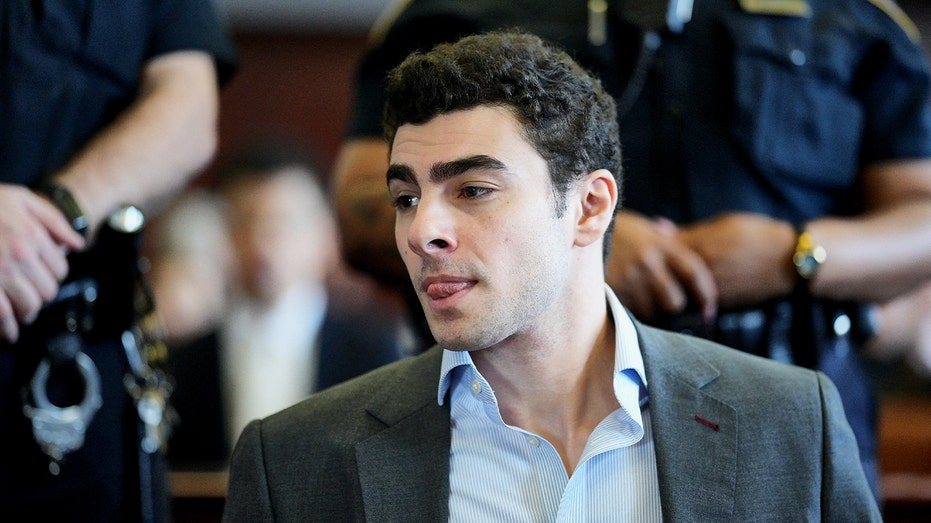
Roxane Gay, a Rutgers University professor and artist-in-residence at Harvard Medical School, called for the release of Luigi Mangione during a Harvard panel on Wednesday that examined the intersection of fatness and healthcare. When the discussion turned to the health insurance industry, Gay responded, «Free Luigi, for one,» and went on to describe the industry as «equal opportunity evil.»
The remarks came during Harvard Medical School's «Against the Pathology of Unruly Bodies» event, which organizers said focused on how medical professionals treat overweight patients and how fat bodies are pathologized with grave consequences. The panel was designed to explore how medical professionals can more ethically treat fat patients as people rather than as problems to be solved.
Mangione pleaded guilty in August to two federal stalking charges resulting in death in connection with the killing of UnitedHealthcare CEO Brian Thompson. He faces a second-degree murder charge, several weapons charges and a forged-instrument charge in New York state court. He is scheduled to be sentenced in federal court on Dec. 18 and faces a maximum potential sentence of life in prison. His state case remains pending.
Gay holds the Gloria Steinem Endowed Chair in Media, Culture and Feminist Studies at Rutgers and is listed as an artist-in-residence at Harvard Medical School. In a statement, she said she made the comment out of «utter frustration» with the health insurance industry, which she said is far more focused on profit than on providing people with the healthcare they need.
«Luigi Mangione was clearly dealing with mental health issues when he committed murder,» Gay said. «Murder is wrong, in all cases, including the death penalty. I don't think his mental health issues will be addressed in a carceral setting. He should be in a setting where he can get actual help, not in a place that might exacerbate the mental illness that drove him to commit murder.»
Gay also said she condemns the killing of Brian Thompson and all killing, adding that murder does not solve anything and did not improve the health insurance system. She said the health insurance industry is «absolutely equal opportunity evil» and that millions of Americans share that sentiment. She added that she would like to see the American health insurance system evolve into a single-payer system so the country has universal healthcare like a significant percentage of the rest of the world.
«At the very, very least, it would be great if health insurance companies didn't make healthcare decisions for patients that should be made by their physicians,» Gay said. She also said that articles of this type result in her receiving death threats and harassment because they are decontextualized.
A Harvard University spokesperson said that for the 2026-2027 academic year, Roxane Gay is an artist-in-residence for the Master of Science in Media, Medicine and Health and the Media and Medicine Certificate Program at Harvard Medical School. The spokesperson added that the views expressed by speakers at events are their own and do not represent Harvard Medical School or Harvard University.
The event and Gay's remarks quickly drew attention online, including from Stu Smith, an investigative analyst at the Manhattan Institute, who wrote on X that Gay had responded to a question about the health insurance industry with «Free Luigi.» Smith also noted that Gay had said minutes earlier that she uses concierge medicine after deciding to «throw money at this problem» and «buy my way out» of ordinary healthcare.
Gay's comments come amid broader public debate over the health insurance industry and the criminal case against Mangione, who has become a polarizing figure. The panel itself was part of an ongoing conversation at Harvard Medical School about how medical professionals treat patients, particularly those who are overweight, and the consequences of pathologizing certain bodies.
4