4 minSociety
Family Says Moscow Police Detained 15-Year-Old After Alleged AI Misidentification
The boy was detained May 4 and later diagnosed with a concussion. Police and the family give conflicting accounts of the force used during the encounter.
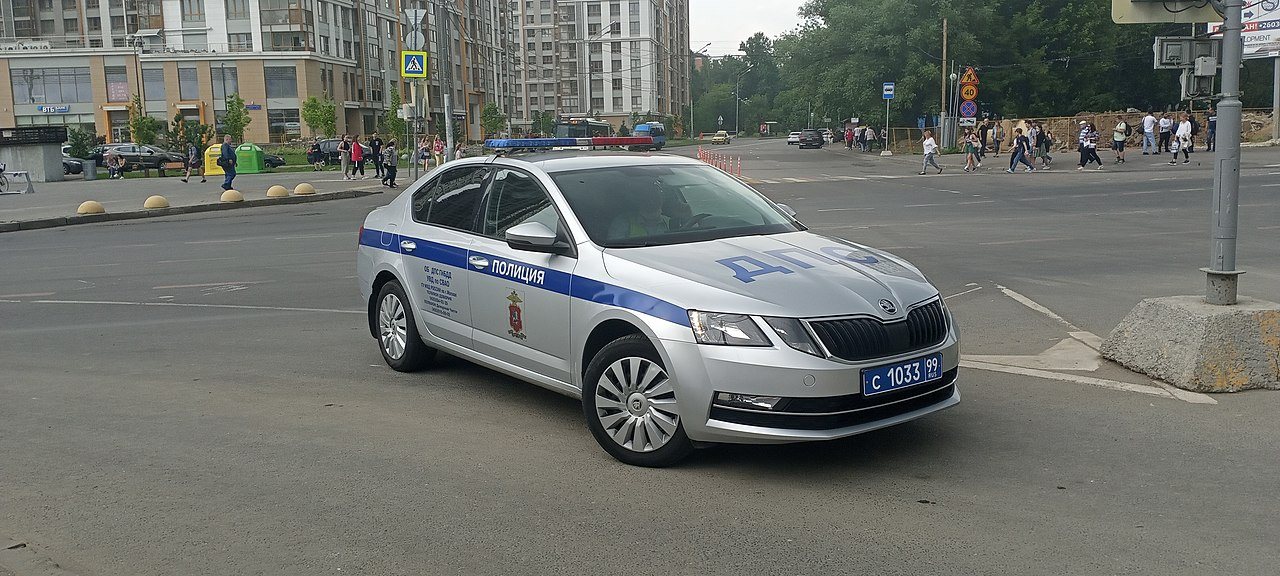
A Moscow family says police detained and injured their 15-year-old son after mistaking him for a suspected drug distributor, and later told the boy’s mother that an artificial-intelligence system had shown an 85–90% match to a person in a police alert.
The detention itself was reported independently in May. Novaya Gazeta Europe said the teenager was stopped on the morning of May 4 on Garibaldi Street while walking to school. The outlet, citing his mother and Ostorozhno Media, reported that plainclothes officers knocked him down, bound his hands with a belt and drove him to a police unit. His mother said the family was not immediately told where he had been taken.
The more specific claim about AI comes from a later account by the boy’s father to Ostorozhno Media. He said officers questioned the teenager about drug distribution and contacted the boy’s mother roughly two and a half hours after the detention. According to the family, officers attributed the suspicion to an AI system that had produced an 85–90% similarity with the person they were looking for.
That claim has not been independently verified. No publicly available police statement has identified the system, described its threshold or confirmed the reported score.
Facial recognition is nevertheless part of Moscow’s public-safety infrastructure. The city’s official transportation portal says a system known as Sfera operates throughout the Moscow Metro, converting faces into biometric templates, comparing them with wanted-person databases and alerting police when a person in those databases is recognized. There is no evidence that Sfera was the technology used in the Garibaldi Street case.
Independent technical testing also shows why an automated match requires interpretation. NIST’s current evaluation of one-to-many facial recognition systems measures false positive identification rates, meaning cases in which a search wrongly returns a person above a selected threshold. Similarity scores are system-specific and depend on the algorithm, images and operating threshold; they are not interchangeable with a simple probability that a person is guilty or even that two images show the same individual.
After the boy was released, his family sought medical care. Novaya Gazeta Europe reported that doctors diagnosed a concussion. Ostorozhno Media’s later report, citing medical documentation, said records also described a closed head injury, a hematoma near the upper lip, a bruise on the back of the torso and multiple wrist abrasions.
The family says officers beat the teenager during the detention and transport. A police response quoted by the family gives a different explanation, stating that the boy actively resisted, caused injuries to officers and attempted to escape. The response says physical force and combat restraint techniques were used. The family disputes those assertions.
The parents filed complaints with police and Russia’s Investigative Committee. Ostorozhno Media says the review has continued without a final outcome being provided to the family.
The unresolved questions are therefore specific. Investigators would need to determine what identification information officers received, whether any facial-recognition system was involved, how that result was verified, and whether the force used against a minor was justified by the circumstances. Until those findings are available, the AI match remains an allegation from the family, while the competing accounts of the physical encounter remain in dispute.
63