6 minSociety
Every Child Will Get AI, but Not Every Child Will Get a Teacher
Low-income students already rely on AI more than their wealthier peers, and a Fortune commentary warns that schools may trade human teachers for cheaper algorithmic tutors, widening inequality rather than closing it.
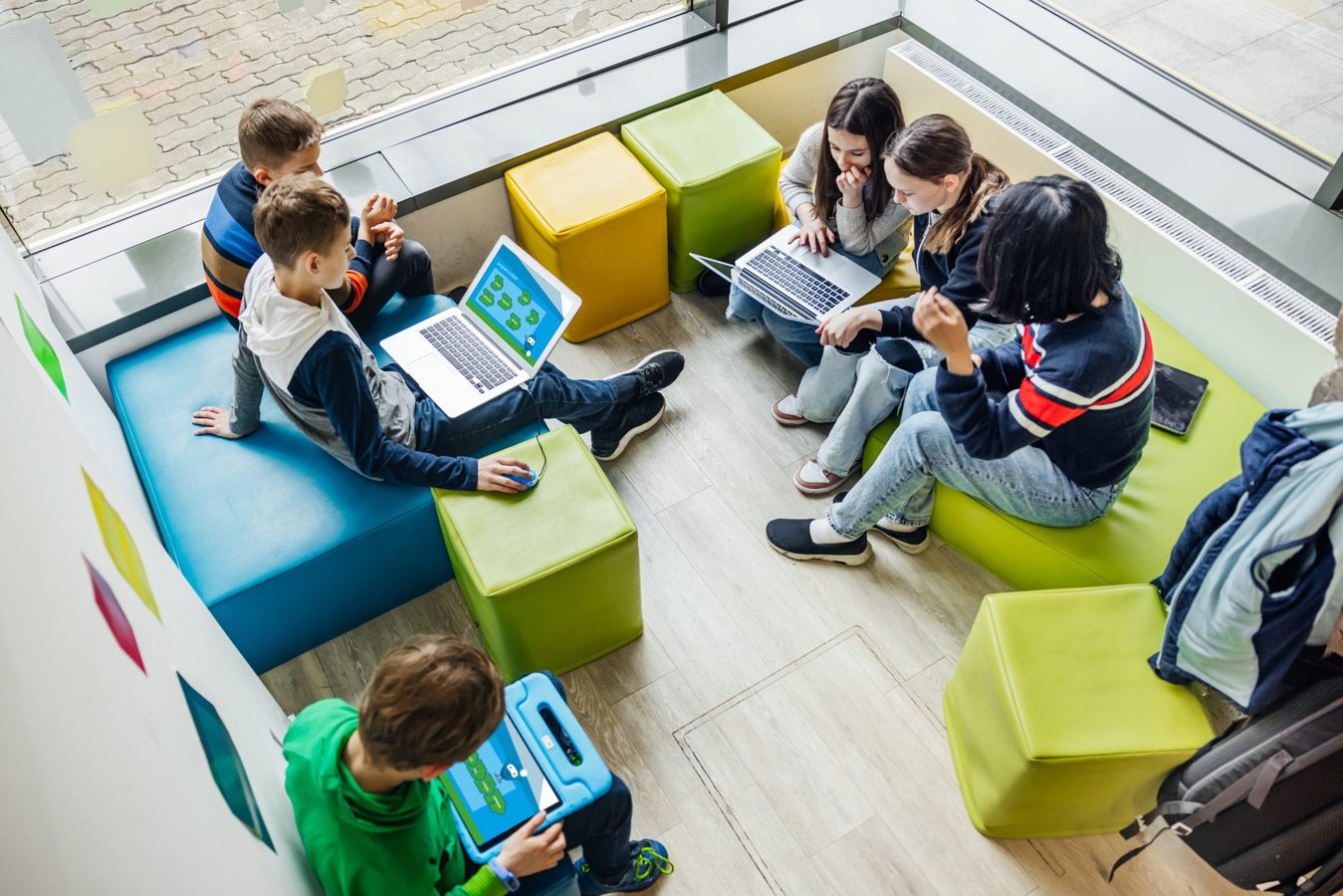
Concerns that artificial intelligence tools will become a privilege of wealthy children may soon be replaced by a different worry, according to a commentary published by Fortune. The author argues that every child is likely to have access to an AI tutor, while only families who can afford it will secure a human teacher. The distinction, the author contends, could deepen the educational divide that AI was expected to narrow.
The author points to data from the Pew Research Center showing that usage already varies sharply by income. One in five teenagers from households earning less than $30,000 a year does all or almost all of their homework with chatbots. Among teenagers from families earning $75,000 or more, the figure is 7 percent. The commentary frames the central issue as one of guidance: with AI, a child can learn more, or can lose the ability to think independently, depending on whether an adult is present to guide them.
To illustrate the difference, the author recalls a man who arrived about 15 years ago at a branch of the author's IT school, looking like a person without a home. Staff assumed he wanted shelter or money, but he asked only to be allowed to study and said he would raise the tuition himself. He did so, completed the course, taught at the school for a period, and rebuilt his life. The author argues that an AI tutor could have supplied the material, but that the man attributed his progress to teachers who believed in him and kept him from dropping out. In the author's view, access to knowledge is not the same as acquiring it.
The commentary cites evidence that AI can impair learning when used as a shortcut. Sal Khan, who has promised a personal AI tutor for every student on the planet, acknowledged this year that most students were not using such a tool. A study by the Wharton School involved about a thousand Turkish high school students solving math problems with standard ChatGPT, with a tutoring version of the bot, or without AI. Both bot groups improved during practice. On an exam taken without the bots, however, students who had used regular ChatGPT scored 17 percent lower than the group that had worked without AI, having grown accustomed to hints and not learning to solve problems independently. The author notes that children tend to hand off the most effortful tasks, such as writing an essay, while not delegating activities they find easy or enjoyable.
The author, who comes from a family of educators and holds a Ph.D. in education, argues that one of a teacher's enduring responsibilities is to create enough motivation for children to learn because the subject is interesting rather than because they are required to. In the commentary's view, that task is best performed by a person who understands the student, not by an algorithm.
Policy is moving in the other direction, the commentary notes. This year the U.S. Department of Education included AI development among the priorities for federal grants to schools. The document specifically mentions AI tutors and assistance for students falling behind in the curriculum. During public comment, some commentators warned that AI in classrooms would reduce the time children spend interacting with teachers. The Department said it considers preserving the human element of learning important but did not alter the final wording of the priority.
Economic pressure adds to the concern. For now, schools using AI still have a human teacher present, the author writes, but AI is spreading faster than the internet or personal computers did, and a model of a given capability becomes tens of times cheaper within a year. Live teachers, by contrast, are scarce and costly. UNESCO projects that the world will need 44 million additional teachers by 2030, 4.8 million of them in Europe and North America. The United States alone has 56,000 unfilled teaching positions. Teachers are also the largest expense for American public schools, with nearly 30 percent of all costs going to salaries, and many districts are already seeking cheaper alternatives.
The author warns that the next step could reduce the teacher's role to that of a platform operator who monitors metrics and intervenes only when the system flags a problem. The commentary recalls that during the pandemic many parents concluded that remote learning fell short of in-person instruction, yet online schools have since grown more popular, suggesting society can adjust to less human contact in education without much notice. Schools now face a choice, the author concludes, between using AI to free teachers' time and using it to get by with fewer teachers. That decision, the author argues, will determine whether every child has an adult who believes in them, or whether AI, intended to level the playing field, entrenches inequality instead.
4