5 minPolitics
West Point Climate Professor Says He Was Fired for Refusing to ‘Defy Science’
A West Point professor alleges he was dismissed from the U.S. Military Academy for refusing to teach climate science in a way he says contradicts scientific evidence, raising questions about academic freedom and military education.
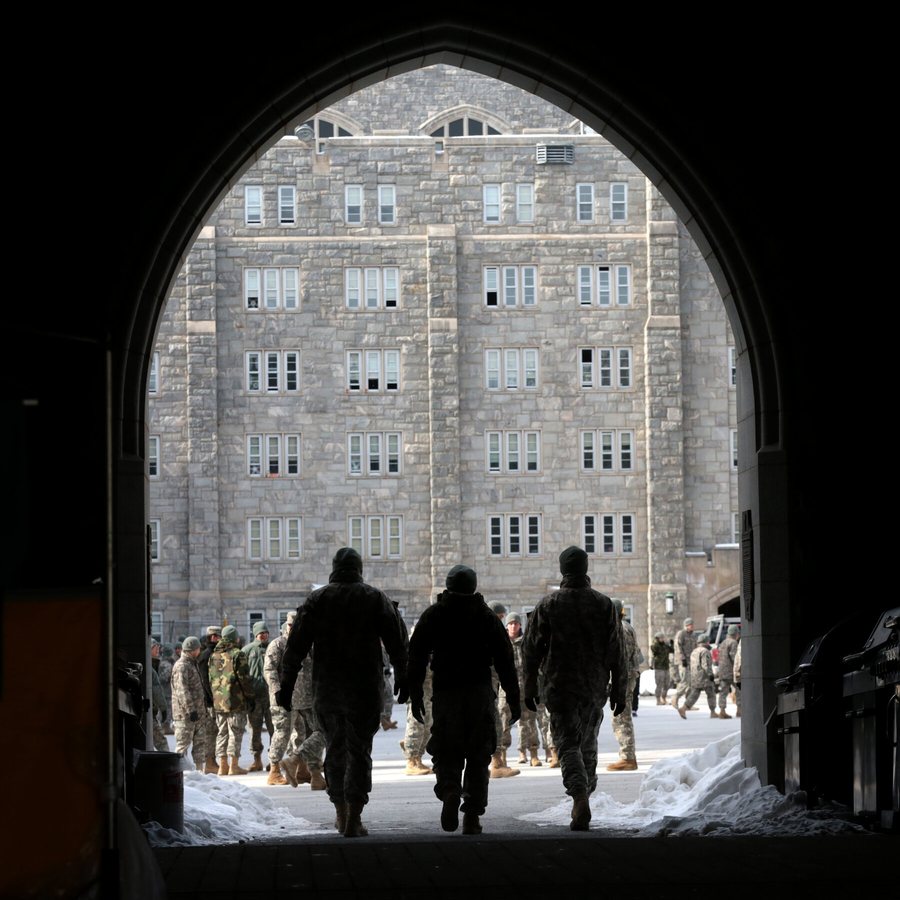
A professor at the U.S. Military Academy at West Point says he was fired for refusing to “defy science” in his teaching of climate change, a dismissal he argues violates academic freedom and the integrity of scientific instruction at one of the nation’s premier military institutions.
The professor, whose area of expertise is climate science, said his termination came after he resisted pressure to alter course material in a manner he believed misrepresented established scientific findings. He described the situation as an untenable choice between institutional compliance and professional honesty, stating that he could not in good conscience present information that runs counter to the overwhelming consensus of the scientific community.
The case, which has drawn attention to the intersection of military education and politically sensitive topics, centers on the academic environment at West Point and the expectations placed on faculty members who teach subjects with public policy implications. The professor’s account suggests that tensions arose over how climate change should be framed in the curriculum, with administrators reportedly seeking a presentation that would downplay the severity or human causes of global warming.
In his public statements, the professor emphasized that his dismissal was not about incompetence or misconduct but about a fundamental disagreement over the content of his lectures. He framed his refusal as a matter of scientific integrity, arguing that the academy’s mission to develop leaders requires honesty in education, particularly on issues that will shape national security and global stability in the coming decades.
The U.S. Military Academy has not issued a detailed public response to the specific allegations, though officials have generally defended personnel decisions as being made in accordance with institutional policies and standards. The academy’s silence on the specifics has left questions unanswered about the exact nature of the dispute and whether the professor’s account will be corroborated by internal documents or testimony.
Legal experts following the case note that faculty members at military academies occupy a unique position, serving as both educators and officers, which can complicate claims of academic freedom that are more straightforward at civilian universities. The professor’s dismissal could become a test case for how far institutional authority extends over scientific instruction in a military setting, and whether instructors can be compelled to teach against their professional judgment.
The broader context of the dispute is the ongoing political debate over climate change in the United States, where scientific findings have at times been challenged by elected officials and policy advocates. Military institutions have increasingly identified climate change as a national security concern, citing its potential to exacerbate conflicts, displace populations, and strain resources, making the teaching of the subject at West Point particularly consequential.
For the professor, the fight is not only about his own career but about the principle that scientific education should remain grounded in evidence. He has indicated a willingness to pursue legal action to challenge his dismissal, which could bring the dispute into public court records and force a more formal examination of the academy’s decision-making process.
Observers say the outcome could have implications beyond West Point, potentially affecting how other military and government-affiliated educational institutions handle sensitive scientific topics. If the professor prevails, it may reinforce protections for instructors who refuse to compromise scientific accuracy; if the academy’s decision is upheld, it could signal that institutional priorities take precedence over individual academic judgment in such settings.
The case remains in its early stages, with the professor’s legal team reportedly gathering evidence and preparing filings. The academy has yet to provide a timeline for any internal review, and it is unclear whether the dispute will be resolved through administrative channels or in court. For now, the professor’s dismissal stands as a flashpoint in the ongoing conversation about science, politics, and the role of education in preparing future military leaders.
47