4 minPolitics
Trump Says Russia Will Ship Diesel to U.S. to Lower Pump Prices
President Trump said he spoke with Vladimir Putin and that Russia will send hundreds of thousands of barrels of diesel fuel to the United States to bring down prices at the pump, drawing sharp criticism from Ukraine's president.
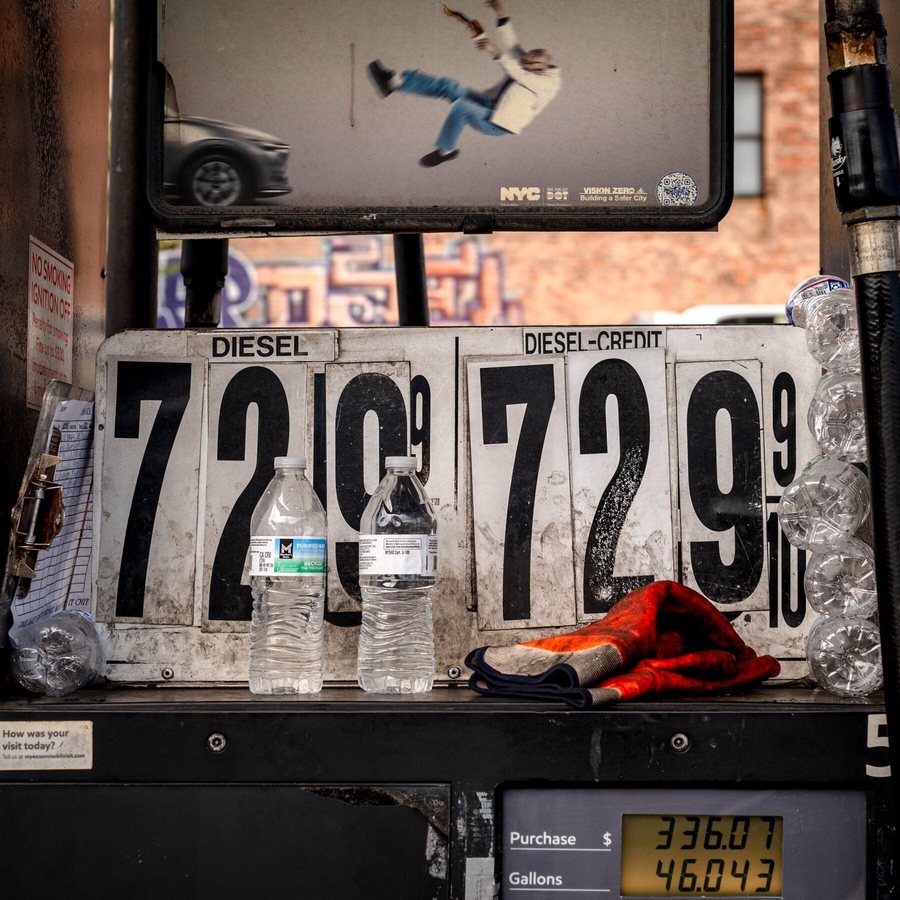
President Trump said Russia will send hundreds of thousands of barrels of diesel fuel to the United States in an effort to bring down prices at the pump, describing the arrangement as the product of a direct conversation with Russian President Vladimir Putin.
The announcement puts a foreign energy supplier at the center of the administration's response to domestic fuel costs, a politically sensitive issue for American drivers and businesses that depend on diesel for freight, farming and construction. Diesel prices have been a persistent pressure point, and the president framed the Russian shipments as a way to deliver relief quickly.
The move drew immediate criticism from Ukrainian President Volodymyr Zelensky, who characterized the deal as a «gift to Putin.» His objection reflects the broader tension between Washington's stated support for Ukraine and any arrangement that channels revenue to Russia's energy sector, which has been a central target of Western sanctions since the full-scale invasion of Ukraine.
Details of the arrangement remain limited. It was not immediately clear how the fuel would be transported, when the first shipments would arrive, what price American buyers would pay, or whether the volumes described would be sufficient to move national diesel prices in a meaningful way. It was also unclear whether the shipments would require any adjustment to existing sanctions or whether they would move through intermediaries.
The president's comments place the decision squarely within the debate over energy costs, which have shaped voter sentiment and household budgets. Diesel is not simply a retail fuel; it powers much of the trucking, rail, agricultural and industrial activity that underlies the broader economy. Even modest changes in its price can ripple through the cost of food, manufactured goods and construction materials.
For the Kremlin, the arrangement offers a potential opening in a market that has been largely closed by sanctions and by European efforts to reduce reliance on Russian energy. For the White House, it represents a bet that lower prices at the pump will outweigh the geopolitical criticism that has followed the announcement.
Zelensky's response signals that the decision will be contested not only in Washington but also among U.S. allies, many of whom have spent the past several years trying to shrink Russia's energy revenues. The Ukrainian president has consistently argued that any easing of pressure on Moscow's energy trade undermines the effort to constrain its war effort.
The announcement also raises questions about how the administration reconciles the shipment of Russian fuel with its broader posture toward Moscow. The president did not present the arrangement as a shift in policy toward Russia, but as a practical step on prices. Critics are likely to argue that the distinction is difficult to sustain when American purchases send money directly into the Russian energy system.
What happens next will depend on logistics, pricing and the reaction of Congress and allied governments. Lawmakers from both parties have previously pushed for tighter restrictions on Russian energy exports, and any perception that the United States is opening a new channel for Russian fuel could trigger legislative pushback.
For now, the president's statement stands as a direct claim that Russian diesel will flow to the United States to ease costs for American consumers. The practical effect on pump prices, and the political effect on the administration's Russia policy, will become clearer as the first shipments are arranged and as allies and lawmakers respond.
8