4 minPolitics
Judge blocks Ohio voter citizenship proof requirement; state appeals
A federal judge in Ohio has blocked a state law requiring documentary proof of citizenship for voter registration, citing conflict with federal law. Ohio Secretary of State Frank LaRose announced an immediate appeal, defending the measure as necessary to prevent non-citizen voting.
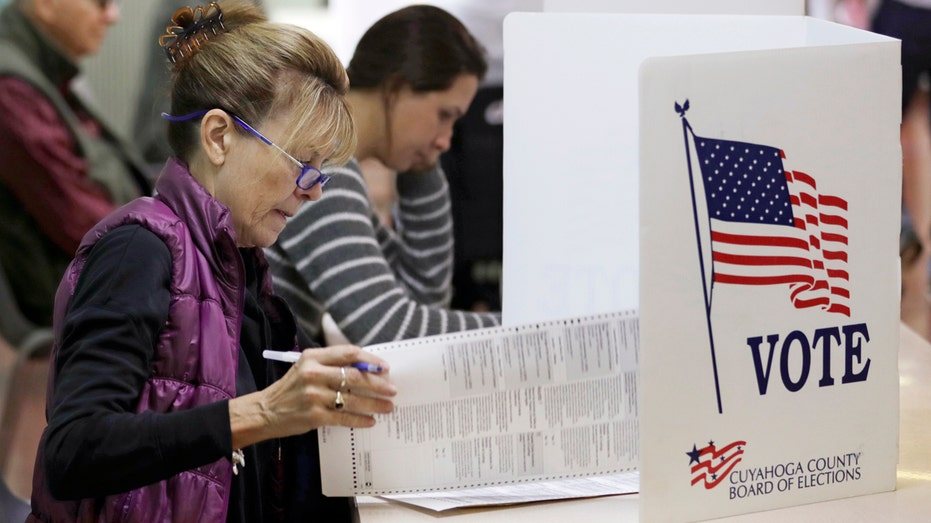
A federal judge in Ohio has temporarily blocked a state law that would require voter registrants to provide documentary proof of citizenship, ruling that the measure conflicts with federal voter registration rules. The decision, issued Tuesday by U.S. District Judge Solomon Oliver Jr., halts enforcement of House Bill 54, which mandated that applicants for a driver’s license or renewal present a passport, birth certificate, naturalization certificate, or other proof of citizenship before being offered the opportunity to register to vote.
Judge Oliver, appointed by President Bill Clinton, granted a preliminary injunction in the case Red Wine & Blue v. Ohio Secretary of State. In his ruling, he wrote that the state cannot rely on House Bill 54’s amendment to require documentary proof of citizenship before offering voter registration. He reasoned that the requirement duplicates information already collected on driver’s license forms, which typically ask about citizenship status, and that a signed attestation of citizenship is sufficient for election officials to assess an applicant’s eligibility.
Ohio Secretary of State Frank LaRose immediately announced that his office would appeal the decision. “We strongly disagree with that decision, and I’ve asked our legal team to file an immediate appeal,” LaRose said in a statement. “I will vigorously defend our legal authority to safeguard our voter rolls and protect the integrity of Ohio’s elections.” The appeal will be heard by the U.S. Court of Appeals for the Sixth Circuit.
The legal dispute centers on the National Voter Registration Act of 1993, commonly known as the Motor Voter Act. That federal law, enacted under the Clinton administration, requires states to offer voter registration opportunities when citizens apply for or renew a driver’s license. It also states that the voter registration portion of a driver’s license application may not require information that duplicates information already required in the license portion. While the act does not explicitly prohibit states from requiring proof of citizenship, Judge Oliver concluded that because driver’s license forms already ask about citizenship, demanding additional documentation is redundant and burdensome.
The ruling is the latest development in a broader national debate over state-level voting requirements aimed at preventing non-citizens from participating in U.S. elections. Proponents of such laws argue that they are necessary to protect election integrity, while opponents contend that they create unnecessary barriers for eligible voters and conflict with federal statutes designed to expand voter participation.
LaRose pointed to a recent case in Franklin County, Ohio, as evidence that attestation alone is insufficient. He noted that an Ohio woman admitted to voting illegally in 2018 as a lawful permanent resident, but a judge found her not guilty by reason of entrapment after a Bureau of Motor Vehicles clerk told her she was eligible to register. “The Franklin County case proves it’s not enough to just have a person’s attestation,” LaRose said. “Ohio has a constitutional requirement to ensure that only U.S. citizens are voting in our elections.”
Under the injunction, Ohio voters can once again register without providing a passport, current driver’s license, naturalization certificate, or birth certificate. The state’s appeal will determine whether the law can take effect while the legal challenge proceeds. The case is expected to be closely watched by both supporters and critics of stricter voter ID requirements, as similar measures have been enacted in other states and have faced legal scrutiny in federal courts.
58