4 minPolitics
House Control May Hinge on Whether Old Political Rules Still Apply
With less than two months until the midterm elections, strategists are uncertain whether traditional patterns will decide House control or whether recent upheavals have rewritten the political playbook.
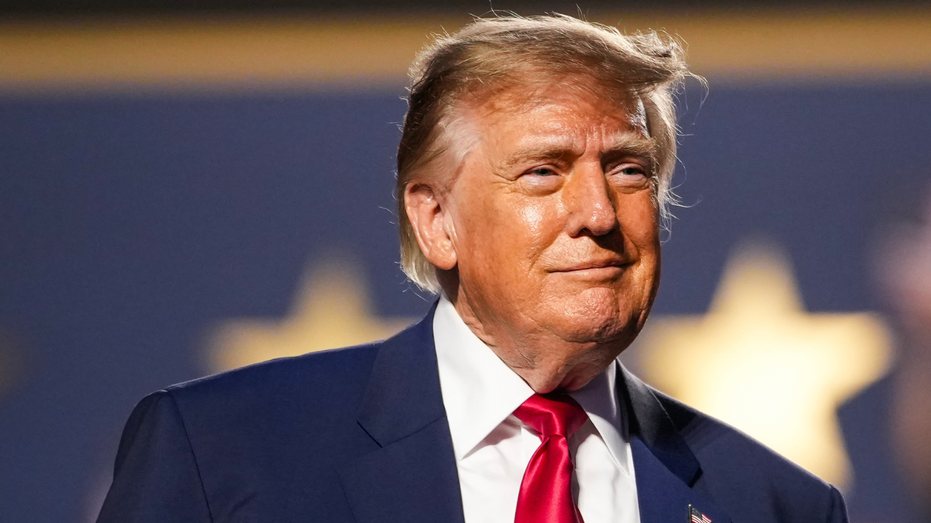
Control of the House of Representatives could come down to a handful of seats this fall, but the bigger question facing both parties is whether the old rules of midterm politics still apply. The president's party has historically lost about 25 House seats in a first midterm, and with high gas prices, rising grocery costs, an ongoing war in Iran, and a trade dispute with a key ally, many Republicans are working to keep President Donald Trump at a distance.
Yet the past several years have repeatedly defied political norms. A president won the White House through the Electoral College while losing the popular vote, an outcome that has now occurred twice in 16 years. A president was impeached twice and later returned to office. The Capitol riot and continued disputes over the 2020 election have left the political system shaken. Those developments make it harder to predict whether voters will follow the traditional midterm pattern or a newer, less predictable one.
Democrats enter the fall with clear advantages on paper. The president's approval ratings have hovered in the mid-30s to low 40s, and voters have told pollsters they want major change amid economic and political discontent. But the party's own standing is weaker than it was in 2018, when Democrats won back the House with a 44% approval rating. This year, that figure stands at 37%, roughly matching the president's numbers. That parity makes it less certain that voters will automatically gravitate toward Democrats even if they are unhappy with Trump.
Turnout is another wild card. Trump has argued that he is effectively on the ballot this fall, a message that could cut both ways. His presence has historically driven voters to the polls, with 60.1% of registered voters turning out in 2016, 66.4% in 2020, and 64.3% in 2024. But given his unpopularity, the same awareness could deter some previous supporters from voting. Midterm turnout has been lower, at 50.1% in 2018, 46.1% in 2022, 36.1% in 2014, and 41% in 2010, when Republicans gained a record 63 House seats.
The president has also acknowledged that gas prices are unlikely to fall before the election and that the U.S. remains involved in Iran through the midterms, undercutting a central economic message. At the same time, redistricting has narrowed the number of competitive seats, which could blunt the effect of any national wave. Republicans likely redrew about five to six seats in their favor nationwide, and with margins tight, the outcome may not be known on election night.
Individual races illustrate the uncertainty. In Missouri, Rep. Emanuel Cleaver's district has been in flux after a court ruled the state must use old congressional maps, only for another judge to reinstate new maps because voters had already cast primary ballots. The back-and-forth leaves Cleaver's political future unclear less than two months before the election. In Iowa, Republicans are defending a Senate seat, the governor's mansion, and multiple House districts, including those held by Reps. Mariannette Miller-Meeks and Zach Nunn, plus the seat Rep. Ashley Hinson is vacating to run for the Senate. Competitive gubernatorial and Senate contests in Ohio could also shape turnout and down-ballot results.
With no clear national wave, the most reliable way to forecast House control may be to go race by race, a painstaking process that both parties are already undertaking. The answer may depend less on any single national trend than on which playbook voters decide to follow.