5 minPolitics
Former Ukraine defense minister shifts from seizing initiative to warning of slow loss
Mykhailo Fedorov says Ukraine still has a path to victory but is on a worsening trajectory and has months to change course. His warning is notable less for the word defeat than for how sharply it contrasts with his own July message.
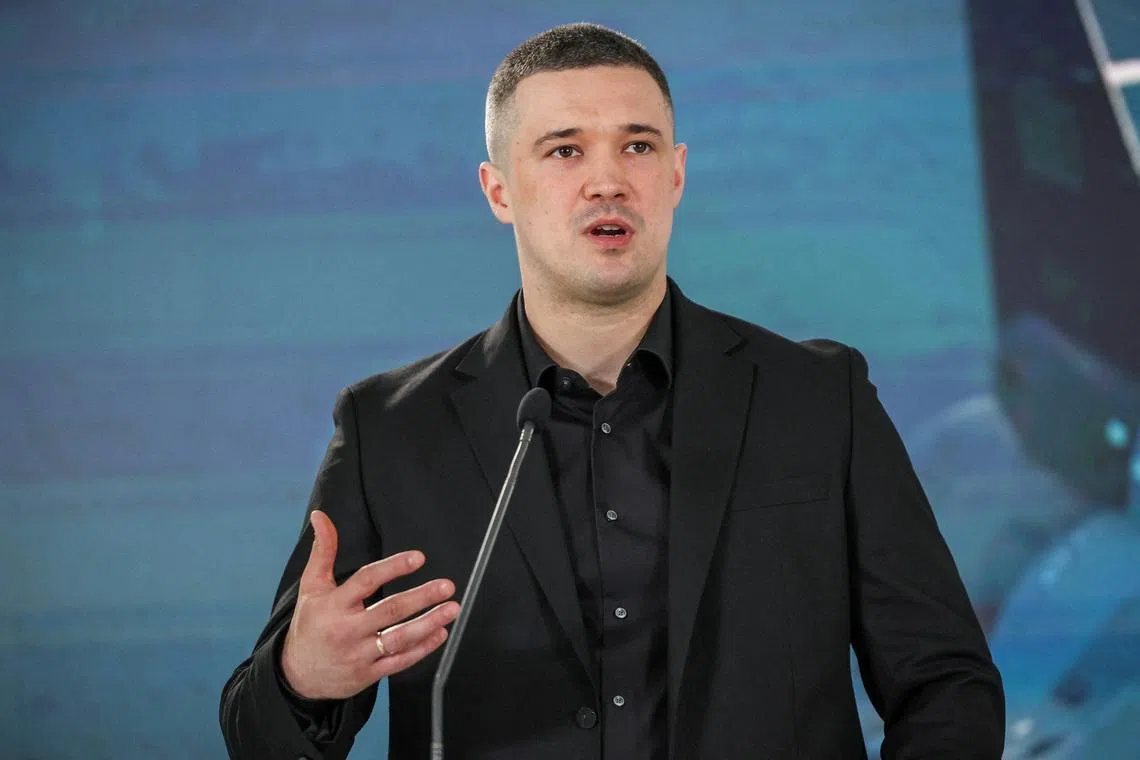
Former Ukrainian Defense Minister Mykhailo Fedorov has moved from describing Ukraine as regaining the initiative to warning that the country appears to be gradually losing the war — a shift that turns his latest military assessment into a political story as well.
In an interview published by Reuters on Aug. 25, Fedorov said Ukraine is at a turning point and has a window of several months to make decisions that could change the trajectory of the conflict. He did not present defeat as inevitable. He said Ukraine still has every chance to win, but argued that the state lacks an overall vision for victory and is too slow to turn available technologies into an integrated military system.
His critique went beyond battlefield tactics. Fedorov pointed to corruption, patronage networks and the political dependence of state institutions. He estimated that the Ukrainian state operates at about 5% of its potential effectiveness. He argued for a much larger role for autonomous drones, inexpensive interceptor missiles, a domestic ballistic missile program and electronic sensors that could reduce the number of troops exposed along the front.
The sharpest contrast is with what Fedorov said on July 23. At that time, shortly after leaving the government, he described the previous six months as a period in which Ukraine had begun to seize the initiative for the first time in years. He said his team had created a window of opportunity to force Russia toward peace from a position of strength. He also said that only three positions truly determine the course of the war: the president, the defense minister and the commander in chief.
A month later, the window in Fedorov’s account is no longer primarily an opportunity to pressure Moscow. It is a deadline for Kyiv to fix its own system. Ukraine’s presidential office highlighted that reversal in its response to Reuters, saying Fedorov had spoken positively about the conduct of the war while he was at the ministry and that the major change since then was his personal status.
It would be inaccurate, however, to describe Fedorov as the first senior Ukrainian political figure since 2022 to publicly acknowledge the possibility of losing. President Volodymyr Zelensky made an explicit warning in April 2024, saying Ukraine would lose if Congress failed to provide the U.S. assistance Kyiv needed. The distinction is that Fedorov’s statement comes from a recently dismissed defense chief and follows his own much more optimistic assessment by only a few weeks.
The sequence also recalls the public evolution of Oleksii Arestovych, though their roles were very different. Arestovych served as a non-staff adviser to the head of the presidential office and resigned in January 2023. Four days after his resignation was accepted, he publicly questioned whether a Ukrainian victory could still be treated as guaranteed and emphasized that he was now speaking as an unofficial person. That is a similar rhetorical pattern after leaving government, not evidence that the two men share the same motives or strategy.
Fedorov’s former office gives his words more institutional weight, but it also subjects them to scrutiny against his own record. One of the most politically sensitive efforts during his six-month tenure was reform of mobilization and the territorial recruitment centers. Military Ombudswoman Olha Reshetylova later said her office had spent months discussing proposals with the ministry but had not seen effective changes beyond public declarations.
That does not establish that Fedorov was dismissed for failing to reform the recruitment system. Zelensky publicly said Fedorov and then-Commander in Chief Oleksandr Syrskyi had been unable to work together while battlefield, brigade and mobilization problems remained unresolved. Fedorov later said he was told the conflict with the General Staff was the formal reason and suggested that resistance to procurement reforms may also have played a role.
For Washington, the most consequential part of the new debate is not whether Fedorov’s rhetoric is optimistic or pessimistic. It is whether Ukraine’s leadership can convert Western assistance and domestic innovation into coherent military capacity quickly enough. His warning places that question inside Kyiv’s own political struggle at a time when the conduct of the war remains closely tied to decisions by the United States and Europe.
42