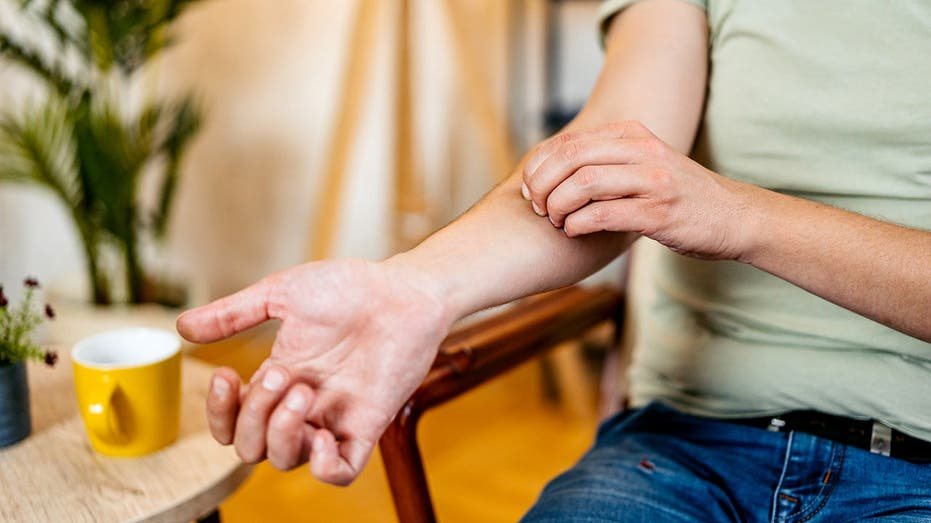
Scratching a mosquito bite or other itchy skin irritation may provide momentary relief, but it ultimately worsens inflammation and prolongs the itch, according to new research from the University of Pittsburgh. The study, published in the journal Science, sheds light on the biological mechanisms behind why scratching feels good yet aggravates skin conditions such as eczema, while also revealing a potential evolutionary benefit: scratching may help defend against bacterial skin infections.
Led by Dr. Daniel H. Kaplan, a professor of dermatology and immunology at the University of Pittsburgh, the research team set out to explore the poorly understood relationship between itching, scratching, and inflammation. They applied an allergen to the ears of mice to trigger allergic-contact dermatitis, a condition similar to eczema that mimics the skin reaction people experience from poison ivy, certain metals like nickel, and some skincare ingredients. The experiment involved four groups of mice: one group was allowed to scratch freely, another was prevented from scratching using an Elizabethan-style collar, a third group was genetically modified to lack an itch-sensing neuron, and a fourth served as a normal control group.
The researchers discovered that scratching activated mast cells, which are part of the body's immune system and act as an alarm system against harmful invaders. When mast cells are triggered, they release histamine and other inflammatory chemicals that cause itching. In the mice that scratched freely, the act of scratching led to the release of more substance P, a signaling molecule that further activated mast cells, creating a vicious cycle of increased inflammation and prolonged itching. In contrast, the mice that were prevented from scratching and those lacking the itch-sensing neuron experienced significantly less inflammation.
While scratching clearly exacerbates inflammation, the researchers also investigated whether this behavior offers any evolutionary advantage. Because mast cells play a role in protecting against bacteria and other pathogens, the team conducted a second experiment to see if scratching-induced activation of mast cells could affect the skin microbiome. They found that scratching reduced levels of Staphylococcus aureus, one of the bacteria most commonly associated with skin infections. This suggests that scratching may have evolved as a defense mechanism against bacterial threats, even though it comes at the cost of increased inflammation.
Dr. Kaplan acknowledged the apparent paradox: if scratching an itch is harmful, why does it feel so good? He explained that the pleasurable sensation likely evolved because scratching provides some benefit, such as protection against bacterial skin infections. However, he cautioned that the damage scratching does to the skin probably outweighs this benefit when itching becomes chronic, as in conditions like eczema. The American Academy of Dermatology recommends using cold compresses and over-the-counter 1% hydrocortisone cream to relieve itching without causing further skin damage.
The findings offer a deeper understanding of the itch-scratch cycle and could inform future treatments for chronic itching conditions. By revealing the dual role of scratching—both worsening inflammation and potentially reducing bacterial load—the study highlights the complexity of this common behavior. The research was published in the journal Science and adds to a growing body of knowledge about how the skin's immune system interacts with environmental triggers and behavioral responses.