6 minNews
Released Emails Show Fauci Privately Acknowledged Lockdowns Had Limited Impact on COVID Spread
Newly released diary entries and emails from Dr. Anthony Fauci reveal that he privately expressed doubts about the effectiveness of lockdowns and pushed for mask mandates based on public behavior rather than scientific evidence, according to materials released by Senator Rand Paul.
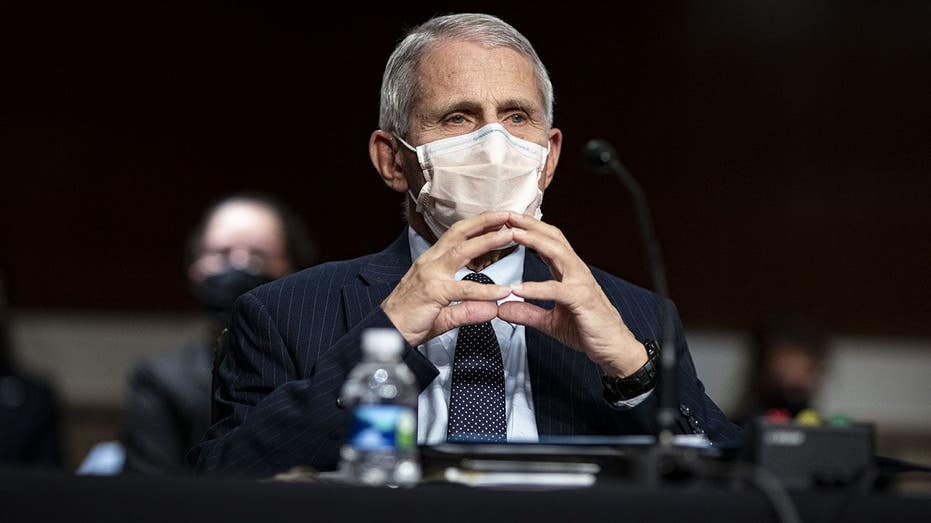
Newly disclosed personal documents from Dr. Anthony Fauci, the former chief medical advisor to the president, show that he privately expressed doubts about the effectiveness of lockdowns and advocated for mask mandates based on public behavior rather than scientific evidence, according to materials released by Senator Rand Paul. The documents, which include diary entries and emails, were made public over the weekend and have reignited debate over the federal government's response to the COVID-19 pandemic.
In an email dated June 18, 2020, sent to Dr. Deborah Birx, another key White House coronavirus response coordinator, Fauci wrote: « I have been obsessing about the increases in cases that do not seem to be related to openings or closings or massive crowds. » He added that there was « something inherent here that we are missing and that is insidiously keeping the outbreak alive in the USA. » The email suggests that Fauci recognized within months of the initial shutdowns that closures and lockdowns were not correlating with case numbers as expected. Yet in the months that followed, he publicly supported prolonged restrictions and criticized states such as Florida for reopening. In September 2020, Fauci told a news outlet that Florida was « asking for trouble » by lifting its lockdown measures, a statement that now appears at odds with his private assessment.
Another email from April 15, 2020, reveals how Fauci pushed for mask mandates. At the time, the Centers for Disease Control and Prevention had recently recommended public masking, but some White House officials and then-Vice President Mike Pence were reportedly hesitant to endorse the guidance. Fauci wrote to Birx: « We should push back a bit on the masks. I think that it is important. Since when do comms people dictate public health suggestions? Walk out of the streets and people are wearing them anyway. » He requested a meeting with the vice president to make the case. The email does not cite any new scientific studies or data to support the mask mandate; instead, Fauci argued that because people were already wearing masks, public health officials should get on board with the CDC recommendation.
The documents also touch on the origins of the virus. Early in the pandemic, Fauci publicly dismissed the theory that SARS-CoV-2 may have leaked from the Wuhan Institute of Virology, calling it a conspiracy theory. However, the released materials indicate that he was aware of the lab leak possibility and discussed it privately. Critics have long accused Fauci of downplaying the lab leak theory to protect funding for gain-of-function research that the National Institutes of Health had supported. The diary entries and emails do not provide a definitive stance but show that the issue was on his radar well before it became widely accepted as a plausible origin scenario.
Senator Rand Paul, a Kentucky Republican and a frequent critic of Fauci, released the documents as part of an ongoing investigation into the federal pandemic response. Paul has argued that the material demonstrates a pattern of dishonesty by Fauci, who was often portrayed as a neutral, science-driven figure during the crisis. The revelations come as the United States continues to grapple with the long-term consequences of pandemic policies, including educational setbacks from school closures and economic inflation linked to stimulus spending.
Fauci served as director of the National Institute of Allergy and Infectious Diseases from 1984 to 2022 and became the public face of the U.S. pandemic response. His public statements consistently emphasized the importance of following the data and the science. The private emails, however, paint a picture of a decision-maker who sometimes relied on anecdotal observations and political calculations. For example, his April 2020 email about masks does not reference any peer-reviewed evidence but instead notes that people were already wearing them, implying that public health messaging should align with existing public behavior.
The released documents are likely to fuel further investigations into the government's handling of the pandemic. Several congressional committees have been examining the origins of COVID-19, the use of lockdowns and mandates, and the approval process for vaccines and treatments. Fauci's defenders argue that his private musings reflect the uncertainty of the early pandemic and that his public recommendations evolved as more data became available. However, the timing of the emails — especially the June 2020 email acknowledging that lockdowns did not appear to affect case numbers — raises questions about why he continued to advocate for broad restrictions for months afterward.
As of now, Fauci has not publicly commented on the newly released diary entries and emails. His representatives have not responded to requests for comment. The materials were obtained through a Freedom of Information Act request by Senator Paul's office and have been posted online for public review.