7 minEconomy
U.S. missile defense stockpiles dwindle as Middle East strategy comes under strain
Months of fighting with Iran have sharply reduced U.S. Patriot and THAAD interceptor inventories, and analysis and budget documents show rebuilding could take years, forcing the Pentagon to rethink its military approach in the region.
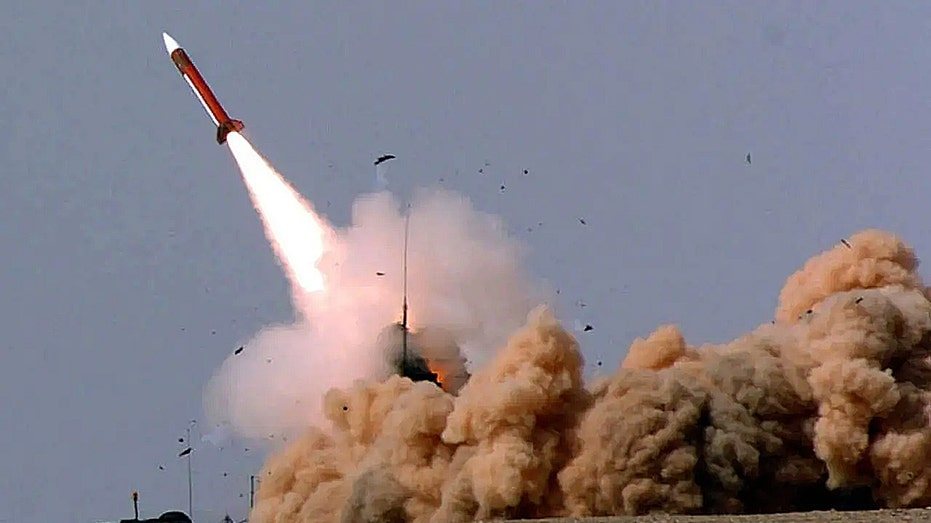
The Pentagon is confronting a growing problem in the Middle East: months of exchanging fire with Iran have drained U.S. missile defense inventories so heavily that military planners are questioning whether the current cycle of limited retaliatory strikes can continue, according to analysts and budget figures submitted to Congress.
Using open-source budget numbers, the Center for Strategic and International Studies estimates that U.S. Patriot interceptor inventories have fallen from roughly 2,300 before the conflict to fewer than 827. THAAD interceptor inventories have dropped from 452 to fewer than 278. The think tank warns that rebuilding those stockpiles could take three years or more, raising new concerns about protecting U.S. forces and bases worldwide if another major conflict erupts, including in the Pacific.
«If you look at what we've expended for the Patriots, for example, over half the global inventory has now been consumed in the Middle East. Similar to the THAAD interceptors as well,» said Kelly Grieco, a missile expert at the Stimson Center. «Almost half of THAAD interceptors have been used. So that's global inventory. That really leaves us with very little excess to be able to use in other theaters, whether it's defending U.S. forces in Europe or the Indo-Pacific. This becomes quite a constraint on the United States capabilities, not just today, but in the years to come.»
The recent campaign, including operations known as Midnight Hammer and Epic Fury, has consumed large numbers of precision munitions, though concerns about stockpile levels existed before the latest conflict. The strain is already visible in Pentagon budget planning. The department's $67 billion emergency funding request for fiscal year 2026 includes $18.2 billion to replace Patriot missiles, Navy Tomahawks, and THAAD interceptors. Half of the munitions requested in the Pentagon's 2027 budget are low-cost munitions worth $600,000 or less, and by 2031 about 70 percent of purchased munitions are expected to fall into that lower-cost range, according to Jerry McGinn, who tracks the defense industrial base at CSIS.
The conflict has exposed the limits of advanced weapons that were designed for performance rather than mass production. «The munitions we use today are incredibly effective: the Tomahawk, the Patriot, the theater missile defense interceptors, or THAAD, that you've seen in the press are incredibly effective. They were built solely for performance, and they were designed a long time ago,» McGinn said. «They weren't built or designed to be produced at scale. So they take two to three years from this contract award to actually come off the assembly line because these are very intricate systems. They're essentially handmade in a lot of ways. So it's hard to scale production on these efforts.»
In a recent Pentagon meeting, department officials summoned a dozen leading Silicon Valley defense firms, including Shield AI and Anduril, to discuss urgently replenishing depleted U.S. weapons inventories as the war consumes precision munitions. McGinn and other analysts said there is uncertainty about whether those companies have demonstrated production at scale. «They have commercial kinds of technologies. They've done prototyping, but are they able to have production lines that can work with the government to produce those munitions at scale?» he asked.
Brandon Tseng, a former Navy SEAL who attended the Pentagon meeting, started Shield AI more than a decade ago, when Silicon Valley was reluctant to partner with the Pentagon and venture capital was difficult to raise. He said the defense technology sector barely registered as an industry in 2015. «Defense tech was not a word in 2015. Venture capitalists thought we were crazy. When we said we wanted to work on this mission of protecting service members and civilians, they just didn't believe you could build a business behind it,» Tseng said.
Tseng recently visited Ukraine, where Shield AI's V-BAT, an AI-driven targeting system, is being used to strike Russian targets. He described it as a miniature Predator or Reaper drone that performs the mission of a $40 million aircraft at roughly $1 million per aircraft, providing intelligence, surveillance, reconnaissance, and targeting at long ranges. The V-BAT can operate when GPS or communications are jammed because its onboard AI pilot, Hivemind, handles navigation and targeting.
The inventory shortage is also shaping military strategy. The head of U.S. Central Command, Adm. Brad Cooper, developed an option for a 10- to 14-day intensive air campaign to cripple Iran's missile capabilities, according to a published report. That approach reflects concerns that the current tit-for-tat exchange is becoming unsustainable as interceptor numbers decline.
Iran's strategy has been to target U.S. bases, forcing the U.S. to fire expensive defensive interceptors and pushing the Pentagon to take greater risks the longer the conflict drags on. Analysts say Tehran believes attrition is its best hope of outlasting the U.S. military. «This is clearly the Iranian strategy,» Grieco said. «Every time they're firing missiles at U.S. bases, they're forcing the United States to intercept them, drawing down those stockpiles. And I think they fundamentally believe that U.S. interests are limited in this war, whereas Iran sees it as existential, and that ultimately the United States, if the IRGC continues driving up the costs, particularly human costs, will decide this is not worth continuing this fight.»
The depletion also raises broader questions about U.S. readiness in other regions. With Patriot and THAAD inventories significantly reduced and replacement production slow, commanders have less margin to protect U.S. forces and allies in Europe or the Indo-Pacific. Defense officials and analysts say the central challenge is not only meeting current demand but restoring the industrial base's ability to produce complex interceptors quickly enough for the next crisis.