5 minEconomy
Private Sector Outpaces Middle Powers in Geopolitical Race
Canadian Prime Minister Mark Carney's call for middle powers to seize a seat at the geopolitical table overlooks a crucial shift: private companies, especially in AI, are already shaping global power dynamics, leaving middle powers behind.
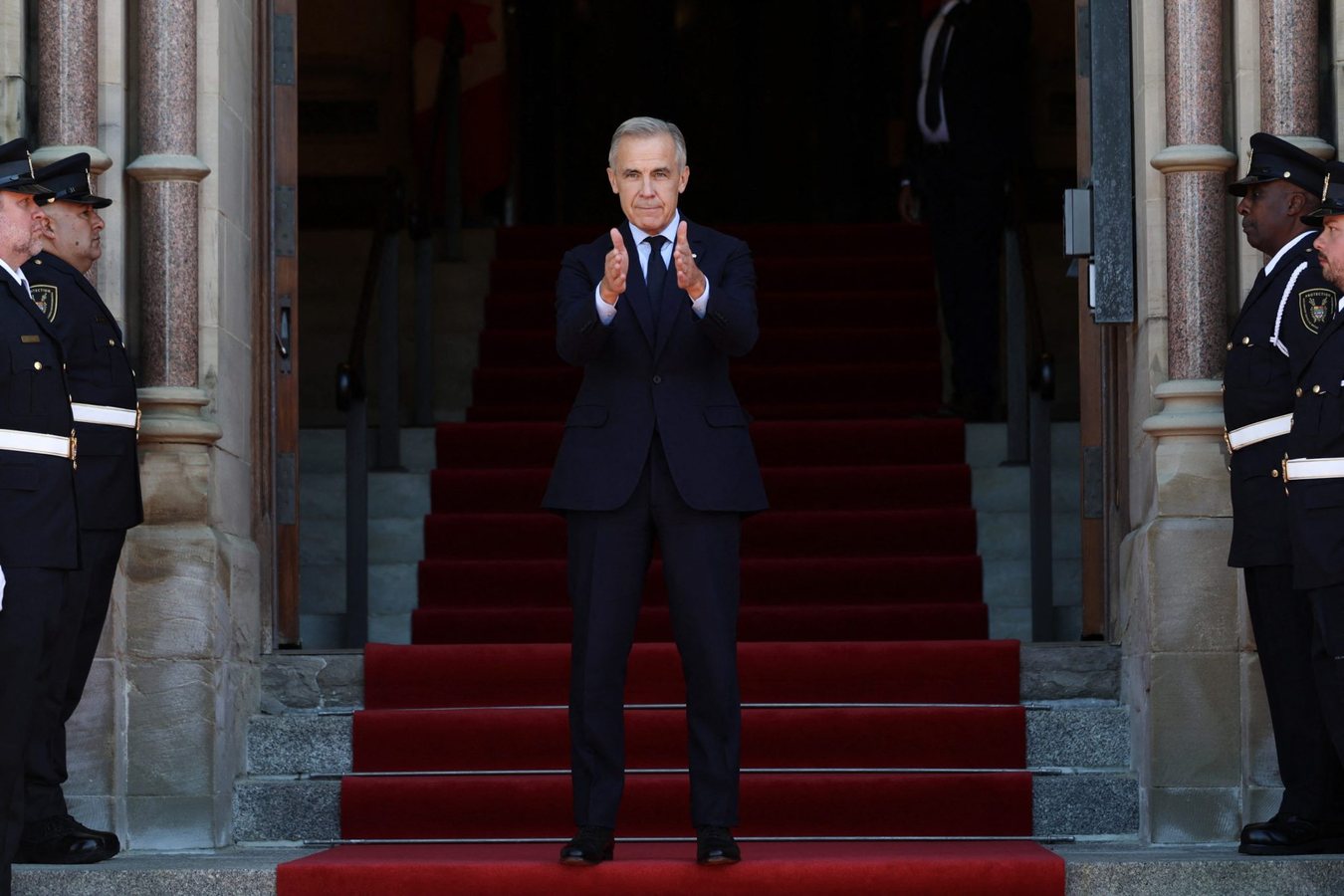
Canadian Prime Minister Mark Carney's warning to middle powers at the World Economic Forum in Davos—that they must get «at the table» or risk being «on the menu»—has resonated amid growing geopolitical uncertainty. But the vision of a united middle-power bloc shaping global affairs rests on a flawed premise: that nation-states remain the primary actors in great-power competition. In reality, private-sector actors have already claimed seats at that table, and their influence is only expanding.
The rise of corporate power is most evident in the technology sector. Nvidia's market capitalization now sits just below Germany's annual GDP and ahead of Japan's. Apple's value exceeds India's GDP, while Amazon's is wedged between Canada and Brazil. These companies wield economic clout comparable to major nations, and they are increasingly setting global priorities. During the COVID-19 pandemic, biotech firms developed and distributed the mRNA vaccines that helped end the crisis. Today, the world's electronics and innovation sectors depend on Taiwan Semiconductor Manufacturing Company, a single Taiwanese chipmaker.
U.S. President Donald Trump's diplomatic style reflects this shift. On a state visit to the United Kingdom last year, he offered investment deals instead of trade concessions. When he hosted Chinese President Xi Jinping at the White House in September, he invited a large group of corporate executives and finance leaders. Diplomacy and commerce are merging, with private interests often taking the lead.
Nowhere is private-sector geopolitical influence more apparent than in artificial intelligence. States are increasingly relying on private technology firms for capabilities once reserved for national agencies. SpaceX and Blue Origin are driving space exploration. Elon Musk's Starlink satellite network has been deployed in conflict zones from the Sahel to Iran, providing civilian internet access and battlefield intelligence in Ukraine. AI models are being integrated into operational planning, simulations, and cyber operations in service of foreign policy.
The tension between private innovation and national security was highlighted earlier this year when Anthropic, an AI safety company, clashed with the U.S. administration over how its models could be used by the Department of War. The Trump administration designated Anthropic a supply chain risk to U.S. national security—a first for an American firm. Meanwhile, privately developed AI is already being deployed for malicious purposes. Anthropic's September threat report identified cases of misuse of its Claude model, including a cyber operation targeting a Southeast Asian government agency to extract civilian records, a China-based threat actor using Claude to advance an undersea weapons system, and suspected Russia-based actors seeking to build an autonomous kamikaze drone swarm. Anthropic also said it disrupted an Iranian plot to use Claude to target U.S. Navy warships in the Middle East.
In response, private AI companies are stepping into roles once held by national intelligence and defense agencies. This does not mean states have become bystanders, but middle powers are only tangentially involved in the AI field. According to Stanford University's 2026 Artificial Intelligence Index report, AI model development remains highly concentrated in the U.S. and China. Through 2025, the U.S. had 59 notable AI models to China's 35. South Korea was the only other country with multiple notable models, at eight.
Carney's Davos speech described a fading rules-based order and urged middle powers to withdraw consent from a system that no longer serves them. It was a compelling idea at a moment when AI is redefining how we think, work, fight, and manage risk. But as the debate over AI safety shows, there is no global consensus on governing the most powerful technology. Private-sector leaders are filling that vacuum and setting the rules we live by.
The seats at the table are being taken not by middle powers but by private actors. As long as middle powers are not leading on AI development, attracting AI investment, or dominating parts of the AI supply chain, they will not exert geopolitical leverage in this emerging world. Instead, it will be private-sector actors, alongside national leaders in the U.S. and China, who shape the next global system.
6