4 minEconomy
Finland Puts €28.5 Million Into Ukraine’s Distributed-Energy Buildout
Ukraine will finance the balance of a €46.5 million technology package, extending a reconstruction model that combines national funds, Finnish support and multilateral credit.
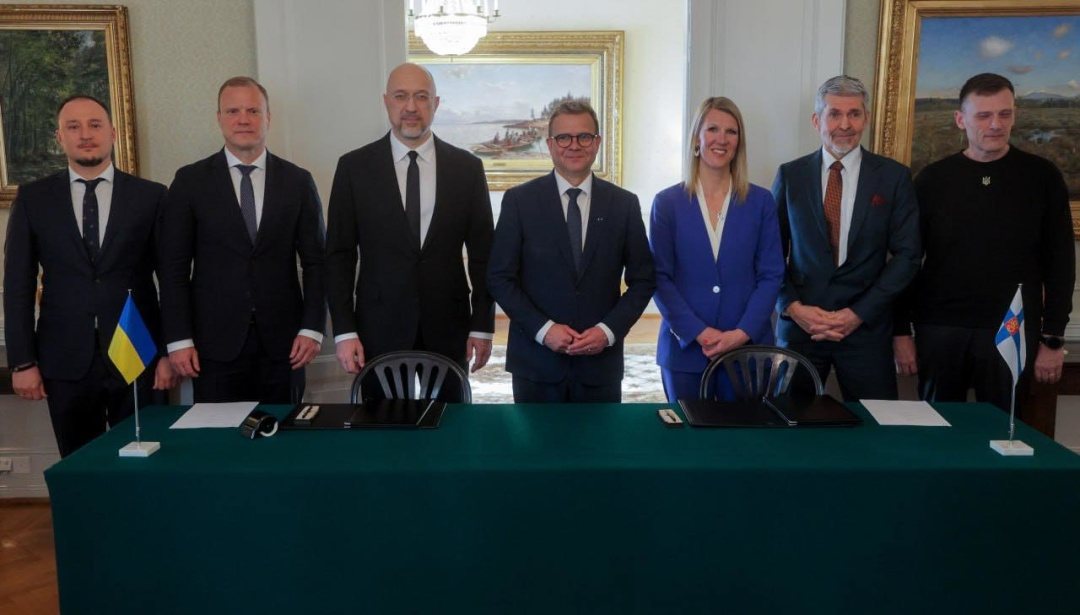
Finland is providing approximately €28.5 million in development-cooperation funding for power-plant technology in Ukraine, with the Ukrainian side financing the rest of a package valued at €46.5 million. The project represents a form of reconstruction finance in which foreign assistance lowers the cost of an investment without replacing domestic spending altogether.
Based on the announced figures, Ukraine’s portion is about €18 million. That means the Finnish contribution covers roughly 61 percent of the technology cost, leaving approximately 39 percent to Ukraine. For a country whose wartime budget is under intense pressure, that division allows scarce domestic capital to be stretched across more infrastructure.
The investment is part of a larger push to make the Ukrainian electricity system less vulnerable. Russian attacks have repeatedly damaged generation plants and transmission infrastructure. Ukraine has responded by repairing large assets while also adding distributed generation—smaller units installed at multiple locations that can supply power closer to demand and reduce dependence on a limited number of major facilities.
Finland’s Ministry for Foreign Affairs lists energy security among the priorities of its 2024–2028 development program for Ukraine. The bilateral budget for that period is at least €320 million. The same program supports civil defense, education, rule-of-law reforms, climate resilience and economic development, making power infrastructure one component of a broader effort to sustain state capacity during the war and recovery.
Finland also operates the Finland–Ukraine Investment Facility. It was set to finance public-sector projects in Ukraine worth up to €50 million in 2025–2026. The structure is intended to support investments using Finnish technology, products, services and expertise. That gives the mechanism an economic-development role on both sides: Ukraine receives infrastructure, while Finnish industry gains a pathway into reconstruction contracts.
There is already a concrete energy pipeline around that relationship. In May, state-owned Ukrnafta and Finland’s Wärtsilä signed a framework agreement for equipment used in distributed generation. The program is being developed in stages with the Finnish-Ukrainian facility. Its first stage had secured an €80 million loan from the European Bank for Reconstruction and Development.
In June, the Ukrainian government said almost 939 million hryvnias would support Ukrnafta gas-engine generation projects in the Ivano-Frankivsk and Lviv regions, with combined capacity of up to 60 megawatts. The projects illustrate why Ukraine is seeking flexible regional generation rather than relying solely on reconstruction of large centralized plants.
Economically, distributed generation can reduce the cost of outages. A factory, water utility or hospital that retains local power avoids some of the production losses and emergency expenses caused by long interruptions. The units still require fuel, maintenance and grid integration, so their value depends on reliable operation rather than installation alone.
The financing announcement is therefore an intermediate step. The decisive stages are procurement, delivery, construction and connection. If those steps move quickly, Finland’s contribution will become a functioning asset in Ukraine’s power system. If they stall, the project will remain a line in reconstruction finance at a time when Ukraine needs operating capacity more than commitments.
79