5 minEconomy
Fed accountability could be key to fending off political pressure
As the Federal Reserve faces pressure from President Trump and questions about its expanded role since the 2008 crisis, scholars argue that greater accountability could strengthen the central bank's independence.
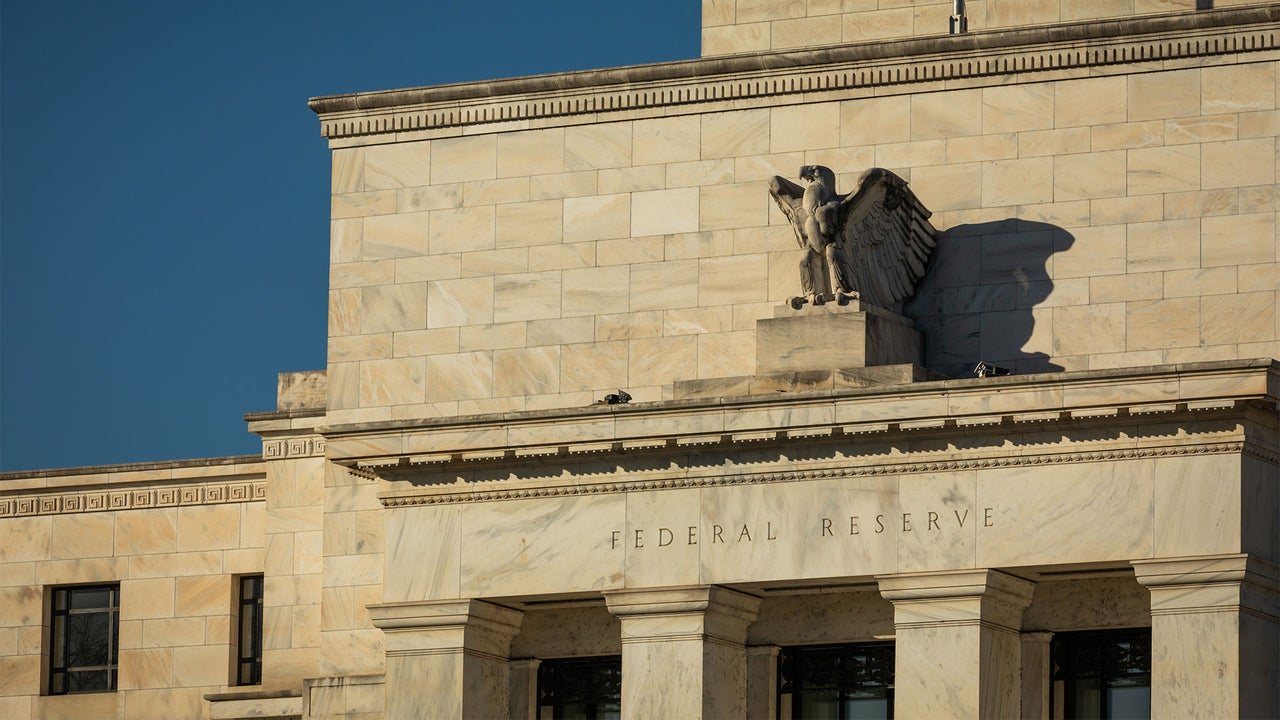
The Federal Reserve, one of the most powerful institutions shaping the U.S. economy, faces a defining challenge as new Chair Kevin Warsh prepares for his first major address at the Jackson Hole conference in Wyoming. With President Donald Trump pressuring the central bank to cut interest rates and attempting to remove Governor Lisa Cook despite a Supreme Court loss, the question of how the Fed balances independence with accountability has moved to the center of economic policy debates.
Interest rates, inflation, and bank regulation all fall under the Fed's influence, affecting everything from mortgage costs to business hiring and economic growth. Critics on both the left and the right have long questioned whether the institution is adequately accountable to the public. While independence from political meddling has traditionally been seen as essential for controlling inflation, the Fed's expanded activities since the 2008 financial crisis have intensified calls for stronger congressional oversight.
The debate over Fed accountability has deep roots. In 1978, amid record-high inflation and slow growth, Congress passed the Humphrey-Hawkins Act, requiring the Fed chair to report to lawmakers twice a year. That same year, the Federal Banking Agency Audit Act gave the Government Accountability Office authority to audit the Fed for the first time, though monetary-policy deliberations remained exempt to protect short-term interest rate decisions from political influence.
Despite those changes, the Fed remains an outlier among federal entities. It is self-financing through member bank capital, so its budget does not depend on congressional appropriations. Governors serve 14-year terms and can only be removed for cause, a higher bar than the at-will standard used elsewhere in the federal bureaucracy. The Fed's inspector general is appointed by the chair rather than by lawmakers or the president, leading some critics to describe the arrangement as undersight rather than oversight.
The 2008 financial crisis catalyzed a historic expansion of the Fed's activities. The central bank used emergency lending powers to inject liquidity into the economy, created special lending facilities for selected markets, and purchased trillions of dollars in bonds. This policy, known as quantitative easing, was designed to lower longer-term interest rates by raising bond demand and prices. It was used again during the COVID-19 pandemic to stimulate the economy.
At its peak in March 2022, the Fed's balance sheet reached nearly $9 trillion, about ten times larger than in 2007 and bigger relative to GDP than at any time since World War II. While it has since declined to roughly $6.7 trillion as of August 2026, it remains about seven times larger than its pre-crisis peak. Some of these interventions have blurred the traditional boundary between monetary and fiscal policy, including purchases of mortgage-backed securities and support for selected credit markets.
These actions can affect wealth distribution and protect specific sectors, tasks that would normally fall to lawmakers. Soon after the 2008 crisis, some economists argued that decisions with such major consequences deserved greater scrutiny. Warsh himself said in 2010 that the Fed's bond-buying spree offered only short-term relief while opening up longer-term economic risks.
Accountability can take different forms, according to scholars of central banking and finance. One approach emphasizes transparency about how decisions are made and who makes them. Another focuses on retrospective evaluation of whether policies worked, what risks they created, and what they ultimately cost. The challenge lies in defining what accountability means in practice and how to implement it without undermining the independence that allows central bankers to make decisions without short-term political interference.
As the Fed navigates these pressures, the Jackson Hole conference provides an opportunity for global leaders in finance, economics, and policymaking to compare notes and debate ideas. While no policy moves are made at the gathering, the discussions could shape how the Fed addresses the competing demands of independence and accountability in the months ahead.
57