6 minEconomy
Defense Industry Leaders Back Trump Administration’s $73 Billion Reconciliation Plan
Top defense contractors aligned with White House officials in a closed-door meeting to support the $73 billion Pentagon and intelligence funding package, part of the budget reconciliation process to replenish weapons for the Iran war.
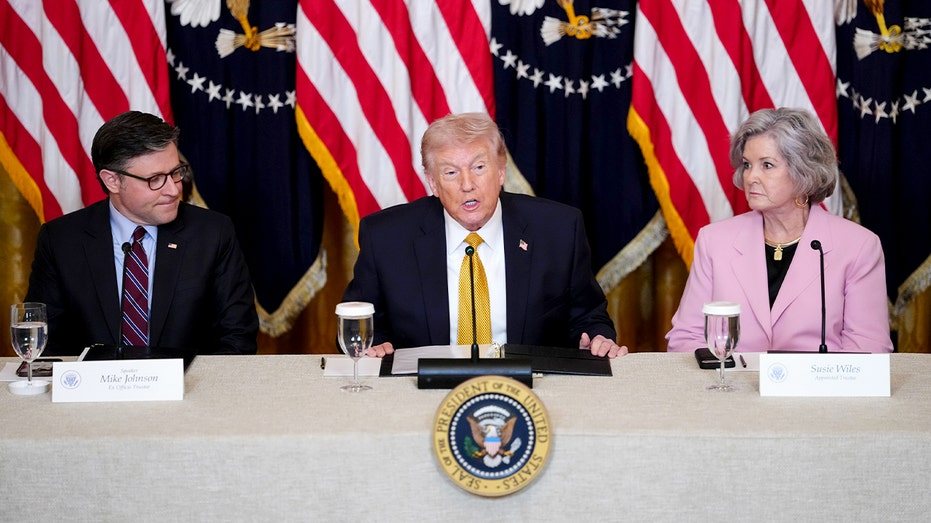
High-level Trump administration officials met Thursday morning at the White House with leaders from 17 major defense contractors, securing alignment on a critical budget reconciliation package that includes $73 billion for Pentagon and intelligence funding. The closed-door strategy session, which included White House chief of staff Susie Wiles, Department of War representatives, and Office of Management and Budget officials, aimed to ensure industry support for what is being called “Reconciliation 3.0,” a fiscal measure largely tied to replenishing U.S. weapons caches for the Iran war.
Participants included executives from Raytheon, BAE Systems, Honeywell, Northrop Grumman, Lockheed Martin, and Palantir, among others, according to a Trump administration official who spoke on condition of anonymity. The administration representatives laid out their vision for the reconciliation package, emphasizing its importance for national security and military readiness. The official said the room fully bought into the plan, with defense company leaders speaking favorably about the White House’s approach and committing to advocate for lawmakers on Capitol Hill to pass the House budget resolution before the imminent August recess.
The budget reconciliation process allows the party in power in Congress to pass sweeping fiscal policy legislation with a simple majority, bypassing the Senate filibuster that typically requires 60 votes. This mechanism enables the House and Senate to align on spending priorities without Democratic support. The current package, known as Reconciliation 3.0, focuses on replenishing weapons and equipment used in ongoing military operations, particularly the Iran war, which has strained U.S. stockpiles. The House has already passed a framework with cash targets for relevant committees, but those committees—primarily the House Armed Services Committee and the House Intelligence Committee—must now provide detailed spending plans.
President Donald Trump has vigorously advocated for the package, urging House Republicans to pass the budget resolution as a critical first step. “I am asking all House Republicans to VOTE YES this week on the Budget Resolution, which is an important first step towards getting a Budget Bill,” he said Monday on Truth Social. The president’s direct involvement underscores the administration’s urgency to secure funding before the August recess, as delays could jeopardize military readiness and the ability to sustain operations in Iran.
The meeting reflects a broader strategy by the Trump administration to align defense industry priorities with its fiscal and military goals. Defense contractors, which rely heavily on government contracts, have a vested interest in the passage of the reconciliation package, as it ensures continued funding for weapons production and maintenance. The industry leaders’ commitment to lobbying lawmakers highlights the symbiotic relationship between the Pentagon and its suppliers, particularly in times of conflict. The $73 billion allocation is expected to cover not only replenishment but also investments in advanced technologies, such as artificial intelligence and cyber capabilities, which are increasingly central to modern warfare.
Critics of the reconciliation process argue that it sidelines Democratic input and concentrates power in the majority party, potentially leading to partisan spending decisions. However, supporters contend that it is a necessary tool to address urgent national security needs without legislative gridlock. The Iran war, which has been a focal point of Trump’s foreign policy, has required significant military resources, and the administration has emphasized the need to maintain a robust deterrent posture in the region. The meeting’s outcome suggests that the defense industry is fully on board with the administration’s approach, providing a unified front as Congress moves forward with the budget process.
As the August recess approaches, the pressure is on House committees to finalize their spending details. The Armed Services and Intelligence committees will play a pivotal role in shaping the final package, determining how the $73 billion is distributed among various programs and platforms. The defense industry’s advocacy efforts are likely to intensify in the coming weeks, as companies seek to influence the allocation of funds to their specific projects. The administration’s ability to maintain this alignment will be crucial for the successful passage of Reconciliation 3.0, which represents one of the largest defense spending initiatives in recent years.