5 minEconomy
China's Greater Bay Area struggles to match its Silicon Valley ambitions
A decade after Beijing launched the Greater Bay Area, the integration project shows innovation gains but uneven growth, population shortfalls and a Hong Kong–Shenzhen core that has yet to pull in the region's other cities.
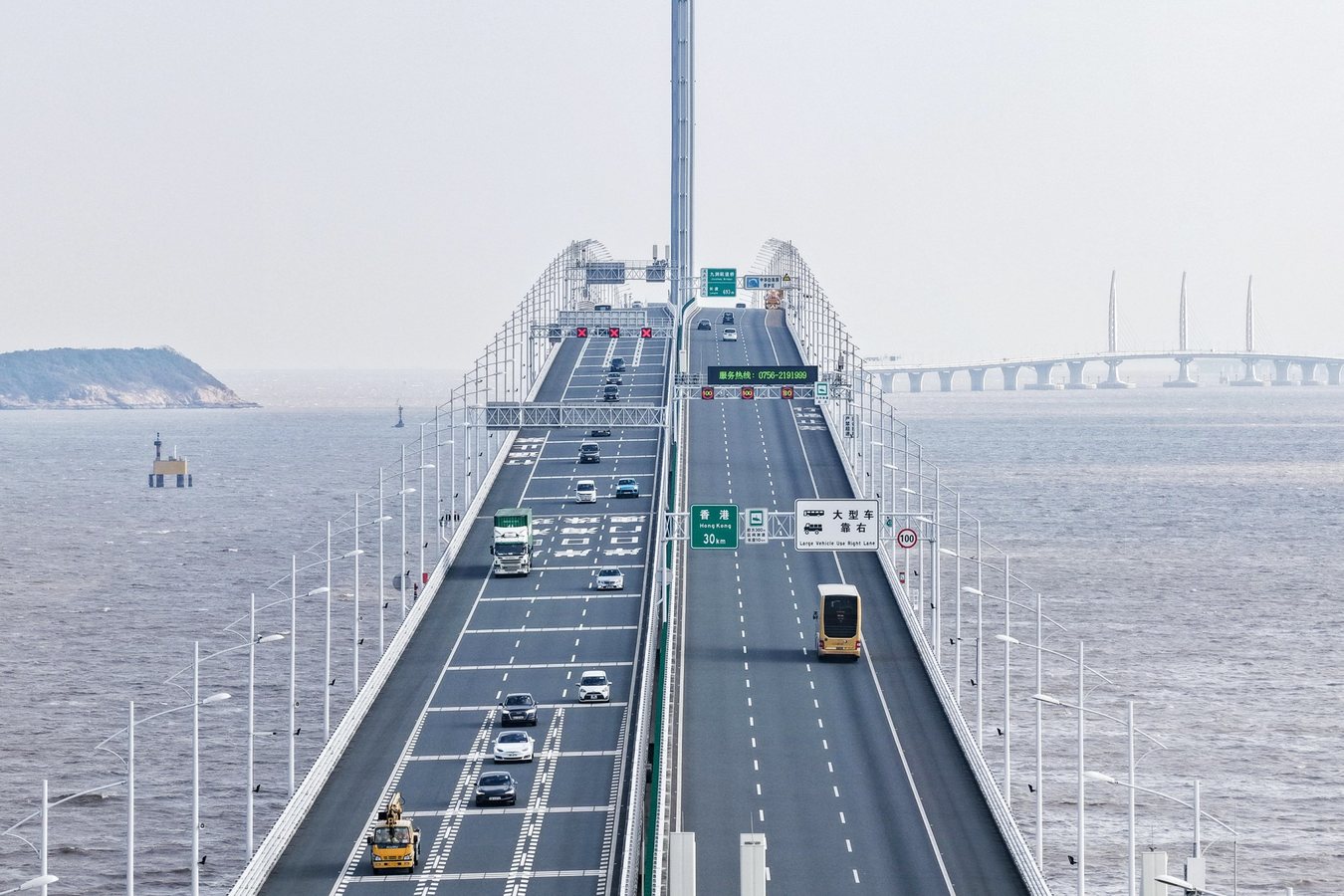
Beijing's plan to build a Silicon Valley rival in southern China is nearly a decade old, and its results so far are mixed. The Guangdong–Hong Kong–Macau Greater Bay Area, formalized in 2017, links nine cities around the Pearl River Delta with the Hong Kong and Macau special administrative regions. Supporters argue that connecting capital, startups and manufacturing could create a world-class innovation ecosystem. Whether the region is living up to that promise remains an open question.
The scale of the project is considerable. The GBA spans three legal systems, currencies and customs territories, yet its 88 million people make it more populous than Germany or Turkey. With a GDP of $2.1 trillion, its economy approaches Canada's in size. The region has been one of China's core economic engines for more than four decades, dating to the designation of Shenzhen, a border market town near the then-British colony of Hong Kong, as a business-friendly special economic zone. Hong Kong's financial sector grew as China opened up, Shenzhen drew founders from across the country, and nearby cities such as Dongguan and Foshan supplied the manufacturing capacity that made the Pearl River Delta known as the world's factory.
The central policy goal is to deepen that integration rather than make the cities identical. Pamela Lam, Hong Kong's commissioner for the development of the Greater Bay Area, has said the aim is interoperability and complementarity across cities and systems. The stated objective is a complete innovation and industrial ecosystem linking laboratories to factories through a high-value supply chain. Connective infrastructure is a key focus. Hundreds of kilometers of railway have been built between cities, and the Hong Kong–Zhuhai–Macau Bridge, the world's longest bridge-and-tunnel sea crossing at an estimated cost of $20 billion, now links the regions. The official ambition is a one-hour living circle that brings travel time between major cities within an hour.
The clearest test case is Hengqin, an island in the mainland city of Zhuhai just across from Macau. As recently as 2009, the island was home to oyster farmers and fishermen. It now hosts an In-Depth Cooperation Zone, a development initiative run by Guangdong province and the Macau Special Administrative Region to help Macau diversify away from gambling by tapping mainland talent and manufacturing capacity. Hengqin is three times Macau's size and features multilane highways, striking architecture and manicured parks, but residents have not followed the infrastructure. Authorities in 2009 hoped the island would have 280,000 residents by 2020. By the end of 2025 it had about 50,000.
Innovation indicators offer a more encouraging picture. The Global Innovation Index, published by the World Intellectual Property Organization, ranked the Shenzhen–Hong Kong–Guangzhou cluster as the world's leading innovation cluster in both 2025 and 2026. According to state media, the GBA's nine mainland cities filed more than a third of China's international patent applications in 2025, and the region accounts for about a fifth of the country's unicorn startups. Mehran Gul, author of The New Geography of Innovation, argues that Chinese technology has moved beyond imitating the United States and is now driven far more by fundamental innovation, a shift he says the GBA helped make possible. He describes the Greater Bay Area and the U.S. Bay Area as running different operating systems. The American region developed largely by accident, while the GBA's division of labor was deliberately engineered.
Economic data is less favorable. Guangdong has grown more slowly than the national average every year from 2021 to 2025. Alicia Garcia-Herrero, chief economist for Asia-Pacific at Natixis, says the region grew faster than the rest of China before the pandemic but no longer does. She points to a slump in China's property market and youth unemployment as heavy burdens on Guangdong, with the latter worsened by increasing AI-powered industrial automation. For now, the Greater Bay Area appears to be a Hong Kong–Shenzhen story, combining Hong Kong's financial strength with Shenzhen's hardware and software capabilities. Whether Guangzhou, Zhuhai, Dongguan, Foshan and the other cities can share in that growth will determine if the region fulfills its original Silicon Valley comparison.
Source: fortune.com
33