4 minEconomy
Bank of America Says Each 1% Fed Rate Hike Adds $95 Billion a Year to U.S. Interest Costs
Bank of America analysts estimate that every 100 basis points of Federal Reserve rate increases adds about $95 billion annually to the government's interest expense, as Treasury payments on the $40 trillion national debt topped $2 trillion in fiscal 2026.
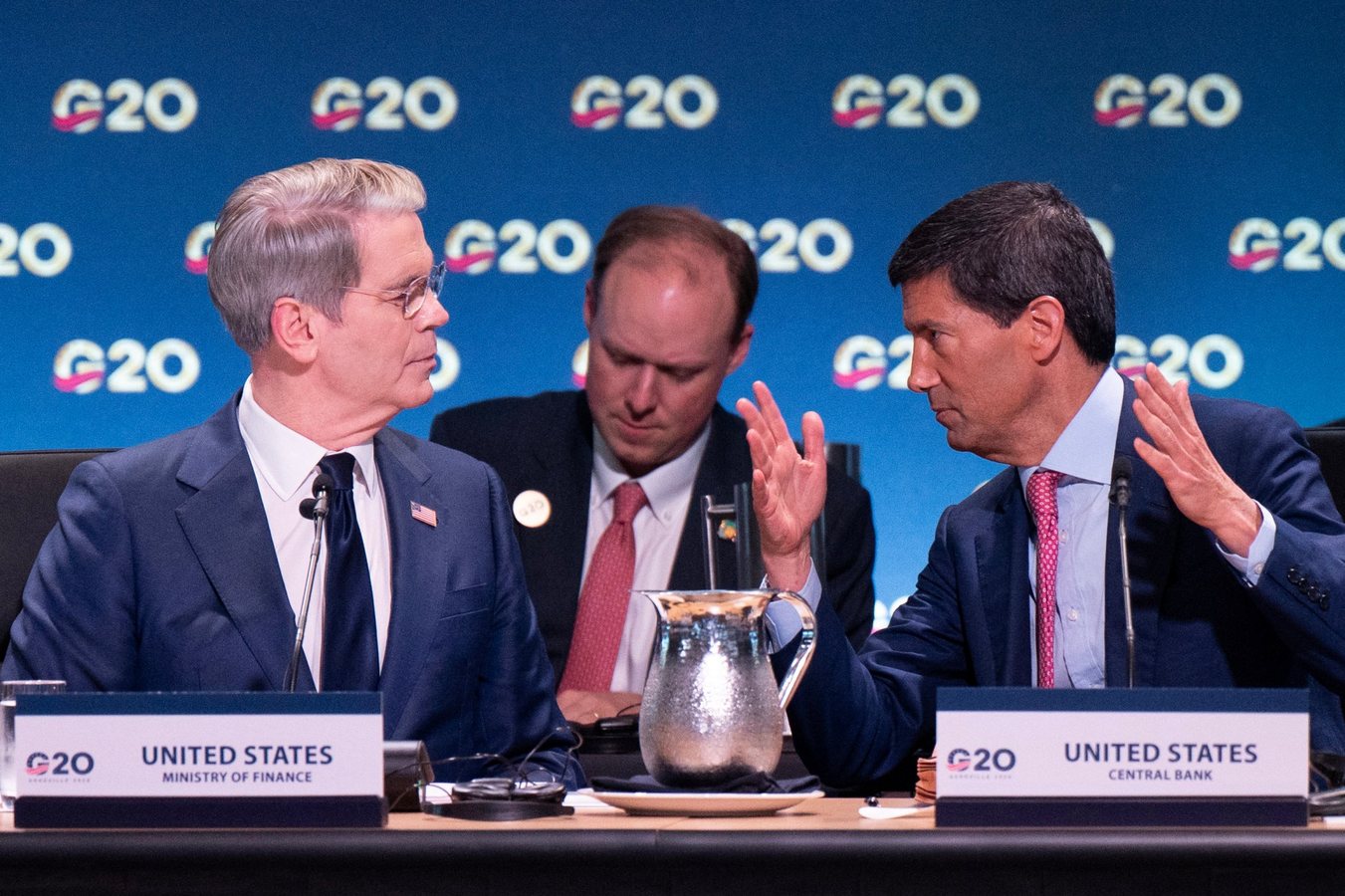
Every percentage point the Federal Reserve adds to its benchmark rate raises the U.S. government's annual interest bill by roughly $95 billion, according to Bank of America analysts, a figure that sharpens the fiscal stakes of the White House's campaign for lower borrowing costs.
The bank's rates team, including Meghan Swiber, Stephen Juneau, Mark Cabana and Ralph Axel, warned that persistently elevated yields compound into materially greater interest expense and Treasury financing needs over time. The analysts said the near-term deficit outlook has changed little, but the rate backdrop has altered the longer-run fiscal math.
Treasury payments to service the $40 trillion national debt surpassed $2 trillion in the 2026 fiscal year, the department recently announced. Against that backdrop, the analysts described an unchanged deficit picture as becoming a bigger financing problem as elevated yields feed through to the debt stock.
Their warning centers on a threshold that economists watch closely: when the effective interest rate on the debt exceeds nominal growth, the government can find itself borrowing simply to cover interest, a dynamic the analysts described as the start of a debt spiral. Higher yields raise the risk of reaching that point, they wrote.
The Congressional Budget Office has modeled how sensitive the fiscal picture is to rates. In one scenario, rates run 150 basis points above current projections between 2026 and 2036, producing deficits $6 trillion larger and a $4.9 trillion increase in net interest costs. A smaller 50 basis point increase adds $1.9 trillion to projected debt and $1.6 trillion in net interest costs.
The estimates land in the middle of a sustained pressure campaign from President Donald Trump and his team for lower base rates. The administration has argued that rates are too high and are hurting consumers' chances of owning a home, since mortgage rates are tied to long-dated yields. The push has included extraordinary measures against previous Fed chairman Jerome Powell, including personal insults and a criminal investigation, and has now extended to the broader Federal Open Market Committee under new chairman Kevin Warsh.
Bank of America is not alone in flagging the risk. Mark Zandi, chief economist at Moody's, wrote over the weekend that global investors are digesting U.S. spending habits and appear to be demanding a higher rate to compensate for the mounting risk. He noted that the 10-year Treasury yield is up about a percentage point this year, among the biggest increases of any major economy, and that countries with the heaviest interest burdens have generally seen the biggest increases.
Zandi warned that a vicious cycle threatens to take hold, with higher rates adding to interest payments and the debt load, which in turn pushes rates up further. The Bank of America team reached a similar conclusion, writing that as elevated yields feed through to the debt stock, interest expense compounds, financing needs rise and the fiscal trajectory becomes less sustainable.
The analysts framed their estimate as a direct measure of what is at stake in the debate over monetary policy. Lower rates would ease the government's own borrowing costs at the same time they make credit cheaper for households and businesses, while each additional percentage point of tightening adds tens of billions of dollars to an interest bill that has already crossed $2 trillion.
7