5 minBusiness
Taxpayer-Funded Sports Stadiums Rarely Deliver Promised Economic Returns
A growing body of economic research shows that public subsidies for professional sports venues often fail to generate the jobs, tax revenue, and growth that teams promise, leaving cities and counties to absorb the costs.
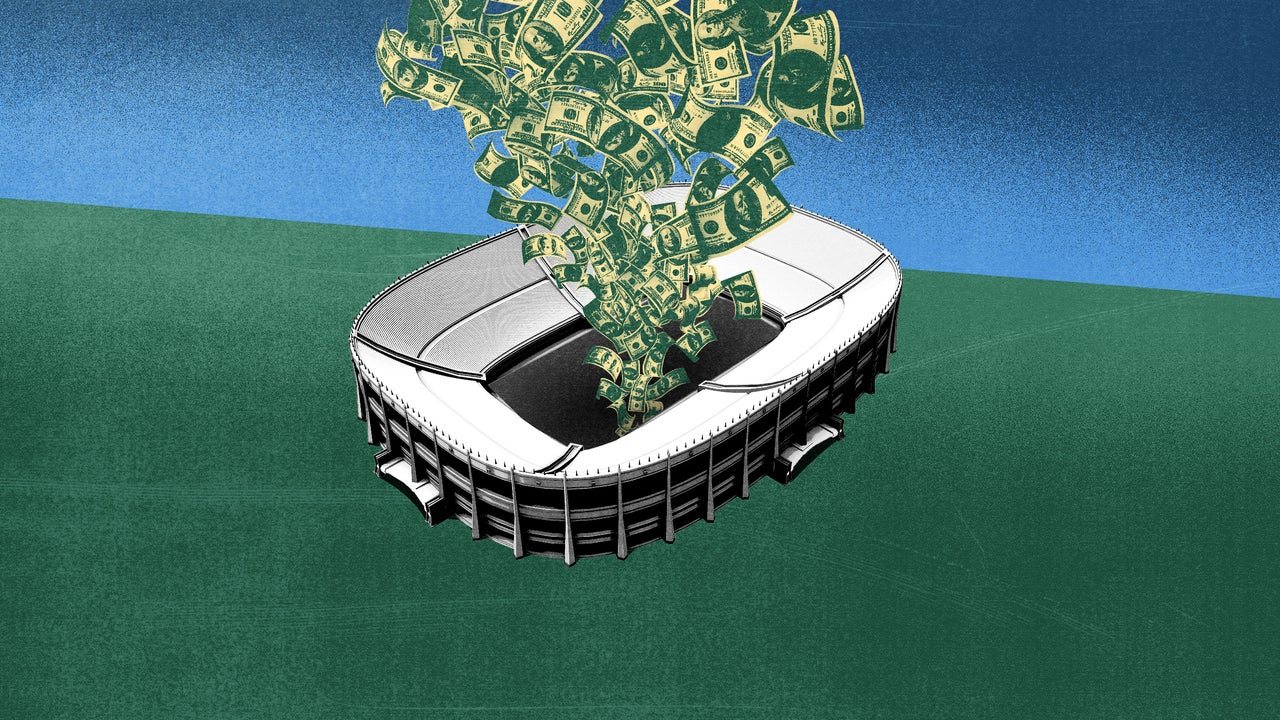
Professional sports franchises in the United States have increasingly turned to state and local governments to finance the construction of new stadiums and arenas, but a broad body of economic research suggests that taxpayers rarely see the promised returns on those investments. From 1970 to 2020, governments across the U.S. and Canada contributed roughly $33 billion toward sports venue construction, covering about 73% of the total cost, according to data cited in a recent analysis of the issue.
The stakes are enormous. The NFL reported approximately $14.5 billion in revenue for 2025, while Major League Baseball collected an estimated $12.2 billion and the NBA earned nearly $12 billion. Yet the leagues and franchises that benefit from those revenues seldom pay the full price of new facilities. The stadium planned for the Washington Commanders is expected to cost $4 billion, and SoFi Stadium in Los Angeles, completed in 2020, cost $6.75 billion, making it the most expensive NFL venue ever built.
When teams seek public money, they typically promise a package of benefits: new jobs, sustained economic growth, improved infrastructure, higher tax revenues, and rising property values. If officials hesitate, franchises often threaten to relocate, taking those touted benefits with them. But economists who have studied the record say those promises are vastly overblown.
An analysis of four decades of stadium economic impacts through the early 2020s found little to no measurable benefit for taxpayers or communities, including per capita income. Other research has reached similar conclusions about job growth, finding effects that are negligible. Stadiums have shown no systematic impact on new business openings, and evidence on property values is mixed at best. Some scholars have found no effect at all, while others have concluded that property values around stadiums increased only after teams left.
The argument that new venues expand the tax base has also failed to hold up. A study of Truist Park in Atlanta, which examined the fiscal effects of the Atlanta Braves' 2017 relocation, found that the county housing the stadium saw a small increase in tax revenue the year after it opened. But surrounding counties experienced a similar bump, suggesting the stadium itself had no effect. More importantly, the increase did not offset the public subsidies for building and operating the venue. Taxpayers lost about $15 million annually because the additional revenue failed to cover the costs of servicing the extra public debt and other remaining expenses.
Proponents sometimes argue that stadiums impose no other costs on surrounding communities. Researchers have found the opposite: negative spillovers can include congestion that makes it harder for residents and business owners to reach their properties, higher pollution, and increases in crime.
The disappointing results may seem puzzling when stadiums appear full on game days, with fans buying food and merchandise. Economists explain the gap through two basic principles: resources are scarce, and trade-offs matter. The people spending money at a new stadium are usually local residents, not out-of-town visitors bringing fresh cash into the economy. A family that spends $500 at a game is not creating $500 in new economic activity; it is choosing the stadium over a restaurant, a museum, or another outing. Because consumers operate on a budget, the stadium changes where they spend their money, not how much they spend. The result is a shift in economic activity rather than a net increase.
The same logic applies to the public dollars used for construction. That money cannot be spent on roads, schools, emergency services, or tax refunds. Even when some economic activity is generated, it often comes at the expense of other local spending or public priorities. For policymakers weighing whether to subsidize a new facility, the research points to a consistent conclusion: the promised boom rarely materializes, and the costs tend to outlast the excitement of opening day.
6